


Poor transcription accuracy can trigger costly and serious consequences. Automatic speech recognition systems can misinterpret 18% to 63% of spoken content, meaning you could lose up to two-thirds of the valuable information you want transcribed if using the wrong one.
Many professionals face challenges with unreliable transcription tools and free ASR tools that promise perfection but fall short. Inaccurate transcripts can cause serious misunderstandings and errors that get pricey, especially when you’re working with dialogue captured in legal testimonies, medical notes, or business meetings.
The bright side is that you don’t need to accept mediocre results or shy away from using ASR for transcription. The right mix of preparation techniques and AI transcription tools can dramatically boost your transcription accuracy. Verbit, for example, finds that balancing advanced transcription technology with proper preparation delivers accurate transcripts even in tough audio conditions.
This piece shows you expert-tested methods to improve transcription accuracy. You’ll learn how to measure accuracy and which AI tools actually deliver on their promises. These insights will help you reshape frustrating transcription experiences into reliable, accurate transcription results.

Understanding Transcription Accuracy
“Speech recognition software can turn an audio file into a text file in a very short space of time, but it’s only in recent years that Artificial Intelligence transcription tools have become a part of the wider market,” said transcription expert Sarah McGowan.
Transcription accuracy measures how well a written transcript matches the original spoken words. Getting it right involves more than just writing down what someone says. It’s about understanding the technical elements that make for accurate transcripts.
What makes a transcript accurate?
A good transcript captures both the spoken words and their meaning. The industry uses Word Error Rate (WER) to measure transcription accuracy. This metric looks at three main types of errors:
- Substitutions: The wrong word replaces the right one (e.g., “Don’t make a fuss” becomes “Don’t make a bus”)
- Deletions: Words go missing and change their intended meaning (e.g., “She did not complete the task” becomes “She did complete the task”)
- Insertions: Extra words appear (e.g., “We’re ahead of schedule” becomes “We’re too ahead of schedule”)
The WER calculation is simple – divide total errors by the word count in your sample. As one example, 20 errors in a 100-word sample gives you a WER of 0.2 or 20%. Lower WER means better accuracy.
These key factors affect how accurate your transcript will be:
- Audio quality and background noise
- Speaker accents and dialects
- Specialized terminology
- Multiple speakers talking simultaneously
- Speech clarity and pace
Why transcript accuracy matters, especially in legal and medical transcription
Medical and legal transcription demand perfect accuracy. Legal proceedings depend on exact words because incorrect transcripts can change case outcomes. Medical transcripts must be perfect. Wrong information can lead to incorrect treatments or wrong medication doses that put lives at risk. A single mistake in a drug name could be dangerous. Both fields use complex terms that standard transcription tools struggle with. That’s why medical and legal professionals need effective transcription services with special training in their fields.
In other industries, such as education and government, The Americans with Disabilities Act (ADA) and Section 508 requirements often require high accuracy standards, 99%, to comply with accessibility rules. When accuracy isn’t met, these institutions and agencies can face legal action.
Common misconceptions about AI transcription
AI transcription has come a long way, but people still believe some myths:
Many think all AI transcription tools work the same way. The truth is accuracy varies based on training data and algorithms. Research has shown some automatic speech recognition tools can misunderstand up to 35% of words for some speaker groups — nearly double the error rate for others — raising real risks of meaning loss and even racial disparities in transcripts. On the other hand, top AI transcription services reach 97-99% accuracy in ideal conditions.
Some people expect AI transcription to work perfectly without human help. AI has improved substantially, but human review and training still adds value, especially when audio contains background noise or involves multiple speakers.
Others believe AI can’t handle technical terms after receiving transcripts with tons of errors and misspellings. Modern ASR systems like Verbit’s Captivate are designed and prepped to learn specialized vocabularies and industry terms. This training means that accuracy tops 99% even in tough audio situations.
As evidenced by Verbit, the right mix of technology and preparation leads to reliable, accurate transcripts. Verbit does so by combining its proprietary AI with optional human review and let users upload specialized terms onto the platform beforehand. This approach helps Verbit’s ASR nail accuracy even in challenging scenarios and with high-stakes legal content to boot.
How Accuracy is Measured in Transcription
Professionals need specific metrics and tools to calculate transcription accuracy objectively. Learning these measurement techniques helps you review transcription quality and pick the right services for your needs.
What is Word Error Rate (WER)?
WER is used to measure transcription accuracy. This metric shows what percentage of words in a transcript don’t match the original speech. The formula is straightforward:
WER = (Substitutions + Deletions + Insertions) ÷ Total Words in Reference
A lower WER means better accuracy, with 0% being perfect. Standard AI transcription systems can hit 90-95% accuracy (5-10% WER) with clear audio. Premium transcription services like Verbit can do even better, reaching up to 99% accuracy. The accuracy improves by a lot when users have the ability to add training materials and specialized terms beforehand, something many basic transcription providers don’t offer.
Substitutions, deletions, and insertions further explained
WER tracks three types of errors that each affect transcript quality in different ways:
- Substitutions happen when the system swaps the right word for a wrong one. Like changing “Don’t make a fuss” to “Don’t make a bus.” Smart AI systems cut down these errors by looking at context instead of words in isolation.
- Deletions leave out words that should be there. These can flip the meaning completely – think how “She did not complete the task” becomes totally different as “She did complete the task.”
- Insertions put in extra words nobody said. Someone says “We’re ahead of schedule” but the transcript shows “We’re too ahead of schedule” – that’s an insertion error. Background noise or people talking over each other often cause these.
Top providers like Verbit keep these errors low with special tech. Verbit’s acoustic model cuts background noise, language model spots terminology and accents, and context model keeps up with current terms and events.
Using a transcription accuracy calculator
Here’s how to review transcription quality on your own:
- Compare the transcript with the original audio
- Count each error type (substitution, deletion, insertion)
- Divide total errors by the reference transcript’s word count
- Multiply by 100 for your WER percentage
Many services come with built-in accuracy calculators or confidence scores, which is another benefit that saves you time. You can also test accuracy yourself by:
- Uploading sample audio that matches your usual recording setup
- Running the same audio file through different services
- Testing tricky content (multiple speakers, noise, special terms)
Several things affect WER scores beyond just the transcription system. Bad audio, heavy accents, weird terminology, overlapping speakers, and background noise all make for more errors. Testing with real examples from your actual use gives you the full picture.
The best results come from mixing tech with human expertise. AI transcription has gotten much better, but human review still matters for critical content. Some providers run scans to calculate confidence scores. This process triggers alerts on when human review is needed or offers users the opportunity to cut costs on when it’s not. This transcription check becomes extra important in legal and medical transcription where mistakes can lead to collateral damage.
Top 5 Expert Tips to Improve Transcription Accuracy
Getting great transcription results takes both technical know-how and smart strategies. These five tips from industry experts will help you get better transcription accuracy and save hours of editing time.
1. Use high-quality audio recordings
Quality audio forms the foundation of accurate transcription. Professional transcription services point to poor recording quality as the main reason for errors.
You should use dedicated recording equipment instead of built-in device microphones when possible. Place microphones near speakers and keep them away from interference sources. On top, you might want to record in spaces with acoustic treatment or natural sound absorption when possible (like rooms with carpeting, curtains, or furniture) to cut down on echo.
2. Minimize background noise and interruptions
Background noise creates big challenges for automatic speech recognition (ASR) systems. Advanced providers like Verbit use specialized technology that can filter out ambient noise. In spite of that, starting with cleaner audio always gives better results.
Before recording, close windows, turn off fans or air conditioners, and ask participants to silence electronic devices. The ground rules should discourage interruptions and overlapping speech, since these lead to higher error rates in transcription.
3. Train your ASR with custom vocabulary
One of the best ways to improve accuracy is by working with an ASR that can be trained on your specific industry use cases and content. Many transcription providers offer opportunities to train the ASR system with specialized terminology. For example, Verbit offers users the options to:
- Create glossaries of industry-specific terms, acronyms, and unusual names
- Upload these custom dictionaries to the transcription tool before processing
- Include common phrases and terminology used in their field
These custom vocabularies work as “hints” that help the AI identify specialized terms correctly instead of using like-sounding common words. Delving deeper, Verbit offers a ‘legal ASR’ which is pre-trained on legal use cases like depositions, hearings and trials. Legal users can then pre-upload terms, name spellings and relevant documents to further train the legal ASR it so it performs strongly from the get-go on both live transcription and recorded audio scenarios.
4. Always review AI-generated transcripts
AI transcription has come a long way, but human oversight is vital for mission-critical content. Verbit’s approach combines AI efficiency with human expertise, reaching accuracy rates up to 99% through this hybrid model.
Legal, medical, or other sensitive transcriptions often need human review to catch nuances that automated systems might miss. Industries with high-stakes content or compliance needs should shy away from using generic or free AI-generated transcription services alone. They often need to manually check and edit the output of them, which can take serious time. Instead, many professional services offer you the opportunity to select from different levels of human review based on your accuracy needs.
5. Test tools with real-life audio samples
You should test a transcription service’s performance with your typical audio conditions before making a commitment. Upload samples that have:
- Multiple speakers with different accents
- Background noise like your usual environment
- Industry-specific terminology and jargon
Results from different providers should be compared using similar samples. This hands-on testing tells you much more than advertised accuracy rates, which usually reflect perfect recording conditions.
These expert strategies will help you get much better transcription results. Note that transcription accuracy depends not just on having the right tools. It’s about preparing your audio and priming the tools available on your specific needs.
AI Transcription Tools That Actually Work
The global AI transcription market is projected to grow from $4.5 billion in 2024 to $19.2 billion by 2034, at a compound annual growth rate (CAGR) of 15.6%, according to Market.us.
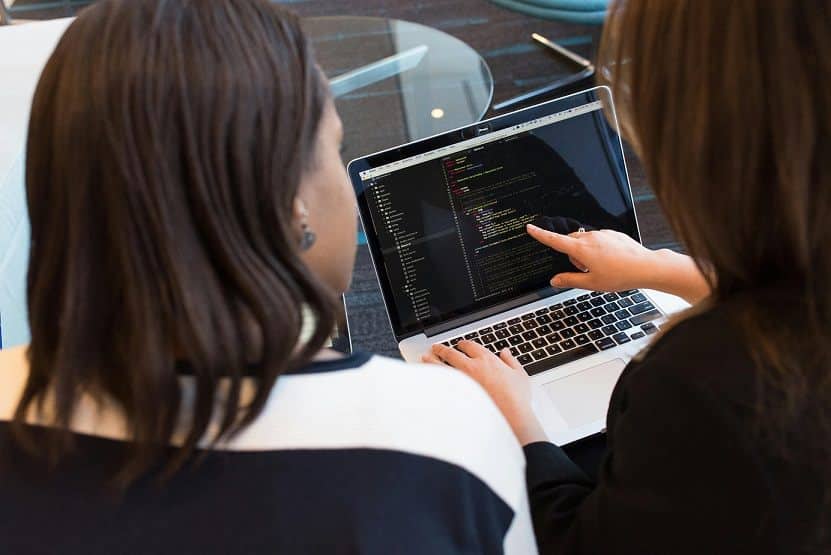
If you’re searching for AI transcription tools that actually deliver accurate results, you’re not alone. With dozens of AI transcription tools available, here are 5 transcription options you should know about for their performance in real-life conditions.
Verbit: Enterprise-grade accuracy with human review
Verbit offers a detailed transcription ecosystem. The Verbit platform combines domain-trained AI with optional human review to achieve up to 99% accuracy, even with challenging audio. The proprietary ASR technology, Captivate™, uses a three-model architecture (acoustic, linguistic, and contextual) that adapts to accents, background noise, and specialized terminology.
The platform shines in regulated industries like legal, government, media and education where precision is crucial. You’ll get everything from live captioning to post-production transcription options designed for ADA Title II, SOC2, HIPAA, and GDPR compliance. Verbit also offers countless integrations into cloud storage, learning management systems, video conferencing and video platforms, making for a super smooth workflow. The transcription platform also offers a self-service solution at $29 monthly.
Otter.ai: Known for meetings and Zoom transcription
Otter.ai has fine-tuned its technology for meeting environments. The tool captures conversations in virtual meetings and identifies different speakers and action items automatically. Teams working remotely benefit from its smooth Zoom integration.
Descript: Edit audio by editing text
Descript is known for changing how creators work with audio and video. The tool lets users edit audio files by altering the transcript text, something free and standard transcription tools don’t offer. The platform achieves 95% transcription accuracy and includes features like voice cloning.
Rev: Fast turnaround with optional human review
Rev started with human transcription, but now provides both AI and human options. Recently, the company evolved to focus primarily on legal AI transcription. Its human transcription is said to reach 99% accuracy levels.
VoiceToNotes.ai: Structured notes from speech
VoiceToNotes.ai takes notes from speech in a unique way. Rather than creating word-for-word transcripts, it formats spoken words into clean headings, bullet points, and paragraphs automatically. The tool supports over 100 languages with 98% accuracy claims.
Best Practices for Using AI Transcription Tools
Professionals know that the right tools and proper strategies maximize transcription accuracy. Understanding these best practices will improve your results substantially.
Why you shouldn’t use free transcription tools
Free transcription services cut corners on everything in transcription. We found they lack proper data security measures that put sensitive information at risk. Enterprise solutions like Verbit offer compliance with standards such as HIPAA, SOC 2, and GDPR, which are vital for industries like legal and government. Security issues aside, free services have trouble with speaker identification and don’t allow for specialized terminology uploads. Users waste time playing “guessing games” to figure out who said what or fixing all of the errors in their transcripts manually.
How to get accurate transcripts from Zoom
Zoom tends to be one of the most popular transcription use cases. Your Zoom meetings need high-fidelity audio mode enabled to optimize transcription settings. Specialized services work better than Zoom’s built-in transcription for exported recordings. Platforms like Verbit can integrate into Zoom, as well as Microsoft Teams and many others you may be using, and process your Zoom recordings with customized terminology dictionaries when you need verbatim accuracy. This method improves speaker identification and technical term recognition substantially, a vital feature for meetings with industry-specific language.
Combining human expertise and AI transcription for best results
AI has made remarkable progress, yet the hybrid model delivers superior results for mission-critical content. The speed that automated transcription provides is unmatched. However, you’ll want opportunities where human input is allowed – whether that be for human review for contextual awareness, experts training the ASR, human customer support to troubleshoot AI issues and more. Verbit takes on this approach, offering human customer support, providing professional human editors when needed and giving access to expert team members who understand our customers’ industry needs. With multiple options available, you shouldn’t settle for anything less than achieving 99%+ accuracy rates, even with difficult audio that has multiple speakers or background noise. Regardless of the platform you use, you’ll also save significant time enlisting an expert transcription provider over using in-house transcription methods.
Avoiding common pitfalls in transcribing content
Test prospective tools with your actual audio samples before you commit. Many services handle perfect audio well, but struggle with ground conditions like accents or overlapping speech. Results need comparison across multiple configurations during testing. Data security demands verification of proper protocols from your transcription provider. Employee mistakes or usage of openly available free ASR transcription can leak confidential information accidentally. You’re much better off using a professional transcription service with documented compliance certifications to protect your data.
Key takeaways on transcription accuracy
Accurate transcription is crucial for effective professional communication and documentation across industries. Good preparation and the right AI tools can turn frustrating transcription tasks into reliable results. Learning about Word Error Rate helps you assess transcription quality objectively instead of trusting marketing claims.
Using quality recording equipment, minimizing potential background noise, and enlisting an ASR system trained with custom vocabulary will cut down error rates significantly. On top of that, it helps to test tools in your actual recording environment before you commit to a solution.
A blend of AI efficiency and human expertise gives the most dependable results. This explains why Verbit’s methodology hits accuracy rates up to 99% with even the toughest audio. Verbit’s three-model system handles accents, background noise, and technical terms while meeting strict compliance requirements.
Note that transcription accuracy goes beyond convenience—it shapes decisions, particularly in legal and medical fields where one wrong word can lead to serious problems. The ideal transcription partner knows your specific industry needs and offers both tech solutions and setup guidance.
Are you still dealing with poor transcription quality? Start using these expert strategies and test the AI tools mentioned in this piece. You’ll thank yourself later for the time saved on transcript editing and the peace of mind that comes from accurate content capture.