
It’s great that you’re already captioning some of your audio and video content. There are now more reasons and ways to offer greater access with tools like captioning than meets the eye.
Take a look at these additional use cases for captioning that could benefit your business and extend your audience reach.
Individuals who benefit from captions who you may not be thinking of
Ensuring that individuals who are Deaf or hard of hearing have equitable access to your content is the most widely considered purpose for captioning. While you’re likely offering captions to accommodate them and to adhere to accessibility laws like the Americans with Disabilities Act (ADA), many others also benefit from having access to captions.
| People who view content without the sound | Three out of four people watch videos on their mobile devices more often than anywhere else, and most of them do so without the sound on. Captions are useful for on-the-go and public video viewing, which is common on public transportation, in waiting rooms and in crowded bars or restaurants. |
| People who view in non-native languages | Learning a new language is a challenge, and more than one in five people1 in the US alone speak a language other than English at home. Captions are incredibly useful to this population and can help them better understand audio and video content with an additional visual aid. For instance, one study found that Dutch students2 who viewed English language videos with English captions comprehended dialogue better than those who watched the same content with Dutch subtitles. |
| People with learning disabilities | Research indicates3 that viewers with mild cognitive impairments such as early memory losses associated with dementia, those with ADHD, dyslexia, audio processing disorders4 and individuals on the autism spectrum enjoy content more and retain information better when they use captions. |
| People in your target audience who are searching online | When you caption and transcribe your video and audio content, it will improve your SEO and discoverability among target consumers and audiences. Good search engine optimization (SEO) strategies help companies rank higher when individuals look for goods and services online. Since search engines like Google and YouTube use crawler bots5 that rely on text, including captions and transcripts rather than audio or video content alone will make it easier to find therefore increasing your search rankings substantially. |
Environments that benefit from the addition of captions
Captioning your content makes it easier for millions of people to engage with your business and receive your brand message. If you’re only captioning some of your resources, you’re missing out on additional opportunities to optimize the reach of your audio and video content.
| Marketing and social media videos | Video marketing is an essential medium for today’s businesses. Videos are also expensive and time-consuming to produce. If you aren’t captioning your marketing and social videos, you’re missing out on benefits like:
Captioning even short social content also ensures access for viewers who are Deaf or hard of hearing while sending your audience an important message about your business’s values. Building yourself up as an inclusive brand is critical because in today’s market, 64% of consumers prefer to purchase from inclusive companies |
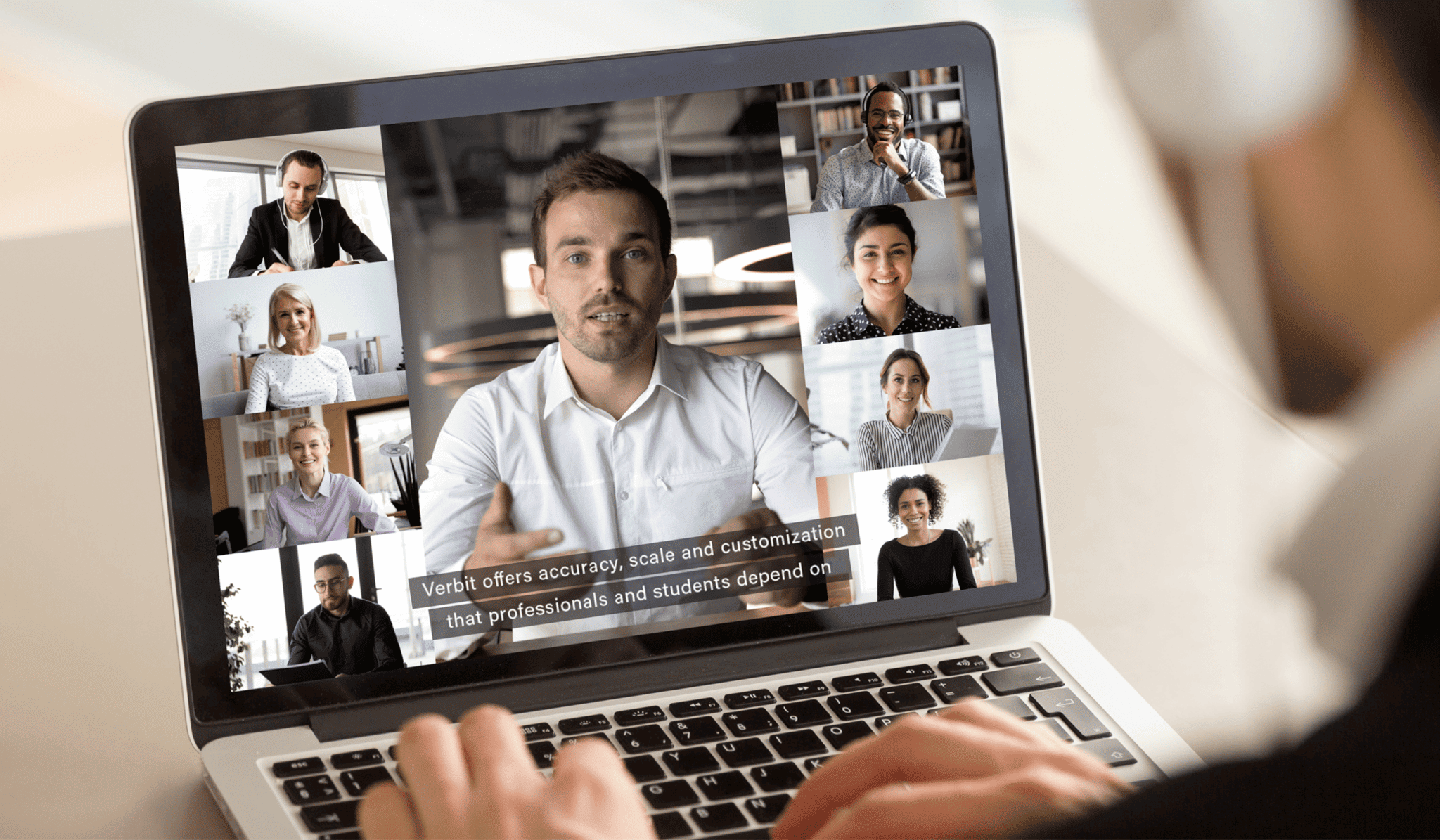
| Live events & webinars | If you’re hosting live events – in-person, virtual or hybrid events, you need to be captioning them. Captions help to meet the access needs of individuals with disabilities, but also help event producers better engage with their audiences and retain their attention. Offering captions will help you provide equity to attendees who are Deaf or hard of hearing, but also connect better with all of the diverse individuals listed above who are tuning into your events from a variety of environments. Zoom fatigue is very real and captions are one method to drive additional live event engagement.
Once you complete your event, adding captions to your on-demand video is also key. Delivering these captions and searchable transcripts of the event dialogue through Verbit help you offer your audience another way to consume the information. Additionally, your team will benefit from easy search tools which help you pull out key information or quotes from the event’s speakers. The Motley Fool is one business offering captions for their live events and using the transcripts effectively to get the most out of each broadcast. |
| Podcasts | If your business is creating podcasts to take advantage of this rapidly growing form of content, remember captions are essential for these programs as well. Captioning will greatly extend the reach of your podcasts to audiences that will include 144 million people in the US alone by 2025. Recently, major podcast producers including Pandora and SiriusXM faced lawsuits for failing to accommodate people who are Deaf and hard of hearing, so prioritizing access is also a legal consideration. |
| Internal training videos |
87% of employers use videos to train employees and statistics also show that 76% of employees8 believe on-demand video training boosts productivity. Adding captions to those training videos is a standard way to improve access and helps businesses meet legal accessibility requirements. Additionally, everyone’s retention and attention will improve because of captions, which means your team will get more out of the training. Remember that under the ADA, you must provide those accommodations even in the recruiting and hiring process. Don’t make the mistake of neglecting this service and others during these earlier stages of a candidate’s relationship with your company. |
| Internal meetings | With more meetings happening virtually and remotely, you also need to consider accommodations for daily regroups and calls. Captions are needed to allow employees, clients and consumers you’re connecting with who are Deaf or hard of hearing to take part in live meetings. Captioning for these meetings will also offer support for other team members as this tool improves retention and comprehension. Employees can also later review records of meetings at a later time to refresh their memories or learn what they missed at a meeting they couldn’t attend. |
 Verbit’s captioning and transcription solutions are simple to implement in all of these scenarios to support business inclusivity and productivity on every level. Contact us to begin expanding your efforts and captioning ׳more content, events and meetings with ease.