

Table of contents
- Contributors
- Additional Perspectives and Live Feedback
- Common Phrases Addressed
- Common Challenge
- Where the Accessibility Journey Started
- Barriers to access encountered at both institutions
- Confronting Fears to Provide Access
- Recognizing Providing Access is Ever-Changing
- Why Buy-In is Important and Key Success Stories
- UML’s Take
- UNCW’s Take
- Success Story: Gathering Data
- Success Story: Working with IT
- Success Story: Altering 'Labels' to Achieve Buy-In
- Success Story: Adding an 'Assistive Technology' Role
- Success Story: A Tech Meets PR Rollout Plan
- Key Takeaways
Faculty members are saturated right now with the transition to online due to COVID and the new technology required. In an effort to inform and inspire, Verbit gathered three university leaders to share success stories in their inclusion efforts. Their message is clear – schools must identify the barriers standing in their way of offering accessible courses and campuses to students. To then overcome them, they must build buy-in for inclusive design with cross-campus stakeholders.
“When it comes to campus-wide accessibility initiatives, they can’t be done alone. It really does take a whole community,”
– Brandon Drake, the University of Massachusetts – Lowell
Drake’s peers from the University of North Carolina – Wilmington echoed his remarks. Each school is organized differently, approaches funding differently and has diverse stakeholders. However, common barriers exist for the majority of universities seeking to offer more access.
Contributors:
To source shared insights and uncover school-to-school differences, we gathered one leader from each university, as well as Jody Goldstein, who worked in disability services at both schools.
“During my time at UMass Lowell, we experienced tremendous growth in the area of inclusive design. I was so impressed at UNCW’s journey, so we wanted to share where both campuses started and where we’re heading to promote inclusive design,” Goldstein said.
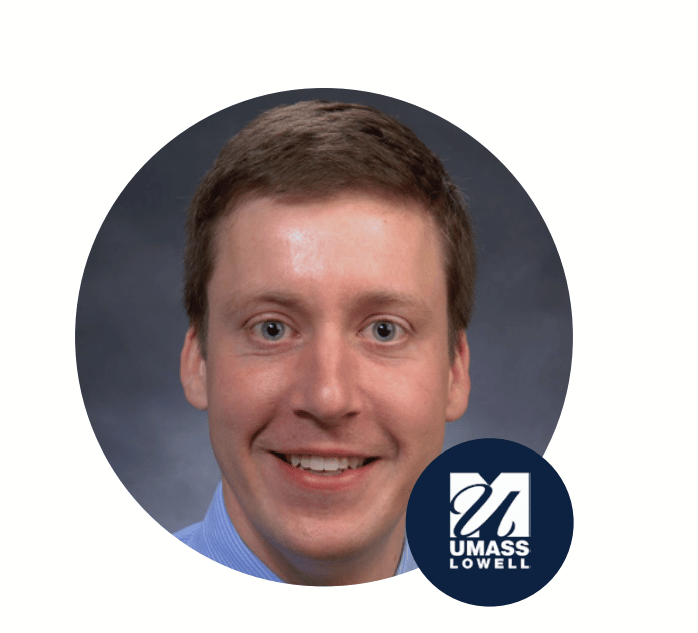
Brandon Drake
Associate Director / Manager of Assistive Technology, UMass Lowell
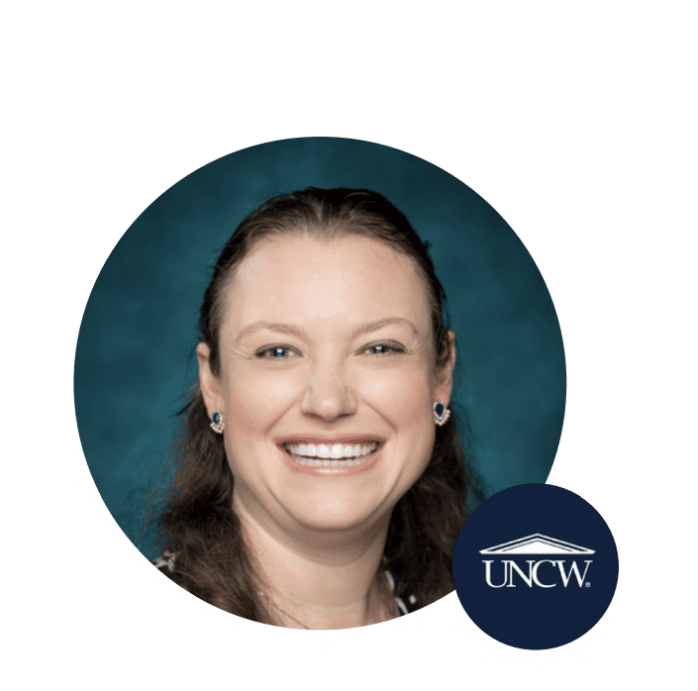
Amy Ostrom
Director of Distance Education & eLearning, UNCW
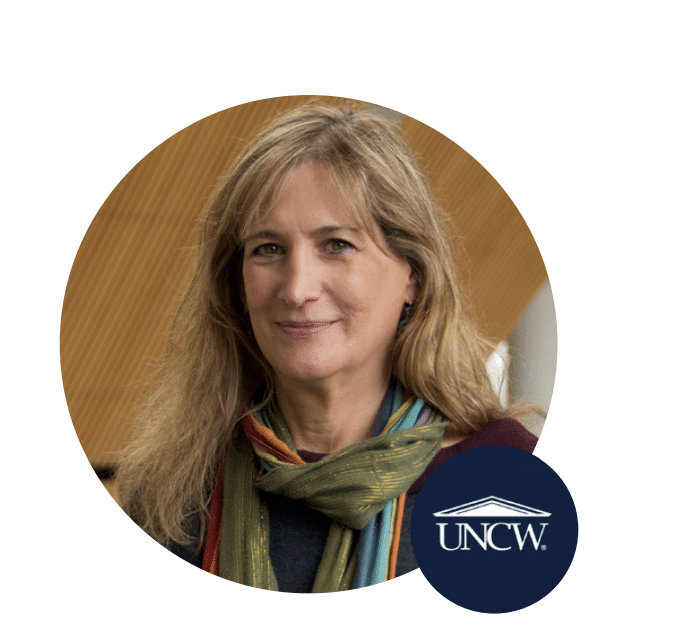
Jody Goldstein
Director of Disability Services, UNCW
Additional Perspectives and Live Feedback
100+ higher-ed professionals joined the live discussion to hear from these leaders in March. The audience offered additional diverse perspectives, coming from different schools.

Common Phrases Addressed
Universal Design for Learning | Quality matters | Course design | Hesitancy |Wanting to comply, but seeing it as extra work | Disability isn’t part of inclusivity at my institution | Support but reluctance | Different duties through accessibility | Finding key stakeholders | REACTIVE STANCE |ADA audit
Common Challenge
“Accessibility is a disability service issue.” This trend of the onus almost always being placed on disability services to find a workaround or accommodate a student’s needs continues. Many departments do not think about accessibility as part of their own processes, Goldstein said. If they’re making a new initiative, they’re not thinking about accessibility as a part of it, rather, they’re retrofitting accessibility into it on an as-needed basis.
Where the Accessibility Journey Started
Goldstein:
There wasn’t clear transparent leadership regarding accessibility or inclusive design. We had stakeholders on campus with a disability minor. We had strong curriculum designers and IT. We even had electrical engineering folks who made products for disabled folks.
For various reasons, there was administration hesitation about who would lead the way. No one really seemed to have the resources. Most of the departments were understaffed and felt like they couldn’t own the burden themselves. Someone had to take a role in moving folks forward. It was a very overwhelming feeling. In 2009, we had stations in the library set for disabled students, and that’s where our access point started. Of course, no students wanted to sit at those stations. When I started, our campus was also fairly uninviting. We had old metal ramps, so even physically, the campus was not universally designed.
Ostrom:
Typically accessibility fell under the Disability Resources Center for Students. When a student with a documented accommodation was in a course, it was taking more of a reactive stance to course design, waiting until there was an accommodations letter in hand to look at design elements. It was a punitive process. My lens comes from looking at online courses, with Director of Distance Education and eLearning in my title, that’s a given. But looking at those online elements, the process that was in place at the time was:
- A list would be generated of every course that was coded as being an online
- A random sample was selected, and that course underwent an ADA
- It was screened and combed through from top to
- All infractions were
- That information was sent to the faculty, and their department chair was copied with a compliance warning and notification of X amount of time to get materials in
“You can imagine the type of environment that could breed when you’re talking about a punitive placement and approach to accessibility. It was very much a hammer. Thou shalt do accessibility. That was this state of affairs, and it made it very difficult to have already sensitive conversations.”
Barriers to access encountered at both institutions
Procurement of new technology tools
Faculty weren’t engaging to find out if new technologies they wanted to try out for online courses were Web 2.0 accessible.
Siloed information
Faculty had little clarity and mixed messages from working with different individuals on campus, making it hard to have a common dialogue. Some schools which offer online courses separately, such as through the Office of Continuing Education as UMass – Lowell does, will encounter this further.
Tip to counteract
Goldstein suggests breaking down the walls of the standard reporting organizational structures and designated roles and responsibilities to allow for more collaboration.
Finding stakeholders on campus
Often, the stakeholder exists, but it can be difficult to locate them due to siloed information.
Cost & fear
Uncertainty on how to pay for accessibility initiatives and how to offer access when faculty isn’t trained on how and doesn’t want to “make it worse.”
Confronting Fears to Provide Access
UML’s public website team feared captioning all the videos on the website would be a fortune. They were fearful about the process of auditing thousands of PDFs on the website and where to start.
When they truly looked into becoming more accessible, they found there were fewer and shorter videos that needed to be captioned.
They were able to send all the videos to be professionally captioned and had captions embedded onto the public website quickly at ~$2,000 – far less cost-prohibitive than they imagined.
They adopted Siteimprove, an auditing software for PDFs, which made that process more manageable.
The small successes snowballed into policies for their web content. PDFs must be accessible to post.
Fear has been replaced by confidence and pride in providing access that helps students.
Recognizing Providing Access is Ever-Changing
Outdated information and not keeping pace with best practices became a barrier at UNCW. Consider if your school is relying on outdated information about access and perpetuating it versus having a conversation about inclusion and items which have been updated.
Ostrom
What was considered accessible and good practice 10 years ago has not kept up with the newest practices. Online learning does not look the same now as it did three years ago. The technology is not the same now as it was two years ago.
This is not a set-it-and-forget-it kind of situation. You have to constantly look at the technology, at the course design, at the students, at the population, at the content, and at the community. This is multifaceted… This is not flat, but it’s ever-evolving… You have to keep up with those small steps as they continue to progress otherwise it’s quicksand.
Why Buy-In is Important and Key Success Stories
The main reason why inclusive design and achieving buy-in is so important is in support of the student – the main consumer. There’s a large population of students that are not being accommodated. From not wanting to be labeled to underprivileged students’ needs not being identified, there are a plethora of students who aren’t reporting their disabilities. Many students find themselves either assuming or hoping that accessibility is going to be built into courses. Unfortunately, it often is not, and so inclusive design ‘covers’ these students.
Success comes from building a table of champions
“One of the things that we’ve had the most success with is finding those champions for accessibility among the faculty, the ones who already know it’s important, the ones who want to learn more and having them be the voice for us about why accessibility is so important. Having those faculty join us on committees, be a part of training, send out notifications about training, so it’s coming from a fellow faculty member rather than a disability office,” Drake said.
UML’s Take
Drake
The table here was built in large part by the students. There’s a student club called Disable the Label, whose purpose is to “unify and connect students with and without disabilities.”Members interact and talk about their personal experiences with other students who can relate. This club really brought a lot of attention and advocacy to the forefront of campus conversations. They would hold events with speakers. The club was even named the student organization of the year in 2016, and with this, the school really started realizing how important accessibility was to its students.
Another driver on our campus was our Disability Studies minor, for students to develop a richer understanding of what it means to live with a disability. It has psychology, sociology and law classes wrapped into it. We feel like a lot of successes came from this because it really opened the door for conversations with other stakeholders who were seeing these conversations happening among students.
UNCW’s Take
Ostrom
UNCW did very much a consolidated grassroots approach. It was built from the faculty who were interested in disability, from champions rather than a top-down, but the top listened. This led to the creation of an ADA 504 committee with representation from all areas of campus – Housing, Disability Resources Center, Academic Affairs and HR. It was about bringing everybody together to have these conversations to say, ‘this is real, and this is important to us, and we’re hearing what our community is saying, we need to respond accordingly.’
Success Story: Gathering Data
UNCW did a full needs analysis with faculty on campus to find gaps in knowledge and awareness. This survey strategy gave UNCW important data to move forward with. They could identify why resistance was occurring versus offering subjective opinions. Other schools would be wise to gather data, analyze it and make informed decisions based on that information.
UNCW’s analysis boiled down into three main categories:
- Faculty reported that they weren’t necessarily aware of what made content accessible versus Video captioning was the No.1 thing that faculty reported as a need to caption videos, but may not know how to caption or where to go to get captioning.
- Once they were made aware that an element of the course was inaccessible, they weren’t sure how to remediate that content, including what to do next and whose job it was to make it accessible.
- Time was a big issue – making an entire course accessible felt overwhelming and time-consuming, with red marks.
“Once we figured out those underlying motivations, took the information from that needs analysis, they gave us a platform, now we can make decisions moving forward based on our faculty needs.”
Success Story: Working with IT
To reinvent the library scenario of stations for disabled students, Goldstein’s team at UMass worked with IT, pulled resources, and bought cloud-based licenses for a virtual lab. Students could then access all that technology from their residence halls or homes.
From implementing in-house captioning to pulling funds to purchase additional technologies, Goldstein’s team worked with IT to embed accessibility into lecture capturing and other aspects of inclusive design.
“I think it’s really important to take the energy and continue to move forward, continue to add to your table, continue to let other people lead the table at times because that’s really important. It shouldn’t just be disability services.” – Jody Goldstein
Success Story: Altering 'Labels' to Achieve Buy-In
Ostrom keeps a 2001 article by Susan Zvacek called Confessions of a Guerilla Technologist top-of-mind on how to use persuasive techniques for action. Slightly altering the way you ‘pitch’ accessibility at your school can help you win buy-in.
“Quite a bit, we talk about ADA compliance. You very rarely hear that on our campus anymore because, with those words, we tend to get body language of furrowed brows and arms crossed over your chest. It’s very closed-down body language… but when we start talking about accessibility and inclusivity, and helping our students, meeting the needs of a diverse population, not just within our classrooms but globally, the body language even changes at the table. It’s much lighter.”
Success Story: Adding an 'Assistive Technology' Role
Prior to having an Assistive Technology role, UMass Lowell leaders “did things the best that we thought that we could, but there was obviously a big gap there,” Drake said.
“Now having somebody on campus that can speak to website accessibility, software accessibility, LMSaccessibility and give more insight about how a student with a disability might use assistive technology to access their course materials, it was just a big help to add those perspectives to folks that were providing services in other departments. It helped a lot with the faculty training and it just started larger conversations about IT in general on campus.”
Even with this role, it’s been helpful to also make sure students have a seat at the table, as well as making sure that there’s not one person who’s unilaterally making decisions for a group, Drake said.
Success Story: A Tech Meets PR Rollout Plan
UNCW changed the culture by creating an Ally two-year rollout plan. It was driven by a technology solution to help faculty remediate their course content directly within the LMS and coupled with an awareness campaign to move from a reactive to a proactive approach. They have people who volunteer to walk the campus and look for different accessibility challenges and opportunities for awareness. They’re looking at micro-learning opportunities with faculty and champions.
Ostrom
We’re bringing guest speakers from around the system, around the nation actually, to come in and talk to our faculty. Sometimes, you can say the same thing over and over and over again, but the minute somebody from the outside says it, light bulbs go off. It suddenly makes sense… Bringing people in to talk about these difficult conversations, the response from the campus has just been phenomenal. We’ve even been contacted by students recently to say, ‘I had no idea. Now, I’ll be captioning anything that I send in for the video project for a class in case somebody needs it, not because they may be deaf or hard of hearing, but because they may look at that video at three o’clock in the morning and they can’t use the sound.
Now, it’s looking at these accommodations and the accessibility initiatives through the lens of who can I help with this? Who is going to benefit? It’s not necessarily just looking at one student here or two students there or a student with a documented accommodation, but who else, who all can I help by making this small change?
Key Takeaways
Accessibility isn’t always a sexy topic, but Goldstein, Ostrom and Drake “brought sexy back.” They’ve won awards, they achieved buy-in with faculty who are “dying to caption. Everybody really wanted to be a part of the success story.”
It’s important to have early successes to build off of. Tangible benchmarks drive momentum and are rewarded. Ostrom remembers being told faculty won’t attend accessibility training. What she instead found was that not only will they attend training, but they’re “hungry for it.”
Create a safe space for your faculty to learn and explore. UNCW’s efforts are being revered and talked about on campus. Your success story could be next.
For more information or guidance on how your school can ensure its courses meet the needs of all students and are accessible, reach out to Verbit.