Attorneys, litigation support managers, and court reporting agency executives.
Key Takeaways
Legal teams rely on word-for-word transcripts of phone calls, depositions, and surveillance files where a single wrong word can alter a case. Combining AI-powered speech recognition with expert human review dramatically cuts processing time while preserving courtroom-grade accuracy.
AT A GLANCE
- Smart speech engines process complex audio from body cams, phone calls, and surveillance footage.
- Combining automated transcription with human review maintains verbatim accuracy across multi-speaker proceedings.
- Streamlined workflows slash transcript delivery times from weeks to hours so agencies scale quickly.
WHO SHOULD READ THIS
Estimated Reading Time
9 minutes
Every deposition, hearing, and client interview ends the same way: with a recording that someone needs to turn into a reliable written record. Get it right, and your team has a searchable, quotable account of exactly what was said. Get it wrong, and a single misheard word can send a case sideways.
That’s why legal transcription matters so much – and why it’s changing so quickly. Fewer court reporters are entering the field, AI tools are getting sharper, and attorneys increasingly expect transcripts in hours, not weeks. If you’re heading into 2027 wondering what all of this means for your firm, court, or reporting agency, you’re in the right place.
In this 101 guide, we’ll cover what legal transcription is, what accuracy really looks like, how AI and real-time tools fit in, and how platforms like Verbit’s Legal Capture help legal teams keep up.
Legal Transcription 101: The Basics
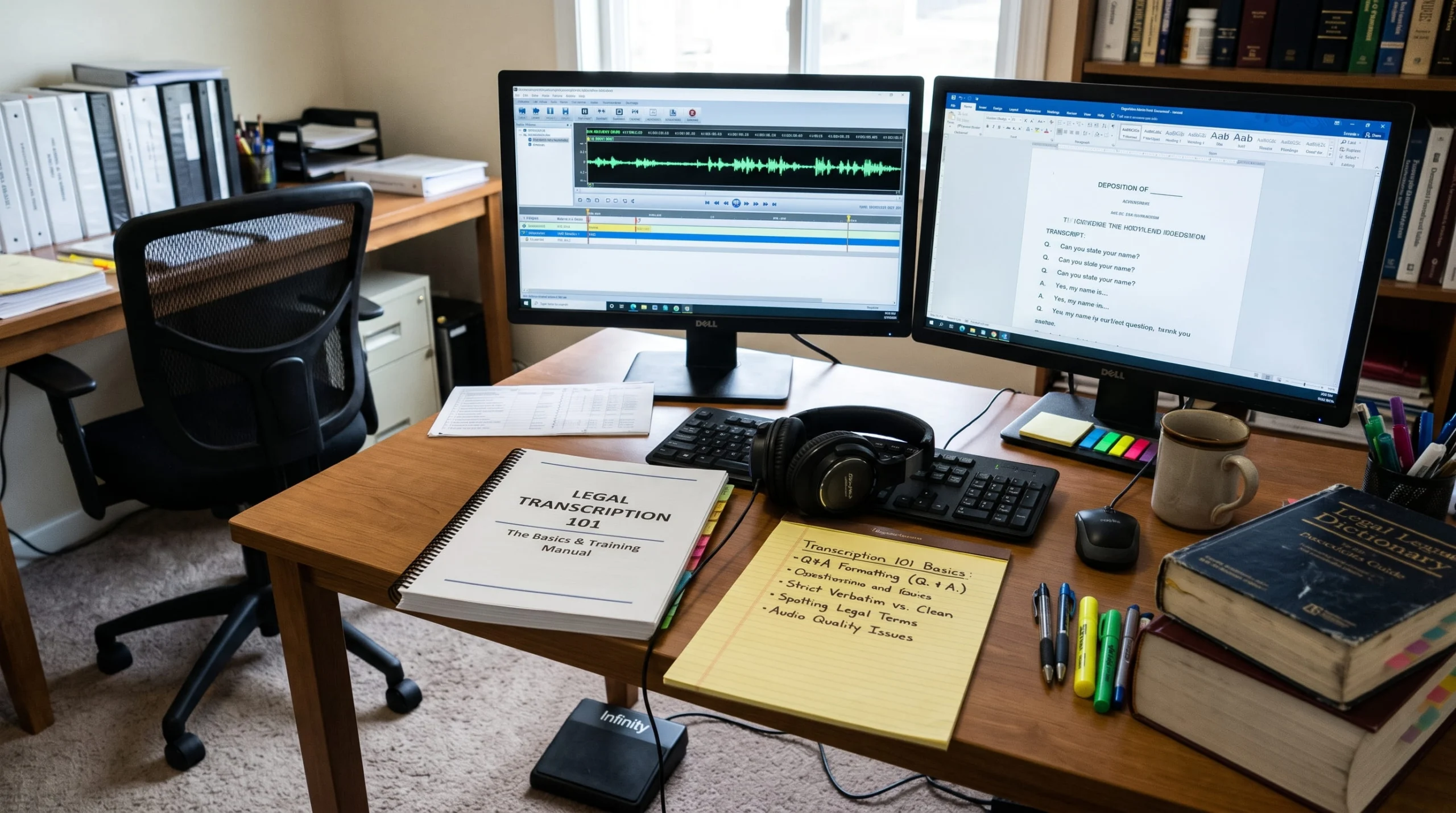
Legal transcription is the process of turning spoken legal proceedings into accurate written text. That includes depositions, court hearings, arbitrations, trials, client and witness interviews, recorded calls, and even body-cam or 911 audio.
A few terms you’ll hear often:
- Rough draft: A fast, unofficial transcript that attorneys use to prep while the final is being completed.
- Final transcript: The polished, reviewed version, formatted with cover pages, speaker labels, and exhibits.
- Certified legal transcription: A final transcript certified by a qualified professional for official use.
- Verbatim transcription: Every word, pause, and false start captured exactly as spoken – often required in legal work.
Why Legal Transcription Services Matter More Heading Into 2027
Legal transcripts are the record that judges, attorneys, and juries rely on. They help lawyers spot contradictions, prepare cross-examinations, support appeals, and keep an official account of every proceeding.
What’s changed is the volume and the speed. Remote and hybrid proceedings are now routine, evidence increasingly includes audio and video, and legal teams want answers faster than ever. Demand keeps growing too: one report projects the legal transcription market will reach $53.8 billion by 2034, more than double its 2024 size.
The Court Reporter Shortage, Explained
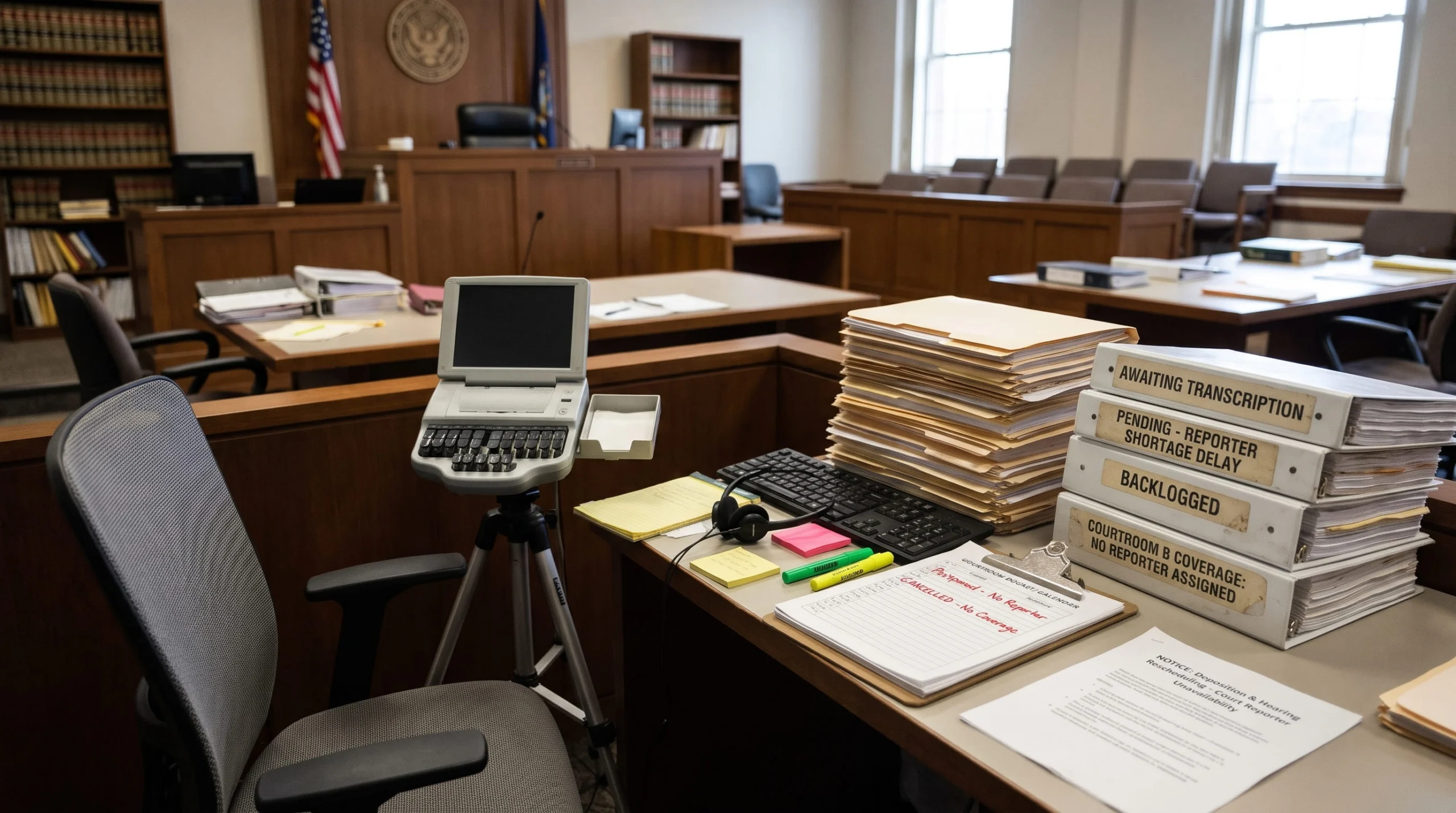
Here’s the challenge: there simply aren’t enough court reporters to go around. The number of stenographers has dropped 21% in a decade to about 23,000, and enrollment in stenography programs is down 74%, with nearly half of those programs closing.
The court reporter shortage shows up in everyday frustrations. In the same AAERT survey, 76% of legal professionals named scheduling as their biggest court reporting challenge, and 55% said costs have gone up.
The answer isn’t replacing court reporters – it’s giving them better tools. Technology that handles the heavy lifting lets reporters, agencies, and courts cover more proceedings without sacrificing quality.
Legal Transcription Accuracy: What "Good" Looks Like
When it comes to legal transcription accuracy, the bar is high. For a sense of scale, earning the National Court Reporters Association’s Registered Professional Reporter credential requires 95% accuracy at 225 wpm on testimony. In AAERT’s survey, 96% of respondents ranked accuracy as the most important measure of court reporting quality.
Great legal transcription gets four things right:
- The words: Legal terms, Latin phrases, case names, and technical testimony spelled correctly.
- The speakers: Who said what, even when attorneys talk over each other.
- The format: Q/A structure, exhibits, and cover pages that match how your team works.
- The context: Background noise, accents, and remote audio handled without losing meaning.
That’s why many teams pair technology with experienced professional transcribers who know legal language inside and out.
AI Legal Transcription: What's Changing in 2027
AI legal transcription has gone from experiment to everyday tool. Among small firms and solo practitioners, generative AI use jumped from 27% in 2023 to 53% in 2025. The professionals using AI now expect to save about 5 hours every week.
Here’s what to watch as we head into 2027:
- Legal-trained AI wins. Generic speech recognition struggles with legal terms. AI built for legal work – and customized with your case names and terminology – is far more reliable.
- Humans stay in the loop. AI drafts fast, but people still review, correct, and certify. The best results come from both working together.
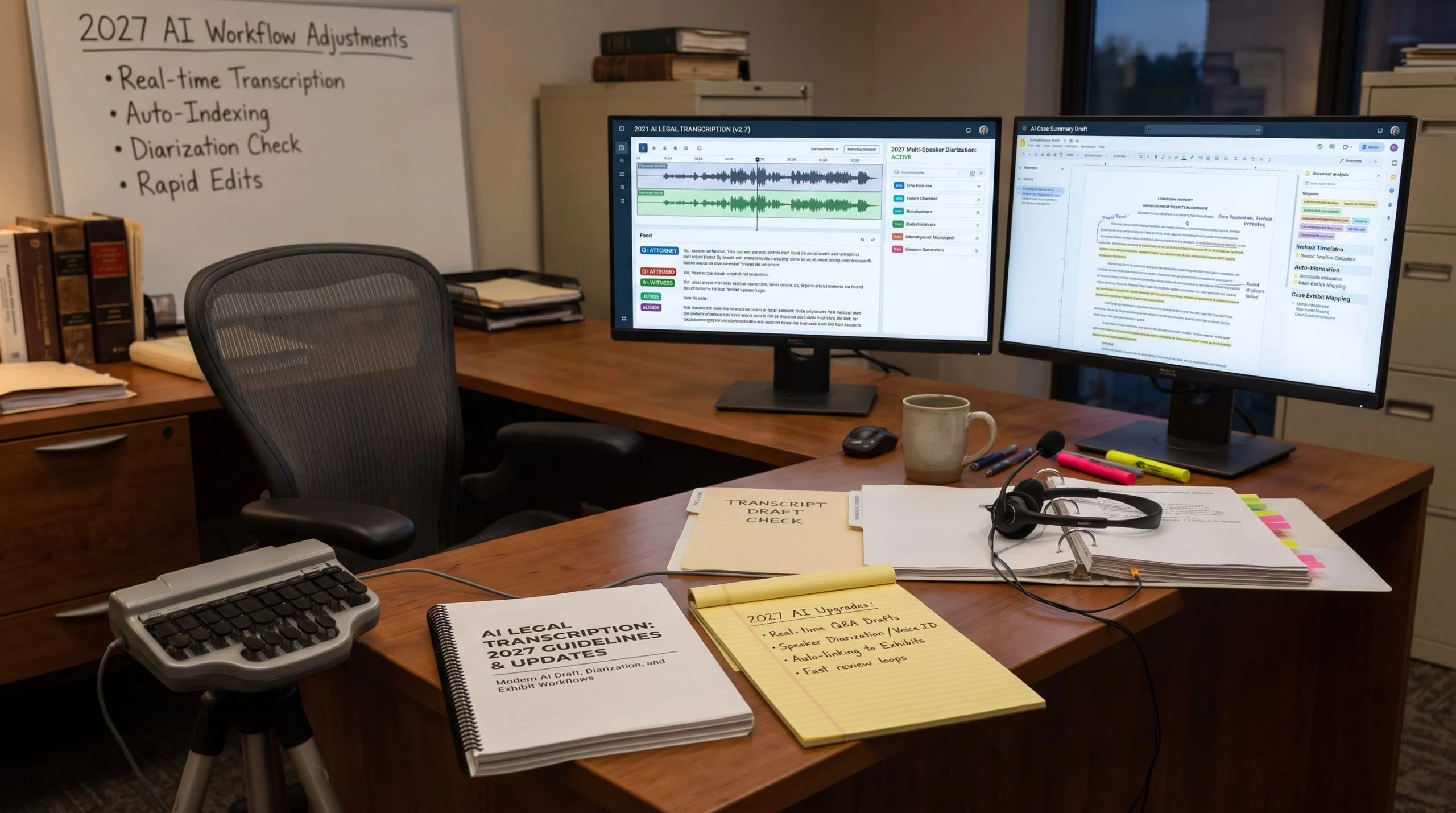
- Real-time becomes the norm. Attorneys increasingly want to read and search testimony while it’s happening, not days later.
- Security is non-negotiable. Firms expect SOC 2-level protections and clear data policies before sharing privileged recordings.
- Transcripts do more. AI summaries, chapters, and keyword search are turning transcripts into tools for case prep.
Real-Time Legal Transcription: Why It's a Gamechanger
Imagine reading a witness’s answer seconds after they give it – and searching earlier testimony for a contradiction before the next question. That’s what real-time legal transcription makes possible.
For court reporters, real-time tools mean faster rough drafts and less cleanup afterward. For attorneys, it means sharper questioning in the moment. And for courts, it means keeping proceedings moving even when reporter availability is tight.
Meet Verbit Legal Capture: Built for Real-Time Legal Transcription
Verbit Legal Capture is a real-time transcription platform made for courts, court reporting agencies, digital reporters, and legal teams. It’s powered by Captivate, Verbit’s legal-trained AI, which you can customize with case names, key terms, and past transcripts, so it learns the language of your matters.
Here’s what makes Legal Capture stand out:
- Smart speaker ID: Voice signature identification learns each speaker after their first few lines and labels them automatically, even in a single audio stream.
- Automatic Q/A labeling: Tag the first question and answer, and Legal Capture carries the format through the session, including colloquies and examinations.
- Live editing and readback: Correct the transcript as you go, and jump to any moment with synced audio and text.
- Live client viewer: Counsel can read, search, and scroll the transcript in real time.
- Legal glossary and exhibit marking: Keep terms consistent and exhibits organized.
- Instant rough drafts and one-click finals: Download a rough draft the moment a session ends, then send it to Verbit’s professional team for certified finals.
- Works where you work: In person, remote, or hybrid, with Zoom and Microsoft Teams integration and a mobile app.
- Built-in insights: Verbit’s generative AI adds summaries, chapters, and keywords for faster review.
- Security you can trust: A SOC 2 Type II-aligned platform with encryption, access controls, and chain-of-custody support.
Court reporting firms are already seeing the difference. “NAEGELI uses Verbit technology every day,” says Juliette Kivo, Vice President at NAEGELI Depositional & Trial. “We have excellent reporters who use the technology to help us get rough drafts and deliverables out quicker and more accurately.” Founder and CEO Marsha Naegeli adds, “Whenever we have something that is time sensitive, that is when we especially turn to Verbit.” Read the full NAEGELI customer story.
For attorneys who want even more during depositions, Legal Visor adds real-time insights during and after testimony.
What Every Legal Transcriptionist Should Know About AI
If you’re a legal transcriptionist – or exploring legal transcription jobs – AI is changing your role, but surely not erasing it. The work is shifting from typing every word to reviewing, correcting, and certifying AI-assisted drafts.
That means the most valuable skills in 2027 are legal knowledge, sharp listening, and attention to detail. A legal transcriptionist who knows how to use custom glossaries, check speaker labels, and catch AI mistakes is more in demand than ever. Many legal transcription jobs now blend transcription with editing and quality control, and Verbit’s transcribers complete in-house legal training and an accuracy assessment before working on legal content.
AI Transcription Plus Human Review: The Best of Both Worlds
AI on its own can mishear a name or garble a term in noisy audio. People on their own can’t keep up with today’s volume. Put them together, and you get speed and accuracy.
Here’s how it works with Verbit’s legal transcription services: AI produces a fast draft, professional transcribers review and correct it, and certified court reporters handle quality control on finals. You get a rough draft within 24 hours and certified legal transcription you can rely on for the final – with ISO 27001 and SOC 2 Type II security protecting every file.
Want a deeper dive? Check out our deposition transcription guide or learn why verbatim accuracy matters. Running a smaller practice? See our guide to transcription for small law firms.
The Future of Legal Transcription
The court reporter shortage isn’t going away, and expectations for speed aren’t slowing down. The good news? The tools to meet both are already here. Legal teams that pair legal-trained AI with skilled professionals in 2027 will move faster, spend less time on cleanup, and walk into every proceeding better prepared.
Interested in a personalized walkthrough of Verbit’s real-time legal transcription? Book a demo of our Legal Capture technology here and see how Verbit can help your court, agency, or firm deliver faster rough drafts, certified finals, and more accurate records – starting with your very next proceeding.
FAQs on Legal Transcription
What is legal transcription?
Legal transcription turns spoken legal proceedings – like depositions, hearings, trials, and interviews – into accurate written records that attorneys, courts, and clients can search, quote, and rely on.
What's the difference between a rough draft and a certified legal transcription?
A rough draft is a fast, unofficial transcript used for prep. Certified legal transcription is the reviewed, formatted final version, certified by a qualified professional for official use.
How accurate does legal transcription need to be?
Legal transcripts need to be accurate without compromise. There’s no single court-wide percentage, but professional benchmarks are high: NCRA’s Registered Professional Reporter exam requires 95% accuracy at up to 225 words per minute. Most legal teams now turning to AI pair it with human review – whether in house or through a transcription provider like Verbit – to protect legal transcription accuracy.
Is AI legal transcription reliable?
AI legal transcription is fast and increasingly accurate, especially when it’s trained on legal language and customized with case-specific terms. For official records, you’ll want to pair it with human review and certification options.
What does a legal transcriptionist do?
A legal transcriptionist converts legal recordings into accurate text, applying legal terminology, speaker labels, and formatting. Today, the role often includes reviewing and correcting AI-generated drafts.
Where can I find legal transcription jobs?
Legal transcription jobs are offered by transcription providers, court reporting agencies, and law firms. Verbit’s open roles are listed on Verbit’s careers page.