


HR managers, corporate communications teams, marketing professionals, and operations leaders.
Key Takeaways
Live translation helps companies reach employees, customers, and partners in their own language in real time, at meetings, events, product launches, and livestreams. With support for 117 languages in any direction with Verbit, it’s easier than ever to connect your global workforce and audiences with one consistent message.
AT A GLANCE
- Live translation tech can now turn spoken content into on-screen captions in 117 languages for meetings, webinars, and events.
- Attendees can follow along on any device via a QR code or link, whether they’re in the room or joining remotely.
- When to consider AI translation to scale to larger audiences and professional human translation options for high-stakes content.
WHO SHOULD READ THIS
Estimated Reading Time
5 min read
If your company operates globally, you know the challenge: how do you make sure a message lands just as well with employees in São Paulo, Seoul, and Stockholm – and with the customers, partners, and investors watching from everywhere else? More and more, the answer is live translation. A few years ago it felt futuristic. Today it’s a must-have for any business with a global workforce and a global audience.
Getting communication right matters. Grammarly and The Harris Poll estimated that poor communication costs U.S. businesses up to $1.2 trillion a year – about $12,506 per employee. And that’s when everyone speaks the same language. Add dozens of languages into the mix, inside and outside your company, and it’s easy for messages to get lost in translation or never get translated at all.
Heading into 2027, the question isn’t whether real-time translation is good enough for business anymore. It’s how fast you can start using it across meetings, town halls, customer events, product launches, and marketing livestreams.
Breaking Down Barriers: The Business Case for Multilingual Communication
Global teams are the norm now. In a Capterra survey of nearly 6,500 employees worldwide, 62% work with colleagues who speak a different native language. And 42% of people who collaborate internationally say language barriers are one of their biggest challenges. Global teams bring a lot to the table – more talent, round-the-clock productivity, and fresh perspectives – but defaulting to English-only communication leaves a lot of people behind.
The same goes for your customers. CSA Research surveyed 8,709 consumers in 29 countries and found that 76% prefer buying products with information in their native language, and 40% won’t buy from websites in other languages at all. People understand more, engage more, and trust you more when you speak their language. That’s true for customers, prospects, partners, and employees alike.
So multilingual communication isn’t just about inclusion – it’s about growth. When your product launch, investor update, customer webinar, or all-hands meeting reaches every audience in their own language, you reach more people, your message stays consistent across markets, and nobody gets left out.
The Evolution of Translation Technology: From Interpreters to AI
Translation technology is growing steadily. Research and Markets values the global machine translation market at USD 1.25 billion in 2026 and expects it to reach USD 2.17 billion by 2031 – an 11.62% annual growth rate. Neural machine translation (NMT) already made up more than 48% of that market in 2025.
Not long ago, live translation meant picking between two imperfect options. Human interpreters were great with nuance but hard to scale for big events or multiple sessions at once. Early AI translation could scale, but it often missed context and tripped over technical terms.
Neural models changed that. Today’s AI translation tools are faster, more natural, and better at understanding context, with less lag. That makes real-time translation practical for everyday business, especially those producing both livestreams and on-demand videos and ads who need video translation services.
Verbit’s Live Translation: 117 Languages, Any Direction
Verbit’s live machine translation now supports 117 languages, all fully bidirectional. That means any language on the list can be translated into any other – Japanese to Portuguese, Swahili to German, Hindi to Spanish – not just to and from English.
That opens up a lot of possibilities. A presenter speaking Korean in Seoul can reach employees, customers, and partners in Lagos, Kyiv, and Lima in real time, with each person following along in their own language. You can select up to 15 languages at once in a single session, so town halls, conferences, product launches, and branded livestreams can reach a global audience without extra complexity.
Verbit’s supported live translation languages
With Verbit, live machine translation is available in these languages now: Acehnese, Afrikaans, Albanian, Arabic, Aragonese, Armenian, Assamese, Aymara, Azerbaijani, Bashkir, Basque, Belarusian, Bengali, Bhojpuri, Bosnian, Breton, Bulgarian, Burmese, Catalan, Cebuano, Chinese (Cantonese), Chinese (Mandarin), Chinese (Mandarin) – Taiwan, Croatian, Czech, Danish, Dari, Dutch, English (UK), English (US), Esperanto, Estonian, Finnish, French, Galician, Georgian, German, Greek, Guarani, Gujarati, Haitian Creole, Hausa, Hebrew, Hindi, Hungarian, Icelandic, Igbo, Indonesian, Irish, Italian, Japanese, Javanese, Kapampangan, Kazakh, Konkani, Korean, Kurdish (Kurmanji), Kurdish (Sorani), Kyrgyz, Latin, Latvian, Lingala, Lithuanian, Lombard, Luxembourgish, Macedonian, Maithili, Malagasy, Malay, Malayalam, Maltese, Maori, Marathi, Mongolian, Nepali, Norwegian, Occitan, Oromo, Pangasinan, Pashto, Persian (Farsi), Polish, Portuguese (Brazilian), Portuguese (European), Punjabi, Quechua, Romanian, Russian, Sanskrit, Serbian, Sesotho, Sicilian, Slovakian, Slovenian, Spanish, Sundanese, Swahili, Swedish, Tagalog, Tajik, Tamil, Tatar, Telugu, Thai, Tsonga, Tswana, Turkish, Turkmen, Ukrainian, Urdu, Uzbek, Vietnamese, Welsh, Wolof, Xhosa, Yiddish, and Zulu.
Why AI Translation Tools Are Essential for Modern Businesses
AI translation tools have gone from novelty to everyday essential – especially when they work inside the platforms you already use. Verbit’s live translation runs within video conferencing, social, and event platforms, including Zoom, Microsoft Teams, YouTube, and Facebook, so translated captions show up right where people are already watching. (Here’s a practical guide to accurate translations on Zoom.)
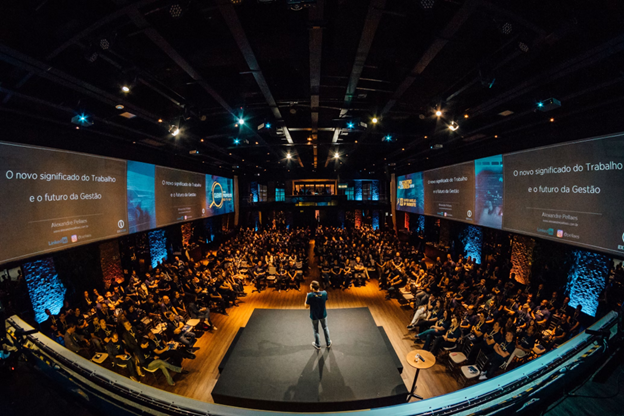
Picture this: your company hosts its annual customer conference and streams the keynote to customers, prospects, partners, and employees on four continents. In the venue, translated captions appear on screens next to the stage. Remote viewers scan a QR code or click a link and pick their language. Afterward, the transcripts become searchable records – and source material for follow-up marketing in every region. No interpreter booths, no headsets, and no need to run a separate event for each market.
That mix of scale, speed, and flexibility is why AI translation has become a go-to tool for global communications and marketing teams.

Creating Accessible Meetings for Global Teams
Real-time translation isn’t just for big stages. Daily stand-ups, training sessions, onboarding, client calls, and partner meetings all run better when people can jump in naturally instead of waiting on an interpreter. Conversations flow, people ask questions, and ideas build on each other – the kind of back-and-forth that solves problems and closes deals.
Verbit shares live, interactive transcripts through QR codes or shareable links, so everyone can follow along in the format and language that works best for them. Aside from translation, some people like to read along in the spoken language while they listen. Others benefit from reviewing the transcript later. And some rely on text for accessibility reasons that have nothing to do with language. When you work with a translation provider like Verbit, you can pair translation with transcription and real-time live captioning, and the same session works for non-native speakers, people who are Deaf or have hearing loss, and anyone joining from a noisy place.
Implementing Workplace Communication Solutions That Scale Across Industries
Live translation has clear benefits for corporate events and global marketing efforts – take product launches, customer conferences, webinars, and branded livestreams to international markets in real time – with one consistent message across every region, without running separate events for each language. Plus, it’s impact on effective corporate and enterprise communications is worth paying attention to, making sure town halls, investor updates, sales kickoffs, and training programs reach every region at once. See how Verbit supports enterprise communication teams. However, it also spans additional use cases across industries:
- Media and broadcasting: Bring livestreams, broadcasts, and premieres to international audiences as they happen, then extend your reach with multi-language captioning and subtitling for on-demand content. Learn more about Verbit for media.
- Higher education: Help international students follow lectures, orientations, and campus events, alongside captioning that supports accessibility in higher education.
- Government: Make public meetings and services accessible to diverse communities with multilingual captions and transcripts. Explore Verbit’s solutions for government.
Verbit’s Hybrid Approach: Where Technology Meets Expertise
The best translation strategy isn’t all AI or all human – it’s choosing the right fit for the content. Verbit offers both: AI-powered translation for speed and scale, and professional human translation when you need cultural nuance, specialized terminology, or extra precision.
Use AI translation for high-volume, real-time needs like internal meetings, webinars, and large livestreams. Turn to professional translation services for high-stakes content like executive communications, customer-facing campaigns, and regulated materials. You choose based on your use case and budget – all with one vendor.
Verbit also works with the tools your teams already use. Its platform integrations let you add multilingual capabilities to your existing workflows instead of building new ones.
It’s also important to consider what security is built in to the translation tools you select. Verbit is SOC 2 Type II certified, so organizations in regulated industries like finance, healthcare, and government can trust that their content is handled securely. Free translation tools often don’t offer the same level of trust. Learn more about what SOC 2 compliance means for your data.

Looking Ahead: The Future of Global Communication
Here’s what will shape live translation through 2026-2027 and beyond:
- Multimodal AI: Translation tools are starting to process speech, text, and visual context together, which should make them even more accurate in fast-moving, real-world settings.
- Customization: More businesses want translation tuned to their industry and organization – especially in fields like healthcare and finance, where terminology has to be exact.
- Accessibility requirements: Regulations like the European Accessibility Act, in effect since June 2025, and ADA Title II deadlines for larger U.S. public entities in April 2027 are making accessible, multilingual communication a baseline expectation rather than a bonus.
The bottom line? Live translation helps you communicate more efficiently, engage employees more fully, and reach customers in markets you might otherwise miss. The technology is ready – the real question is how quickly you put it to work.
For companies with global workforces and audiences, support for 117 languages in any direction removes one of the biggest barriers to truly inclusive communication. Whether you’re hosting a global customer conference, launching a product in new markets, running meetings across continents, or making sure every employee gets training in their preferred language, you can make it happen today.
The future of work – and of reaching global audiences – is multilingual. The companies that thrive will be the ones that make sure every employee and customer can engage with ease. Book a demo with Verbit to learn more about how our translation technology can work for your company’s needs.
FAQs on Live Translation Technology
What is live translation?
Live translation turns spoken content into another language as it happens, instead of after a recording is finished. It usually appears as translated captions or transcripts during meetings, webinars, livestreams, and in-person events.
How is real-time translation different from interpretation?
Interpretation uses human interpreters to speak a translation out loud for listeners. Real-time translation usually means AI-powered translation shown as on-screen text, which can easily cover many languages and sessions at once. Many organizations use both, depending on the event.
How many languages does Verbit’s live translation support?
Verbit’s live machine translation supports 117 languages, all fully bidirectional – so any supported language can be translated into any other. You can select up to 15 languages in a single session.
Are translated captions the same as subtitles?
Not quite. Captions show the spoken audio in the same language as the original, while subtitles usually show it in a different language. Translated live captions work like real-time subtitles, helping multilingual audiences follow along.
Is AI translation accurate enough for business meetings and events?
For most meetings and events, yes – especially with clear audio. Background noise, poor connections, people talking over each other, and heavy accents can affect accuracy, so for high-stakes content, many organizations add professional human translation.