

Digital media producers, global marketing teams, and content creators.
Key Takeaways
Modern video translation services make it easier than ever to put your video in front of viewers in dozens of markets. Discover how to use effective AI translation for speed and scale, and when to consider professional translation solutions.
AT A GLANCE
- Non-English titles drove over a third of Netflix viewing last year
- Why it's important to implement localization strategies like subtitles and dubbing
- Translation services like Verbit’s AI translation provides reach in 117 languages, with up to 15 languages running live at once
WHO SHOULD READ THIS
Estimated Reading Time
6 min read
Great content travels, but only as far as its language allows. Audiences around the world are watching more video than ever – especially on mobile, and they increasingly expect it in their native language.
For media companies, creators, universities, and global brands, that makes video translation a standard part of publishing rather than an extra step at the end. The real question is how to translate quickly, accurately, and at a cost that scales with your library as you head into 2027.
This article covers why video translation matters now, when to use AI translation versus professional human translation, and how Verbit helps teams reach new audiences, including with AI translation that now spans 117 languages.
Why Video Translation Services Matter Heading Into 2027
Three shifts are moving translation to the top of the priority list for 2026-2027.
Video is How the World Consumes Content
Video made up around 75% of all mobile data traffic at the end of 2025, according to Ericsson. Spending on language access is climbing, too: Nimdzi sizes the language services industry at $75.7 billion in 2025, on track to reach $92.3 billion by 2029. When most attention lives in video, a single-language library leaves most of the world’s viewers on the table.
Audiences Expect Content in Their Own Language
Global hits now come from everywhere. Non-English titles accounted for over a third of all Netflix viewing in the second half of 2025. YouTube expanded multi-language audio to all creators in 2025 after early testers saw more than 25% of their watch time come from viewers in other languages. Translation is how content gets discovered, shared, and recommended in new markets.
Accessibility Rules Are Raising the Bar
Accessibility and translation are different jobs, but they often share a workflow. In the EU, the European Accessibility Act took effect on June 28, 2025, requiring audiovisual services to transmit subtitles and other access services accurately and in sync. In the US, the Department of Justice set new ADA Title II web accessibility deadlines of April 26, 2027 for larger public entities and April 26, 2028 for smaller ones. Teams creating captions for compliance are well placed to add translated subtitles on top, using the same transcript. Read more about localization through translation and captioning.
AI Video Translation vs. Professional Video Translation: Which Do You Need?
Most teams need both, and the trick is matching the method to the moment. AI translation and professional human translation solve different problems, and the best video translation services let you switch between them without changing vendors.
AI video translation uses speech recognition and machine translation to turn spoken audio into translated text in seconds. It shines when speed and volume matter: livestreams, webinars, breaking news, social clips, and large back catalogs that would never get translated otherwise.
Professional video translation puts experienced linguists on the job. They catch idioms, humor, brand voice, cultural references, and specialized terminology that machines can still miss. It’s the right call for flagship releases, marketing campaigns, documentaries, and anything where a mistranslation could cost you credibility.
| AI translation | Professional translation | |
|---|---|---|
| Best for | Live events, high-volume libraries, and fast-turnaround content | Premium releases, marketing, and nuanced or high-stakes content |
| Speed | Real time to minutes | Hours to days, depending on length and languages |
| Cost | Lower per minute | Higher, reflecting human expertise |
| Nuance | Strong on clear speech; may miss tone and idiom | Handles tone, culture, and terminology |
Verbit’s translation solutions are built around that choice. You can run content through AI translation for speed, add professional review for critical material, or go fully human where accuracy can’t bend, all from one platform and one set of files.
Video Translation Formats: Subtitles, Captions, Dubbing, and Transcripts
The format you choose shapes how your audience experiences the content. Here’s how the main options compare.
Translated Subtitles
Subtitles put translated dialogue on screen while keeping the original audio. Viewers hear the real voices and performances, which is why subtitles remain the default for film, docuseries, and interviews. Verbit’s Translate Post delivers translated subtitles for recorded video in standard formats like SRT and VTT, ready to upload to YouTube, Vimeo, or your OTT player.
Captions vs. Subtitles
The terms get used interchangeably, but they aren’t the same. Captions are in the same language as the audio and include sound cues for viewers who are deaf or hard of hearing. Subtitles are a translation for viewers who don’t speak the original language. Many teams need both: captions for accessibility and subtitles for reach.
Video Dubbing
Dubbing replaces the original audio with a translated voice track, so viewers can watch without reading. It’s especially effective for kids’ content, eLearning, explainers, and mobile-first viewing. Verbit’s dubbing services combine AI voice technology with optional human review and professional voice actors, so you can match the level of polish to the project. Learn more in our guide to AI-powered dubbing and localization.
Transcription: The Foundation of Every Translation
Accurate translation starts with an accurate transcript. Verbit’s transcription is powered by Captivate™, Verbit’s proprietary automatic speech recognition, with human review available on top. That transcript becomes the single source for every language version, which keeps names, terms, and timing consistent across markets. It also makes your video searchable and easier to repurpose into clips, articles, and social posts.
AI Translation in 117 Languages: What's New at Verbit
Verbit’s AI translation now covers 117 languages, more than triple the previous lineup, and every one of them works in both directions. Any supported language can be translated into any other, so a press conference in Japanese can reach viewers in Portuguese, Arabic, and Swahili at the same moment.
Translate Directly Between Any Two Languages
Many translation tools route everything through English first. That extra step can blur meaning and introduce errors. Verbit translates straight from the speaker’s language to the viewer’s, which helps keep tone and detail intact. It also means non-English productions get the same reach: a Spanish-language broadcast or a Korean creator’s livestream can go global as easily as an English one.
Reach Audiences in Languages Most Platforms Miss
The expanded lineup covers the languages you’d expect, plus many that other platforms still skip:
- Global reach: Spanish, Mandarin, Cantonese, Arabic, Hindi, French, German, Japanese, Korean, and Portuguese (Brazilian and European)
- Regional and minority languages: Basque, Catalan, Galician, Welsh, Irish, Breton, and Kurdish (Kurmanji and Sorani)
- Fast-growing digital audiences: Swahili, Hausa, Igbo, Tagalog, Vietnamese, Indonesian, Bengali, and Urdu
- Rarely supported languages: Acehnese, Aymara, Guarani, Quechua, Wolof, Xhosa, and Zulu
For media companies, that opens markets that were previously too small or too costly to serve. For universities and nonprofits, it means reaching communities in the languages they speak at home.
Stream in Up to 15 Languages in a Single Live Session
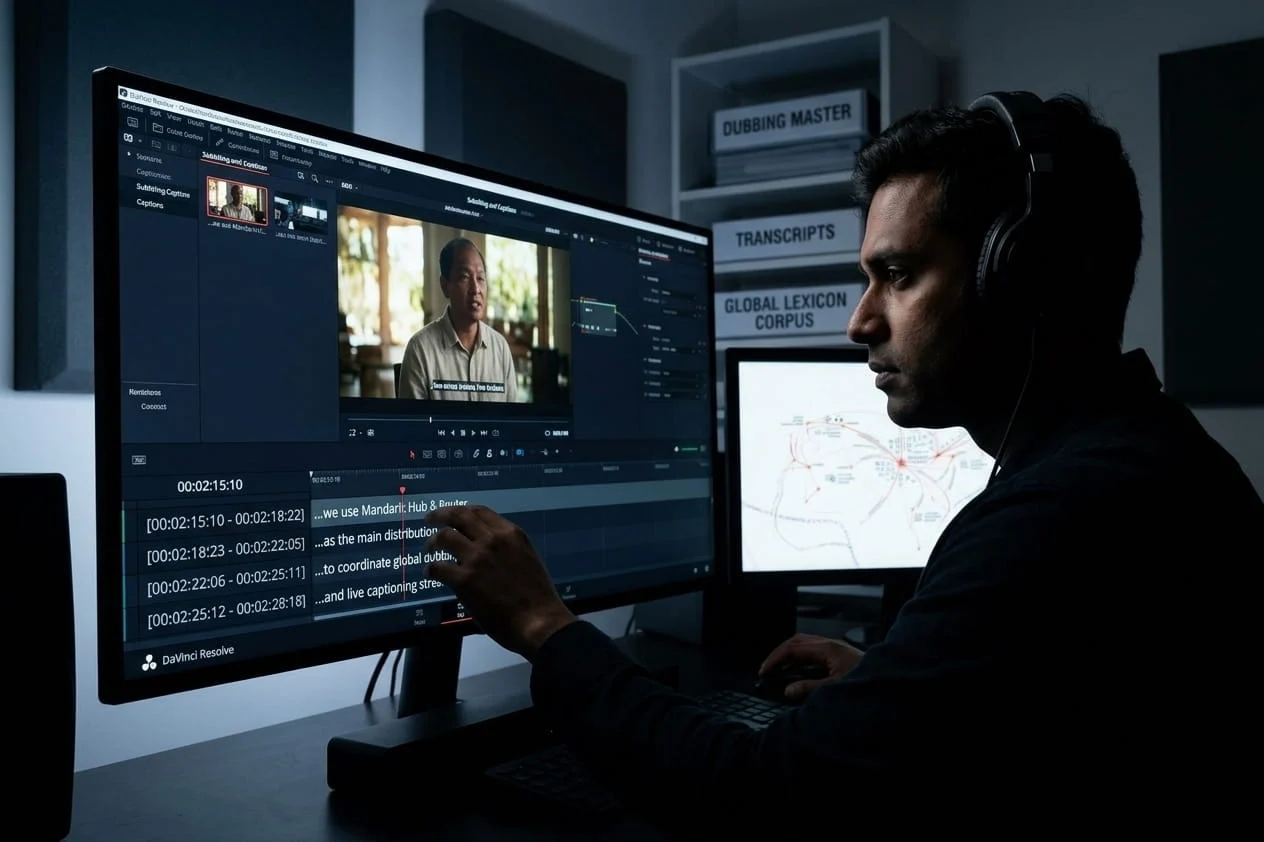
With Verbit’s Translate Live, you can run up to 15 translation languages at once in a single live session. Picture a product launch, sports event, or global town hall streaming once, with viewers in 15 language markets following along in real time. It works across the platforms teams already use, including YouTube, Zoom, and Microsoft Teams. See the full list of integrations.
How to Choose the Right Video Translation Service
The right partner depends on what you publish and how fast it needs to move. Use these questions to narrow it down.
- Do you need live, recorded, or both? Live events need real-time AI translation, while recorded content can add professional review. A provider that does both saves you from juggling vendors.
- How many languages, and which ones? Check that your target markets are covered, including regional languages, not just the top ten.
- Can you choose AI, human, or a mix? Flexibility lets you spend on human expertise where it counts and use AI everywhere else.
- Does it fit your workflow? Look for standard file formats (SRT, VTT, and SCC) and integrations with your video platform, LMS, or meeting tools.
- Is your content secure? Unreleased media and internal communications need a provider with strong security credentials. Verbit is SOC 2 Type II compliant.
| Content type | Recommended translation approach |
|---|---|
| Livestreams, webinars, live sports, and events | AI translation, up to 15 languages per live session |
| Films, series, and documentaries | Professional subtitles or dubbing |
| Marketing and brand campaigns | Professional translation or dubbing for key markets |
| Training, eLearning, and lecture libraries | AI-translated subtitles, with human review for core courses |
| Social clips and short-form video | AI subtitles for speed and volume |
How Different Industries Use Video Translation
Media and Entertainment
Broadcasters, streamers, and production companies use translation to take shows, news, and sports into new markets without rebuilding them from scratch. Verbit’s media solutions cover live captioning and translation, multi-language subtitles, dubbing, and audio description, backed by media-trained AI and expert human review. Verbit’s extensive localization suite helps media creators, FAST companies, and content distributors alike take care of multiple content translation needs all in one place.
Education and eLearning
Universities and eLearning platforms translate lectures and courses to serve and attract more international and multilingual students. Verbit works with eLearning leaders like Coursera, Skillshare, and Udacity to help them better engage their audiences with everything from captions to translation. Now, higher-ed teams focused not only on growth through translation, but inclusion and overall ADA Title II needs can receive translation alongside other tools like transcription, captioning, and audio description through packages like Verbit’s Campus Complete.
Corporate and Enterprise
Smart companies now use translation both internally – for town halls, onboarding, training, and engaging global team members – as well as externally for marketing videos, product launches, and more so every employee and customer can be spoken to in their native language. See how Verbit supports enterprise teams and why multilingual transcription is often the first step.
Take Your Video Global & Expand Your Content’s Reach with Accurate Translation
Until you start translating, you’re sure to missing big audience pools that are already out there and would be interested in your content. Now that AI translation can help you quickly translate in more languages than ever at a friendly price, it’s worth giving it a shot. Of course, having accurate translation is key and you don’t want to risk translating into tons of languages only for your content to be distributed with errors that can hurt your reputation or brand. Verbit is one partner who can give you both AI speed and professional precision in one place, so you can pick and choose how you translate live events, content libraries, and anything else as you see fit.
Explore Verbit’s translation solutions or book a demo to see how our technology can be embedded into your existing workflow to easily translate your content.
FAQs on Video Translation Services
What are video translation services?
Video translation services convert the spoken content of a video into another language, delivered as translated subtitles, a dubbed audio track, or a translated transcript. Modern providers use AI, professional linguists, or a combination of both.
Is AI video translation accurate enough?
For clear speech and fast-turnaround content, with the right partner, AI translation is often accurate enough to publish as is. The goal is using an AI which can be prepped and primed on your content ahead of time so it performs strongly in the moment. For marketing, premium releases, or specialized terminology, adding professional review is the safer choice.
How long does it take to translate a video?
AI translation for live events happens in real time. AI subtitles for recorded video can be ready in minutes, while professional translation typically takes longer depending on length, language, and review level.
What's the difference between subtitles and dubbing?
Subtitles show translated text on screen and keep the original audio. Dubbing replaces the audio with a translated voice track, so viewers hear the content out loud in their desired language and don’t need to read.
How many languages does Verbit translate?
Verbit’s AI translation supports 117 languages, translatable from any one to any other, with up to 15 languages running in a single live session.