
Legal, education, media, and enterprise teams evaluating voice AI, plus anyone curious about where speech recognition is heading.
Key Takeaways
Voice is now the front door to AI – agents like Meta’s Muse don’t just answer questions, they act on what you say. This article explores how speech recognition got here, why accuracy is still the make-or-break challenge and how domain-trained ASR with human review delivers the accuracy courts, universities, and broadcasters most need.
AT A GLANCE
- AI agents now act on voice commands, not just answer them.
- Modern speech recognition technology performs by learning from massive amounts of real-world audio.
- ASR tools that offer opportunities to ingest custom vocabularies important to your subject matter and offer human review for high-stakes work make outputs like captions and transcripts accurate for use from the get-go.
WHO SHOULD READ THIS
Estimated Reading Time
6 min read
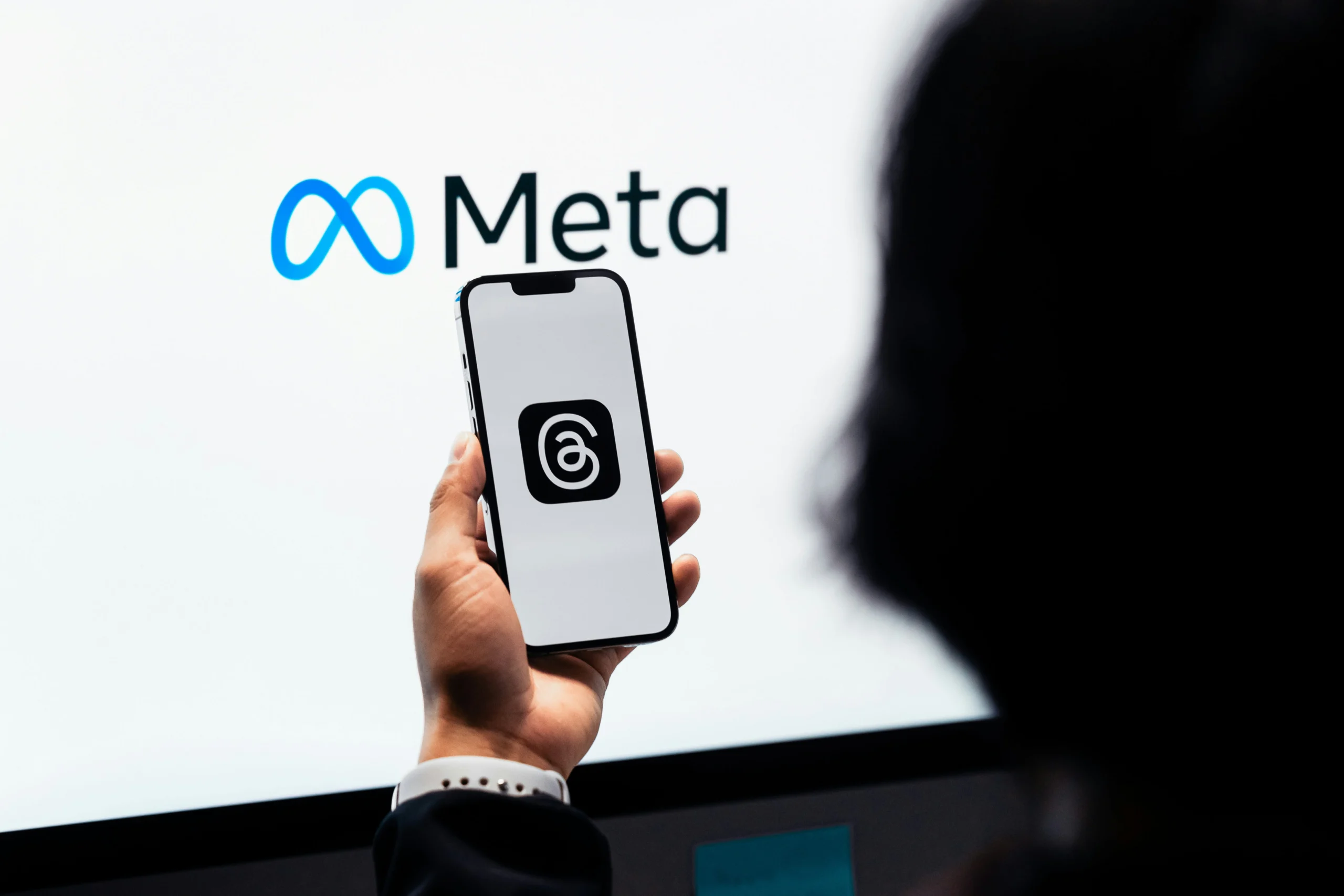
Say one word, and your glasses get to work. That’s the future Meta put on stage this September, when it announced that Muse, its new personal AI agent, is coming to its smart glasses – woken by voice and ready to book appointments, log meals, and shop for you while you keep walking. Meta’s chief AI officer, Alexandr Wang, told Axios the long-term goal is “personal superintelligence that helps people accomplish their goals.”
It’s a staggering leap for a technology that started out barely able to count to nine. Siri, once the height of the future, now looks almost quaint. Automatic speech recognition has quietly become one of the most important technologies on the planet – powering everything from AI agents to real-time court transcripts to live captions for meetings and in lecture halls. Here’s how we got here, and where voice AI is heading next.
The Speech Recognition Timeline: From Counting Digits to AI Agents
The journey from basic voice to text capabilities to today’s sophisticated speech recognition programs spans more than seven decades of innovation. Each milestone brought us closer to natural human-machine interaction.
| Year | Milestone | Why it mattered |
|---|---|---|
| 1952 | Bell Labs builds "Audrey" | The first machine to recognize spoken numbers - digits 0-9, from one voice |
| 1962 | IBM unveils "Shoebox" | Wowed the Seattle World's Fair by understanding 16 words plus digits |
| 1976 | Carnegie Mellon's "Harpy" | Jumped to about 1,000 words, backed by DARPA research |
| 1997 | Dragon NaturallySpeaking | Put continuous dictation on everyday PCs |
| 2008 | Google Voice Search | Moved recognition to the cloud and trained it on massive data |
| 2011 | Apple Siri | Turned the voice assistant into a household name |
| 2014 | Amazon Alexa | Brought always-listening voice tech into the living room |
| 2022 | OpenAI Whisper | Trained on 680,000 hours of multilingual audio, raising the bar for AI speech-to-text |
| 2024 | Real-time voice AI | Made natural, back-and-forth conversation with AI possible |
| 2026 | Meta Muse goes voice-first | Speech becomes the command line for AI agents that take action |
Act One: Teaching Machines to Hear
The earliest automatic speech recognition systems matched sound patterns to tiny vocabularies. They worked for specific speakers, in quiet rooms, one word at a time. Over the next few decades, research pushed vocabularies into the thousands, and statistical models learned to predict which words were likely to come next.
By the time Dragon arrived in 1997, people were ready to talk to their computers – as long as they spoke slowly and clearly. Court reporters lived a parallel version of this story, moving from typewriters to AI-powered tools. These early speech recognition programs proved that voice to text conversion was possible, even if the technology wasn’t yet ready for everyday use.
Act Two: Voice Goes Mainstream
Then came the cloud and the smartphone. Google, Apple and Amazon could suddenly train on oceans of real-world speech, and deep learning replaced hand-built rules. Siri gave voice tech a personality. Alexa made talking to a speaker feel normal. Common examples of speech recognition emerged across daily life – hands-free driving, automated call centers and voice control for people with vision and mobility disabilities all followed.
But these assistants mostly answered. Set a timer. Check the weather. Play a song. Speech recognition was still limited to simple command-and-response interactions rather than true understanding.
Act Three: Voice AI That Acts
Today’s systems run on huge neural models trained on hundreds of thousands of hours of audio across dozens of languages. Speech recognition is no longer a feature – it’s the front door to AI that reasons, plans and gets things done.
Muse is the boldest example yet. It runs on its own virtual machine in Meta’s cloud, sends emails, books travel and works through bigger goals on your behalf. At Meta Connect, the company showed Muse holding long spoken conversations while it works in the background, with sub-second responses from a real-time avatar.
To be clear, Muse isn’t a speech recognition product. It’s an AI agent that uses speech as its interface. But that’s exactly the point: in 2026-2027, the question is no longer “did the machine hear me?” It’s “did it understand me well enough to act?” This shift marks the maturing of speech recognition artificial intelligence from passive listening to active assistance.
How an Automatic Speech Recognition System Works Today
The simplest way to understand the meaning of automatic speech recognition is to look at the technical layers working together. An automatic speech recognition system turns audio into text through several components:
- Acoustic modeling maps sound waves to the building blocks of speech.
- Language modeling predicts the most likely sequence of words.
- Deep learning and neural networks learn both from massive training data instead of hand-written rules.
- Natural language processing (NLP) turns the transcript into meaning, so an AI can respond or act.
Context is still the hardest part. “Euthanasia” and “youth in Asia” sound nearly identical – only context tells them apart. That’s why Verbit built Captivate™, its proprietary ASR engine, around domain training, custom vocabularies, and industry-specific language models. A legal deposition, a biology lecture, and a live sports broadcast each speak their own language, and generic models often miss the words that matter most.
This is where professional speech recognition programs pull away from consumer tools like built-in dictation apps. General-purpose cloud APIs such as Google Cloud Speech-to-Text give developers scale, but mission-critical settings like courts and classrooms also need domain training, custom vocabularies and human verification. Here’s a closer look at why enterprise speech recognition beats Google’s consumer tools when errors carry real consequences.

Where General-Purpose Voice Recognition Technology Still Stumbles
Flashier doesn’t mean flawless. A 2018 Washington Post study found smart speakers were significantly less likely to understand non-native and some regional American accents. Accents, crosstalk, specialist terms and bad audio still trip up consumer-grade models.
When an AI agent mishears you, it books the wrong table. When a transcript is wrong in a deposition, a courtroom or a university lecture, the consequences are far more serious. That’s where professional-grade speech recognition earns its keep:
- Legal: One misheard objection or case citation can change the official record. Real-time ASR like Verbit’s now drafts the transcript as testimony happens, and court reporters verify its output – here’s how AI became a court reporter’s secret weapon and what real-time legal transcription looks like today. Speech recognition in legal settings demands a level of accuracy consumer apps can’t guarantee.
- Education: Lectures are packed with jargon, fast talkers and every accent under the sun. Domain-trained ASR turns them into live captions and searchable transcripts for when every word must land in real time. These specialized speech recognition programs like Verbit’s handle technical terminology that general-purpose systems miss.
- Media and live events: Broadcasts leave zero room for lag. ASR has to keep pace live. Mistakes in the original output of real-time captioning or transcripts can result in translation mistakes when AI translation is then being used so global audiences can follow along.
In each case, AI does the heavy lifting and human expertise comes in to close the accuracy gap where it counts. This whitepaper explores the impact and limits of ASR.
What's Next for Speech Recognition in 2026-2027
The integration of speech recognition artificial intelligence continues to accelerate across platforms and use cases:
- Voice becomes the default interface for AI agents on phones, glasses and computers.
- Real-time, multilingual everything – live captions and translation as standard, not add-ons.
- Speech analytics at scale – hours of audio and video turned into searchable, structured data for legal, education and enterprise teams.
- A premium on trust – from watermarked AI voices to verifiable, accurate records of what was actually said.
The machines have learned to listen. The next race is about who listens best – and who can be trusted when every word counts.
How Verbit’s Speech Recognition is Built for When Every Word Counts
Consumer voice AI is racing to book your dinner and answer your texts. Verbit is focused on something different: making sure the words themselves are right – in the courtroom, the classroom, the newsroom, and the boardroom.
Verbit offers its users a voice AI platform where they can leverage its proprietary Captivate™ ASR and human expertise, so organizations get the speed of AI and the accuracy their work demands. Verbit Captivate stands apart among other ASR solutions in that it learns your world. You can upload glossaries, names, and terminology to the engine, and it adapts to the language of your field or industry – no matter how niche. Plus, it identifies speakers across live and recorded content so you always know who said what.
When considering ASR options now available to you today, you should no longer settle for ones that don’t offer customization opportunities that can be put to work specifically for your needs. Verbit’s ASR engine is built to perform for specific high-stakes settings across different industries:
- Legal: It delivers scalable, real-time transcription for court reporting agencies via tools like Legal Capture, while attorneys are offered real-time, AI-powered insights during proceedings via Legal Visor.
- Education: It can be employed via subscription-based solutions like Campus Complete to help colleges and universities meet ADA Title II accessibility requirements with captions, transcripts, and audio description at scale.
- Media and events: It can support media networks, FAST channels, creators, and podcasters alike, with live captioning to help event producers and A/V teams, plus localization technologies like Verbit Dub to help content creators, media, and distributors reach new audiences.
- Global reach: It can power AI translation in dozens of languages, with subtitles and dubbing built for streaming.
Most of all, it’s important to understand that while customization and use-case performance is key, in high-stakes settings, trust is part of accuracy. The ASR or voice AI you use needs to runs on enterprise-grade, secure infrastructure, especially when your sensitive data and information is being shared. Verbit for example is SOC 2 Type II compliant, ISO 27001, and GDPR certified.
The next era of speech recognition won’t just be about machines that listen. It’ll be about knowing you can rely on what they heard. Book a demo with Verbit’s team to see how our domain-trained voice AI can work for your specific needs.
FAQs on Automatic Speech Recognition (ASR)
What is speech recognition?
Speech recognition, also called automatic speech recognition (ASR) or speech-to-text, is technology that converts spoken words into written text. It powers voice assistants, live captions, dictation tools and transcription platforms, and it’s now the entry point for AI agents that respond to spoken commands.
Who invented speech recognition, and what was the first system?
The first working system was “Audrey,” built by Bell Laboratories in 1952. It could recognize the spoken digits 0-9, but only from a single speaker. IBM followed in 1962 with “Shoebox,” which understood 16 English words, and DARPA-funded research in the 1970s pushed vocabularies past 1,000 words.
What's the difference between speech recognition and voice recognition?
Speech recognition identifies what is being said and turns it into text. Voice recognition identifies who is speaking, based on the unique traits of their voice – it’s used for things like voice biometrics and speaker identification. Many modern systems combine both, for example labeling each speaker in a meeting transcript. Understanding this distinction is key to grasping the full meaning of automatic speech recognition.
How does speech recognition work?
ASR systems break audio into small segments, use an acoustic model to match sounds to units of speech and use a language model to predict the most likely words and sentences. Today’s systems rely on deep neural networks trained on hundreds of thousands of hours of audio, and many add natural language processing to understand meaning and intent.
How accurate is speech recognition in 2026?
Accuracy is usually measured by word error rate (WER) – the percentage of words a system gets wrong. Leading models perform very well on clear audio from a single speaker. Accuracy drops with background noise, crosstalk, strong accents and specialist vocabulary, which is why legal, education and media teams use domain-trained ASR with human review.
Why does speech recognition struggle with accents?
Models learn from their training data. When that data over-represents certain accents or dialects, the system performs worse on everyone else – a gap a 2018 Washington Post study highlighted in smart speakers. More diverse training data, custom vocabularies and speaker adaptation help close that gap.
Is AI transcription as accurate as human transcription?
For clear, everyday audio, AI transcription can come close. For high-stakes content like depositions, court proceedings or accessibility compliance, a hybrid approach is still the standard: AI produces the fast first draft, and trained professionals verify names, terminology and speaker attribution. Learn more about how AI transcription supports court reporters.
Is Meta Muse speech recognition technology?
Not exactly. Meta’s Muse is a personal AI agent that takes actions on your behalf, like sending emails or booking travel. It uses speech recognition as one way to talk to it, especially on Meta’s smart glasses, where it’s activated by voice. It shows how ASR is becoming the interface for AI that acts, not just AI that answers.
What's the difference between a voice assistant and an AI voice agent?
Voice assistants like Siri and Alexa mostly handle single commands – set a timer, play a song, check the weather. AI voice agents can hold a conversation, remember context, plan multi-step tasks and complete them across apps and websites. Both depend on accurate speech recognition to understand what you asked in the first place.
What are some examples of speech recognition in everyday use?
Common examples of speech recognition include virtual assistants (Siri, Alexa, Google Assistant), voice-to-text messaging, automated customer service systems, live captioning for videos and meetings, voice-controlled smart home devices and dictation software. Professional applications include real-time court transcription, medical dictation and accessibility tools for people with disabilities.
What's next for speech recognition?
Expect voice to become the default way to use AI agents on phones, glasses and computers, with real-time captions and translation built in. The bigger challenge is trust: as more decisions run on spoken input, accurate, verifiable records of what was actually said matter more than ever.