
Table of contents
- What is AI-powered dubbing?
- What is AI content localization and why does it matter?
- AI dubbing vs. traditional dubbing: A comparison
- 7 benefits of AI-powered dubbing
- Human dubbing expertise + AI dubbing
- AI dubbing use cases
- How to get started with Verbit Dub
- FAQs on AI dubbing and content localization
Every day, content goes unseen by the audiences it was made for — because it is in the wrong language.
That is the problem AI-powered dubbing solves. What once took weeks of studio coordination and a significant budget per language can now happen in hours, across dozens of languages at once. AI content localization has made going global a realistic option for media companies, creators, and businesses of every size, not just the ones with the largest production budgets.
The AI dubbing tools market reached approximately $897 million in 2024 and is projected to grow to $3.57 billion by 2034 (Research and Markets). That growth reflects a broader shift: audiences worldwide expect content in their own language, and organizations that deliver it are seeing real gains in reach, engagement, and retention.
This article covers what AI-powered dubbing actually delivers, how it compares to traditional methods, and how solutions like Verbit Dub make it possible to scale content localization without the usual trade-offs.
What is AI-powered dubbing?
AI-powered dubbing replaces the original spoken audio in a video with a new-language voice track, without requiring studio recording sessions or voice actor scheduling. The technology combines natural language processing to translate the script, neural speech synthesis to generate natural-sounding voices, voice cloning to preserve the original speaker’s characteristics, and timing algorithms to align audio with lip movements and scene pacing.
The result is a multilingual audio track that sounds authentic and can be produced at scale. For example, Verbit Dub, built in partnership with Deepdub and its expressive Text-to-Speech (eTTS™) technology, trains on brand tone, domain-specific terminology, and accent to produce output that is ready for broadcast, OTT platforms, corporate communications, or eLearning delivery.
What is AI content localization and why does it matter?
AI content localization is the process of adapting video, audio, or written material so it feels genuinely native to a new language, region, or culture. That goes beyond translating words: it accounts for tone, idiom, pacing, humor, and cultural context, so audiences experience the content as it was intended rather than as a translated version of something made for someone else.
Traditional localization treats each language as a separate production project, with its own timeline and budget. AI content localization treats multiple languages as parallel outputs, making it possible to produce dozens of localized versions of the same content at the same time, with consistent quality across all of them.
That efficiency is what makes AI content localization strategically important. Organizations that localize effectively see stronger audience engagement, longer content lifespans, and access to markets that were previously out of reach. For video content in particular, AI video localization removes what was once a hard constraint on how many markets you could realistically serve. For a deeper look at building a localization strategy that delivers, read our Content Localization 2026 eBook.
AI dubbing vs. traditional dubbing: A side-by-side comparison
| Traditional dubbing | AI-powered dubbing | |
|---|---|---|
| Turnaround time | Weeks to months | Hours to days (4-10x faster) |
| Cost per language | Up to $175 per minute of audio with some vendors | 60-90% lower; each additional language costs far less |
| Scalability | Each language requires a separate studio run | Multiple languages processed at the same time |
| Voice consistency | Varies across sessions, actors, and seasons | Consistent voice profiles maintained across all content |
| Human involvement | Built into every stage of production | Flexible: from fully automated to hybrid with professional review |
| Content it’s best for | High-stakes cinematic content requiring peak emotional performance | Corporate content, eLearning, marketing, streaming, YouTube, and more |
Traditional dubbing follows a sequential process: translation, then casting, then recording, then editing, then review. Every additional language multiplies that timeline and cost. AI dubbing restructures the workflow, running processes in parallel and replacing the most time-intensive manual steps with automation.
7 benefits of AI-powered dubbing
The AI-powered dubbing benefits highlighted below apply whether you’re an individual content creator, a media company, or an enterprise team scaling content across dozens of markets.
1. Deliver faster: AI dubbing cuts production timelines dramatically
AI dubbing cuts localization time by 80% or more compared to traditional studio workflows, delivering multilingual content in hours or days rather than weeks. Translation, voice synthesis, and audio synchronization all happen at the same time, eliminating the bottlenecks that slow traditional production down: no scheduling coordination, no studio availability conflicts, no multi-session recording runs.
For time-sensitive content, whether that is a product launch, a live event recap, or a new episode release, this speed advantage is not just convenient. It determines whether content reaches its audience while it is still relevant.
2. Spend less: AI dubbing reduces localization costs by up to 90%
Traditional professional dubbing can cost up to $175 per minute of audio with some vendors. A single 90-minute feature can run to tens of thousands of dollars, per language. AI dubbing brings those costs down by 60-90%, and the economics improve with each additional language, since AI systems process them at the same time rather than as separate sequential projects.
That cost structure is what puts global content within reach for organizations that could not previously justify the budget. Verbit Dub, for one, offers four flexible tiers, from fully automated AI dubbing to full-cast cinematic production, so organizations can match their spend to the value of each project.
3. Stay consistent: Reliable voice quality across every piece of content
Maintaining a high standard of voice quality across a large volume of content is one of the harder challenges in localization. Session quality can vary, production timelines create gaps, and keeping any aspect of audio output uniform at scale takes real effort.
AI dubbing addresses this directly. Once a voice profile is established, it applies consistently across all content in all markets, regardless of volume or timing. Whether the goal is to match an existing sound or build something new, AI gives teams a stable, repeatable output they can count on, episode after episode, update after update.
4. Scale globally: Reach more markets with AI Content Localization
This is where AI Content Localization changes the math entirely. Traditional production scales in a straight line: more languages means more time, more budget, more coordination. AI Content Localization works differently. Producing content in 10 languages costs only marginally more than producing it in two, because the work runs in parallel.
For media companies, that makes same-day global releases achievable. For corporate and eLearning teams, it means training materials can reach every region at once rather than rolling out over months. And for content libraries with a backlog of videos, courses, or episodes that need localizing, it makes a previously overwhelming project manageable.
5. Form deeper connections: Personalized voices that resonate with local audiences
AI dubbing is a customizable system, not a one-size-fits-all translation layer. Voices can be tuned for regional accents, adapted for different audience demographics, or matched to established brand characters. That level of personalization is rarely practical with traditional dubbing given the cost and time involved, but with AI it is built into the workflow.
The result is localized content that does not just speak the language of a new market. It speaks to that market, with the inflection, tone, and delivery that resonates with a local audience.
6. Integrate easily: AI dubbing works with the tools you already use
A common concern with any new technology is disruption to existing processes. Verbit’s dubbing solutions connect with video platforms, LMS systems, OTT pipelines, and content management workflows. Supported formats include SRT, VTT, SCC, SAMI, RTMP, and SMPTE, with compatibility across broadcast, OTT, and cloud-based distribution environments.
Lip-sync alignment, tonal calibration, and background noise reduction are handled automatically, so adopting AI dubbing does not require rebuilding how your team works. The technology fits around your existing setup.
7. Reach further: More languages, more audiences, more engagement
Language is the most direct barrier to global content reach, and removing it has measurable effects. Audiences engage more deeply with content in their native language. Platforms offering dubbed content consistently see stronger retention and watch time, as reflected in the rapid expansion of multilingual content on YouTube and major streaming services.
For media companies and organizations, more languages means a larger addressable market and a longer content lifespan. For corporate and educational teams, it means more inclusive programming that actually reaches the people it was made for. The reach benefit of AI dubbing is not a side effect – it is the point.
When human dubbing expertise meets AI dubbing: Getting the most from both
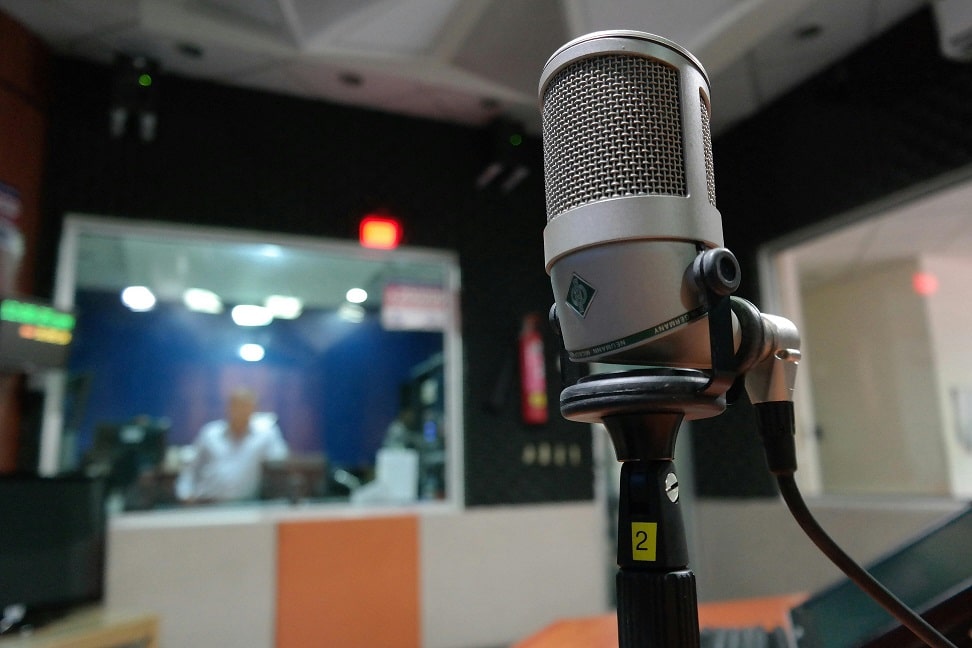
AI-powered dubbing delivers real efficiency gains, but the strongest results come from combining AI speed with human expertise. Cultural nuance, emotional performance, idiomatic language, and character consistency are areas where a trained professional still adds something the technology alone cannot fully replicate.
That is the thinking behind Verbit Dub‘s tiered structure. AI handles translation, voice synthesis, and synchronization at scale. Human professionals step in to refine the output where it matters most, from tonal adjustments and phrasing to cultural accuracy and lip-sync precision. Organizations choose the level of human involvement that fits their content and their audience.
The four tiers:
- Verbit Dub: Fully automated AI dubbing for rapid, budget-friendly delivery. Ideal for YouTube content, FAST channel programming, and internal communications.
- Verbit Dub Plus: AI with human refinement for improved tone, phrasing, and cultural accuracy. Well-suited for creator content, social media, and educational videos.
- Verbit Dub Pro: Expert-led hybrid production with professional mixing, voice selection, and high-fidelity lip-sync. Designed for FAST, SVOD, and OTT content.
- Verbit Dub Premier: Full-cast cinematic dubbing combining AI efficiency with human voice acting, for broadcast-ready, long-form storytelling where emotional accuracy is paramount.
Every tier supports both voiceover and audio lip-sync dubbing with quality control throughout. Verbit’s platform meets SOC 2 Type II standards, protecting content and ensuring compliance at every stage. See the full range of Verbit dubbing solutions.
AI dubbing use cases: Who should be using it?
AI-powered dubbing and AI content localization are relevant across industries, content types, and organization sizes. Here is where the impact tends to be greatest.
AI dubbing use cases by industry:
- Media and entertainment: Streaming platforms, broadcast networks, film studios, and YouTube creators reaching multilingual audiences at scale. Verbit is a YouTube Recommended Vendor for dubbing.
- Corporate: Global organizations producing training materials, HR communications, marketing campaigns, or executive messaging for international teams. See Verbit’s corporate solutions.
- Education and eLearning: Universities, edtech platforms, and L&D teams making courses accessible across multiple languages and regions. Explore Verbit’s education solutions.
- Government and NGOs: Public-facing agencies producing multilingual outreach, training content, or communications for diverse communities. See Verbit’s government solutions.
- Broadcasters and distributors: Production companies and rights holders localizing feature films, TV series, and streaming content for global distribution. Explore Verbit’s media and entertainment solutions.
How to get started with Verbit Dub
Verbit Dub is built for flexibility to deliver multiple options to individual content creators and global media enterprises alike. With a simple four-tier structure, organizations can start where it makes sense for their budget and content type, then scale as their localization needs grow.
AI voice technology continues to improve rapidly, with advances in emotional expressiveness, lip-sync precision, and dialect accuracy narrowing the gap between AI and traditional dubbing. The organizations building a content localization advantage today are the ones positioned to benefit most as those capabilities keep developing.
Ready to expand your content’s global reach? Talk to a dubbing leader at Verbit today or explore the full Verbit Dub suite to find the right tier for your project.
FAQs on AI dubbing and content localization
What is AI dubbing?
AI dubbing uses artificial intelligence to replace the spoken audio in a video with a new-language voice track, automatically. The technology handles translation, voice synthesis, voice cloning, and lip-sync alignment, producing a dubbed audio track without the need for studio recording sessions or voice actor scheduling. Modern AI dubbing systems can process multiple languages at the same time, making large-scale content localization faster and more affordable than traditional methods.
What is content localization?
Content localization is the process of adapting video, audio, or written material so it feels native to a specific language, region, or culture. For video content, this typically means dubbing, subtitling, or both, alongside adjustments for cultural references, tone, and style. Effective content localization ensures that audiences in any market experience the content as it was intended, not just as a translated version of something made for a different audience.
What is AI content localization?
AI content localization uses artificial intelligence to adapt content for different languages and cultures at scale. It is also commonly referred to as AI localization, and the two terms are largely interchangeable. What is AI localization at its core? It is the use of AI to handle translation, voice synthesis, dubbing, and cultural adaptation automatically, across multiple languages at the same time. AI content localization goes a step further by encompassing the full content experience, including subtitle generation and cultural customization, not just the language conversion itself. This makes it possible for organizations to localize content significantly faster and at a lower cost than traditional methods allow, without sacrificing quality. AI localization does not replace editorial judgment, but it automates the most time-intensive parts of the process so human expertise can focus where it matters most.
Will AI replace localization professionals?
Not entirely, and not by design. AI excels at high-volume, speed-sensitive localization with strong consistency across outputs. Human professionals bring irreplaceable judgment around cultural nuance, emotional performance, editorial decisions, and quality oversight. The hybrid model is the most effective approach: AI handles the heavy lifting, specialists refine the output where it counts. For many projects, this combination produces results that neither approach could deliver alone. Most organizations today approach content localization with AI as the foundation and human review as the quality layer on top.
How much does AI dubbing cost compared to traditional dubbing?
Traditional professional dubbing can cost anywhere from $50 to $175 per minute of audio with some vendors. AI dubbing reduces those costs by 60-90%, and the economics improve with each additional language since AI systems process multiple languages at the same time rather than sequentially. Organizations that could not previously justify multilingual dubbing budgets are finding it is now accessible.
What languages are supported for AI dubbing?
Verbit supports AI dubbing in 28+ languages, including Spanish, French, Arabic, Hebrew, Mandarin, and more. Verbit also partners with language experts globally for projects requiring additional languages. See the full range of supported dubbing languages on the Verbit dubbing solutions page.
How long does AI dubbing take?
AI dubbing workflows typically deliver content 4-10 times faster than traditional studio production. Shorter-form content can be turned around in hours; larger projects that previously required weeks to complete in multiple languages can often be done in days. Turnaround depends on content length, language count, and the level of human review selected.
What types of content work best with AI dubbing?
AI dubbing performs strongly across corporate training and communications, eLearning modules, online courses, news and informational content, marketing videos, and YouTube programming. For content requiring high emotional performance, such as narrative drama or feature films, Verbit Dub Pro or Premier tiers combine AI efficiency with professional voice talent and direction for the best results.