

Table of contents
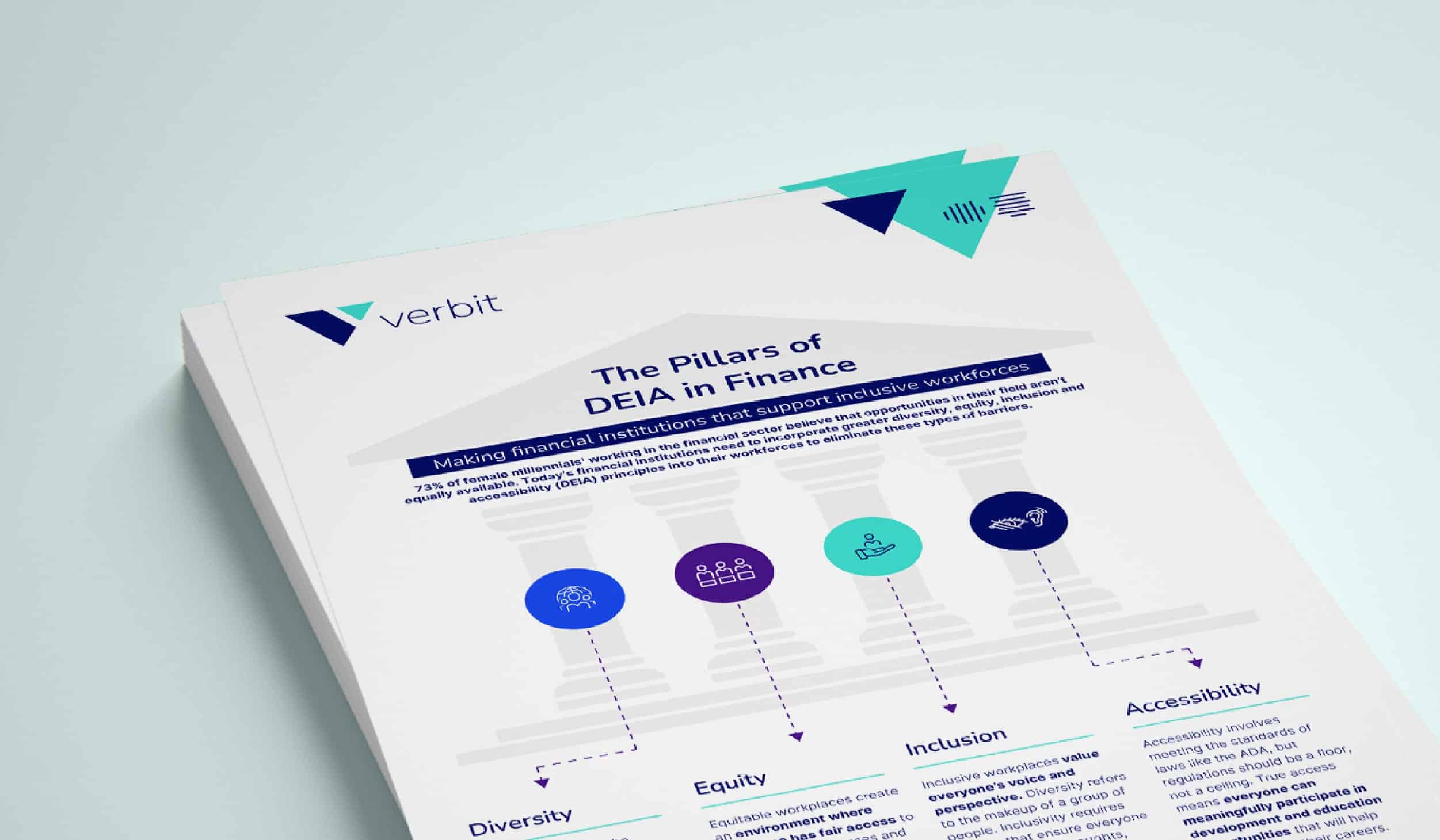
73% of millennials who are women and are working in the financial sector believe that opportunities in their field aren’t equally available, according to PWC. Today’s financial institutions need to incorporate greater diversity, equity, inclusion and accessibility (DEIA) principles into their workforces to eliminate these types of barriers.
Diversity
Diversity refers to the existence of people from different backgrounds and with different experiences. Diverse workforces include representation of various ethnicities, races, religions, sex, gender, social economic backgrounds, ages and access.
Practicing diversity
Create a fair hiring process that doesn’t inadvertently exclude diverse candidates, but also look at your retention demographics. If employees from different backgrounds aren’t sticking with the company, evaluate promotion practices and consider mentorship programs to help these employees feel valued.
Equity
Equitable workplaces create an environment where everyone has fair access to information, resources and opportunities. Equity may require additional support for people who come from marginalized groups.
Practicing equity
The gender pay gap is real, and it’s not the only one. Racial pay gaps and lower wages for people with disabilities also create inequity. Evaluate salaries and ensure your company isn’t treating people unfairly.
Inclusion
Inclusive workplaces value everyone’s voice and perspective. Diversity refers to the makeup of a group of people. Inclusivity requires actions that ensure everyone can share their thoughts, experiences and insights.
Practicing inclusion
Create employee resource groups (ERG) that give a collective voice to underrepresented employees like people of color, people with disabilities and women. ERGs should have executive backing, and facilitate communication with the company’s leaders.
Accessibility
Accessibility involves meeting the standards of laws like the ADA, but regulations should be a floor, not a ceiling. True access means everyone can meaningfully participate in development and education opportunities that will help them advance their careers.
Practicing accessibility
Make sure everyone has access to career development programs. If the institution offers training, make sure it includes captioning and audio description so that people who are Deaf or blind have the ability to benefit. Don’t exclude anyone from opportunities to achieve their career goals.