

Market research professionals, corporate analysts, and consumer insights directors.
Key Takeaways
High quality transcription turns qualitative research sessions into searchable data that accelerates consumer insights. Market research teams leverage precise transcripts to preserve nuance, reduce analysis time, and uncover the behavior drivers behind survey numbers.
AT A GLANCE
- Demonstrates that the global marketing transcription market is projected to reach $7.33 billion by 2032.
- Highlights that 64 percent of market research professionals use professional transcription services.
- Shows that AI-assisted workflows reduce transcription time by up to 46 percent compared to manual methods.
WHO SHOULD READ THIS
Estimated Reading Time
9 min read
High-quality market research transcription plays a key role in transforming everything from interviews, focus groups, user-tests and other qualitative sessions into reliable, searchable data.
As the volume of recorded research grows, transcription has become a critical tool in helping teams efficiently extract insights, validate findings, share results, and uncover the “why” behind consumer behaviors. Market research companies are also leveraging the power of transcription to make for smoother, quicker workflows.
Market boom: Why transcription matters more than ever in market research
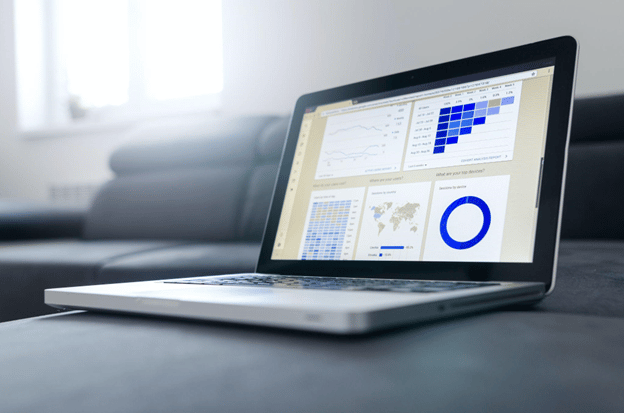
The global market for transcription services is growing fast. Transcription strongly benefits companies that rely on qualitative insights, like market researchers. According to a recent GlobeNewswire study, the global marketing transcription market was valued at $3.66 billion in 2024 and is projected to reach $7.33 billion by 2032, growing at a compound annual growth rate (CAGR) of 9.1%.
Meanwhile, the greater AI-powered transcription market, inclusive of business, legal, education, media, and research use cases, is also expanding rapidly. One 2025 Market.us forecast estimates the global AI transcription market will reach $19.2 billion by 2034 (from $4.5 billion in 2024) at a CAGR of 15.6%.
This surge is driven by:
- Rising volumes of audio and video content (interviews, focus-groups, webinars, user-tests).
- Growing demand for accurate, searchable text for deeper analysis, compliance, accessibility, and collaboration.
- Advances in AI and speech recognition technologies, often combined with human editing, which improve speed, accuracy, and scalability.
Given this momentum, now is a critical moment for market research organizations to bake transcription into their workflows. Transcription shouldn’t be looked at as an afterthought, but as a strategic way to unlock insights more efficiently and reliably.
Why accurate transcription is key to high-impact market research
What is market research transcription?
Market research transcription is the process of converting recorded interviews, focus groups, and consumer conversations into written text to support accurate analysis and insight discovery.
In general, transcription refers to converting recorded audio or video content. You can transcribe anything from interviews, focus groups, user-tests, or other qualitative sessions into written form with transcription. There are two common transcription styles:
- Verbatim transcription involves capturing every spoken word (and non-speech sounds, pauses, repeated words, etc.).
- Non-verbatim transcription involves condenses recorded content into main ideas and summaries.
For market research, verbatim transcripts are typically preferred. They preserve nuance, tone, and participant voice, which are often critical when analyzing qualitative feedback.
Whether a study involves one-on-one interviews, remote or in-person focus groups, or usability testing, transcripts preserve the richness and authenticity of what respondents said. They offer a reliable, searchable record, which can be invaluable for downstream analysis, reporting, or stakeholder sharing.
How transcription adds value to market research
There are a number of different use cases for qualitative research transcription that market research professionals should be aware of.

Focus group & interview transcription – making conversations actionable
Focus groups and interviews often generate large volumes of spoken content with multiple participants, overlapping dialogues, emotional nuance, hesitations, reactions. With raw audio or video, it’s difficult to isolate who said what, track recurring themes, or compare responses across participants. Transcription transforms those sessions into structured, searchable documents, often with speaker attribution and timestamps. That allows researchers to isolate individual contributions, compare across sessions, and more easily extract quotes or themes.
Also, written transcripts of interviews allow for easier cross-referencing with other data, including surveys, analytics, demographic info, which enable a more holistic understanding of consumer behavior.
AI transcription accelerates insight extraction, saves time and promotes efficiency
While transcription is valuable for market research needs, manual transcription can be slow, costly, and labor intensive. Traditional human transcription can take ages to produce and receive when outsourcing. By contrast, many modern workflows use AI-powered speech recognition like Verbit’s which can be customized to each market research team’s exact needs. This approach saves around 90–95% of time and cost compared to fully manual transcription, while still producing high-quality transcripts suitable for analysis.
A 2025 academic study found that an AI-assisted transcription workflow reduced transcription time by up to ~46% compared to conventional manual methods, and all the while remained compliant with data-protection regulations.
Faster turnaround means analyses can start sooner and insights can be discovered earlier, which is especially critical when clients or product-teams expect rapid cycles.
Use transcripts to improve accuracy, validity and compliance
Accurate transcripts, which are ideally verbatim, with speaker labels and timestamps, help ensure qualitative data remains unfiltered and traceable. Transcribing reduces risk of misinterpretation, misquoting, or loss of nuance.
For sensitive topics, regulated industries, or multinational research, transcripts support ethical, legal, and compliance requirements. They help maintain audit trails, support anonymization or redaction, and provide a transparent record for ethical review boards or regulatory review.
Transcripts enable advanced analysis and data-driven insights
Once conversation data is transcribed into text, you can combine it with quantitative data like sales, usage analytics, demographics for a richer understanding of “why” behind the numbers.
Also, text transcripts lend themselves to modern analysis methods, including keyword searches, sentiment analysis, thematic coding and more. Transcribing from research study sessions helps to unlock patterns or insights that might remain buried in audio alone.
Real-world success: How transcription helps with market research & qualitative research
To better understand how market research transcription can help you, here are some real-world applications showing the value.
- A 2024 qualitative-methods paper on healthcare research found that intelligent automatic speech recognition technology (ASR) significantly reduces the burden of audio-data transcription. Professional ASR transcription makes it easier to scale qualitative research projects while preserving data quality, especially in environments with many interviews or recurring data collection needs.
- According to Forbes, 64% of market-research professionals use transcription services, which highlights how common transcription has become as a core component of qualitative data workflows.
- Forbes also found that transcripts have been shown to improve the reliability of qualitative insights. When researchers cross-reference transcripts with survey data or observational data, they can more confidently identify consumer trends, sentiments, and unmet needs, which makes research outcomes more actionable.
These examples illustrate that high-quality transcription isn’t just a convenience. When it’s done right, it results in greater research accuracy, efficiency, and insight depth.
Why Verbit is the go-to strategic partner for market research transcription
While transcription can be done manually in-house or with generic AI tools, many professionals face trade-offs between speed, cost, accuracy, and compliance. Verbit offers a specialization in transcription as a market research tool. For market research business leaders dealing with high volumes of audio and video to transcribe or derive research from, juggling tight deadlines, or managing sensitive data, Verbit’s market research services offer a combination of speed, accuracy, and compliance makes us a strategic transcription partner.
- Verbit combines advanced AI-powered transcription with human editing options to deliver high-accuracy transcripts, reaching up to 99% accuracy
- Verbit preserves speaker attribution, timestamps, and support for complex vocabulary (research jargon, technical terms, industry-specific lexicon). This is critical in market-research contexts where nuance and detail matter.
- Verbit’s transcription platform supports various formats: focus-group sessions, one-on-one interviews, usability tests, multi-language transcription, making it versatile for research operations.
- With searchability, glossary support, and scalable workflows, Verbit’s market research tool helps teams collaborate, analyze, mark, and repurpose transcripts quickly. This helps turn qualitative data into actionable insight with minimal friction.
- With access to Verbit’s Gen.V tool, users can receive instant summaries of long sessions, with keywords, chaptering and more to help them work efficiently, create market research reports, and make the most out of the transcripts they’re creating to research the market.
Reach out today to learn more about how Verbit can help with your next market research survey and optimize your workflows so you can keep your focus on market research methodologies and other aspects that are more important in your work.