


Partners, associates, litigation attorneys, and in-house counsel at firms ranging from solo practices to Am Law 100, plus legal procurement teams evaluating AI tools.
Key Takeaways
Legal AI adoption nearly doubled year over year, and this roundup covers 15 tools worth knowing, from research and contract review to deposition intelligence and practice management. The advice underneath the list: pick one time-consuming workflow to fix first, choose a tool built for that specific problem, and expand from there instead of adopting everything at once.
AT A GLANCE
- Legal AI adoption jumped from 14% to 26% year over year
- 15 tools compared across research, contracts, litigation, and practice management
- Start with your single biggest time drain, then expand tool adoption gradually
WHO SHOULD READ THIS
Estimated Reading Time
26 minutes
Legal AI adoption among firms nearly doubled year-over-year – jumping from 14% to 26%. Contract analysis usage climbed 17%, and case law summarization surged 34%. These aren’t incremental shifts; they signal a fundamental change in how attorneys work.
The best AI tools for lawyers today handle the repetitive, time-consuming work – think document review, legal research, contract drafting – so that professionals can stay focused on strategy and the client relationships that actually win cases.
This article covers 15 leading legal AI software platforms that deliver real value to litigators, what each one does well, and which practice types stand to benefit most.
1. Verbit Legal Visor: AI-Powered Legal Transcription & Deposition Intelligence Platform
What It Does
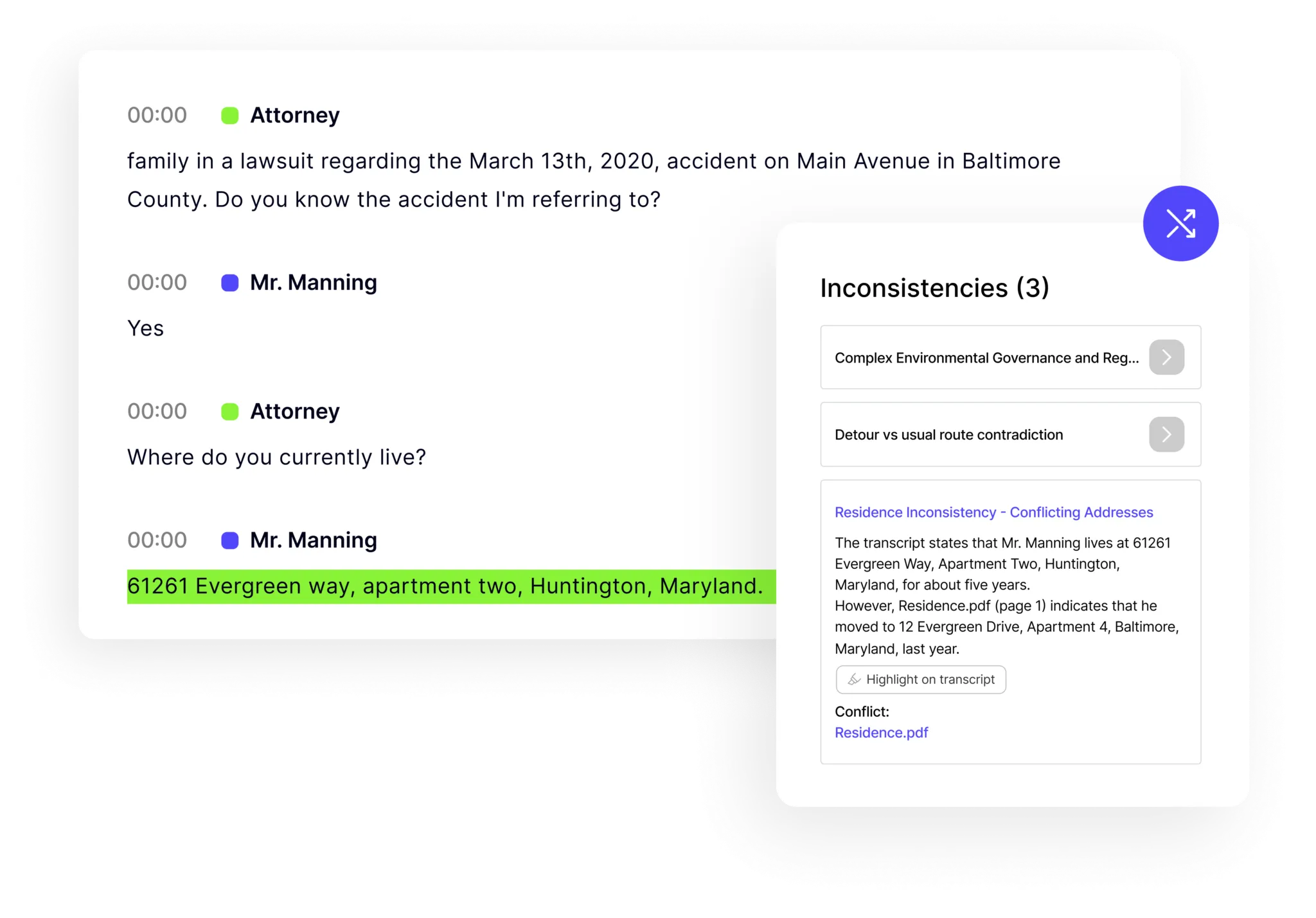
Most AI tools for lawyers operate after the fact – summarizing documents that have already been reviewed, drafting memos after the research is done. Verbit’s Legal Visor works differently. Built on litigation-grade transcription infrastructure trusted by 3,000+ organizations processing millions of minutes annually, Legal Visor targets depositions, arbitrations, witness interviews and more to surface real-time AI insights, admissions, inconsistencies, and follow-up opportunities as testimony unfolds rather than hours later.
Verbit’s Legal Visor platform covers three distinct phases. Attorneys can upload deposition outlines and prior transcripts ahead of proceedings. During testimony, real-time intelligence surfaces as witnesses speak. And once proceedings conclude, structured analysis is available immediately — no waiting, no manual review of raw transcripts.
Key AI Features
Legal Visor’s technology delivers highly accurate real-time transcription, trained on AI models specific to legal terminology. The system automatically flags discrepancies between witness statements and case documents during depositions and other legal proceedings, identifies speakers within 15-30 seconds of speech, and supports transcription and translation in multiple languages.
Cross-deposition search allows attorneys to query testimony and case documents using plain language — a meaningful capability when building follow-up questions mid-examination. The platform also generates automatic chaptering and summaries for efficient post-proceeding review. Security standards include SOC 2 Type II certification, ISO 27001 compliance, and HIPAA certification.
Who It’s Best For
Legal Visor serves attorneys across employment defense, insurance defense, commercial litigation, and plaintiff litigation. Second-chair attorneys gain particular value from real-time insight panels that suggest follow-up questions while lead counsel stays focused on examination — a practical division of labor that most tools don’t account for. Partners at law firms like Smith, Gambrell & Russell are using Legal Visor to quickly search transcripts, locate relevant testimony, and generate clear summaries for clients, reducing manual review and improving collaboration.
Pricing
Verbit offers tailored pricing for its litigation-focused products to allow for customization to each legal team’s specific proceeding volume and requirements. You can estimate your annual time savings from using Legal Visor, with this ROI calculator. You can schedule a demo to see Legal Visor’s capabilities in action and get a custom quote for the fastest way to get exact numbers. Teams with lighter, more simple legal transcription needs can also start on Verbit’s basic transcription plan at $24/month (not court-admissible).
2. CoCounsel (Thomson Reuters): AI Legal Research with Westlaw Integration
What It Does
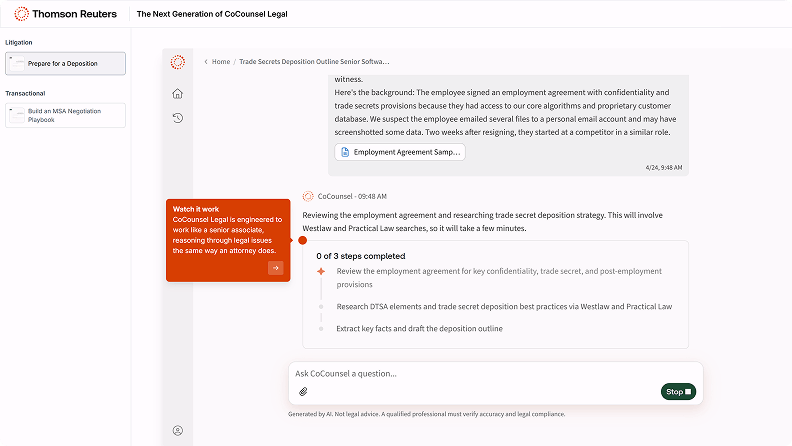
Thomson Reuters built CoCounsel as a legal AI assistant grounded in Westlaw primary law and Practical Law guidance – a meaningful distinction in a market where many platforms rely on general-purpose models untethered from verified legal authority. The platform originated from Thomson Reuters’ $650 million acquisition of Casetext in 2023, and the investment shows in its scale: Thomson Reuters reports that well over a million professionals now use CoCounsel, including 80% of the Am Law 100. Federal courts across the U.S., including the Supreme Court and circuit courts, plus courts in 94% of U.S. states, have adopted the platform.
CoCounsel handles legal research, document analysis, contract review, deposition preparation, and drafting. Thomson Reuters frames this through what it calls “Fiduciary-Grade AI” — systems designed specifically for professionals who carry duties of care and operate under regulatory oversight. That framing matters. It signals a commitment to accuracy over speed, which is exactly what litigation-heavy practices need.
Key Features
Deep Research stands out as CoCounsel’s flagship capability. This agentic AI develops multi-step research plans, deploys Westlaw tools, and continuously refines searches as it works. A health care attorney, for example, can request analysis of how different states interpret “medical necessity” in Medicaid regulations — and Deep Research will extract statutory definitions across jurisdictions, identify relevant regulations, and deliver a jurisdictional comparison table. That kind of structured output, sourced from verified authority, takes hours to produce manually.
The Library provides expert-created prompts and workflows for common legal tasks. Document analysis tools include Tabular analysis for reviewing thousands of documents simultaneously, Review for complex multipart questions about document batches, and Knowledge Search for querying multiple content repositories. Mischaracterization Identification detects when opposing counsel miscites or overstates case authority — a capability with direct tactical value in litigation. AI Jurisdictional Surveys complete 50-state research significantly faster than traditional methods.
CoCounsel covers a wide swath of legal research and drafting; for teams that also handle frequent depositions, Verbit’s Legal Visor adds the real-time witness-analysis and live-transcription layer that a research platform isn’t built to provide.
Who It’s Best For
CoCounsel fits litigation-heavy firms already subscribing to Westlaw. The platform works best for organizations running frequent legal research that demands verified citations — where accuracy carries more weight than speed.
Pricing
Thomson Reuters doesn’t publish CoCounsel pricing directly — plans are quoted individually — but third-party estimates put CoCounsel Essentials, the document-only tier without case law access, at around $225 per user monthly, Westlaw Precision with CoCounsel at roughly $428 monthly for a single attorney, and full-stack access at around $850 per user monthly. Plans are available in 1-year, 2-year, and 3-year terms, with longer commitments offering savings.
3. Ironclad: AI-Native Contract Lifecycle Management
What It Does
Most contract platforms add AI as a feature. Ironclad built AI into the foundation. Founded in 2014 and now processing over 1 billion contracts, the San Francisco-based company has reached $200 million in annual recurring revenue — a figure that reflects just how much enterprise legal teams have embraced the platform. Ironclad has raised $334 million across nine funding rounds, including a $150 million Series E in January 2022.
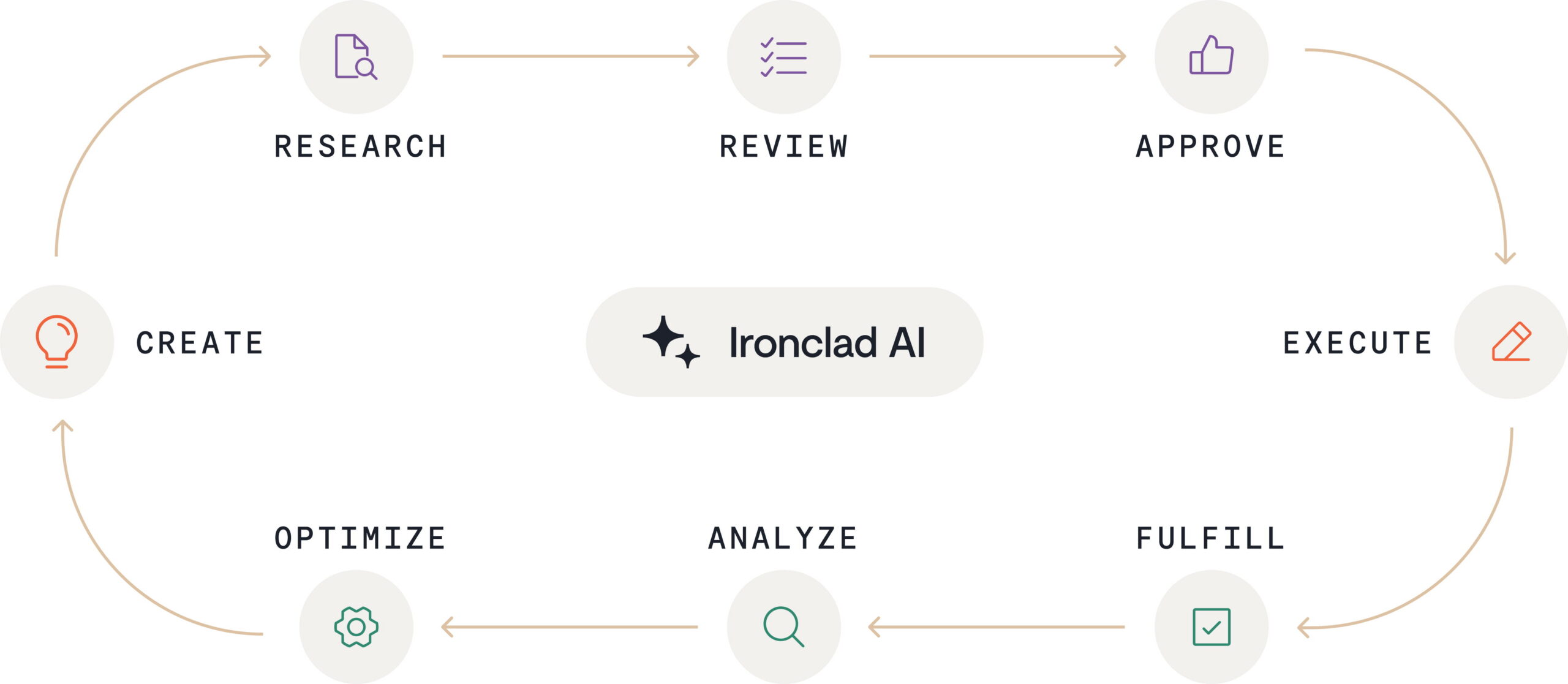
The platform covers every stage of the contracting process — creation, review, negotiation, signature, storage, analysis, and obligation tracking — through no-code workflow automation. It integrates directly with Salesforce, so sales teams can generate and execute contracts without leaving their CRM. The results speak for themselves: Ironclad customers have reported up to a 96% reduction in contract turnaround time and a 70% reduction in contracting costs in individual case studies.
Core AI Capabilities
Ironclad’s Jurist serves as the platform’s agentic AI layer, built on multiple specialized models orchestrated through the company’s Rivet framework. Three agents rolled out in early access during 2025 extend its reach considerably: Intake Agent automatically extracts metadata from third-party contracts, Redlining Agent proposes edits aligned to organizational playbooks, and Conversational Search enables natural language queries across entire contract repositories.
AI Assist, powered by GPT-4, generates clause language and proposes redlines based on company policies — cutting typical contract review time from 40 minutes to 2 minutes. Smart Import uses OCR to bulk-upload legacy contracts with automatic metadata extraction, while AI Playbooks detect nonstandard clauses and flag compliance gaps during workflows. Nearly one-third of new customers have adopted Jurist since launch, driving nearly six times year-over-year revenue growth for the AI assistant.
Who It’s Best For
Enterprise legal, procurement, and sales teams managing high-volume contract workflows will find value in Ironclad’s standardized automation.
4. Lexis+ AI (Protégé): AI-Powered Legal Research Platform
What It Does
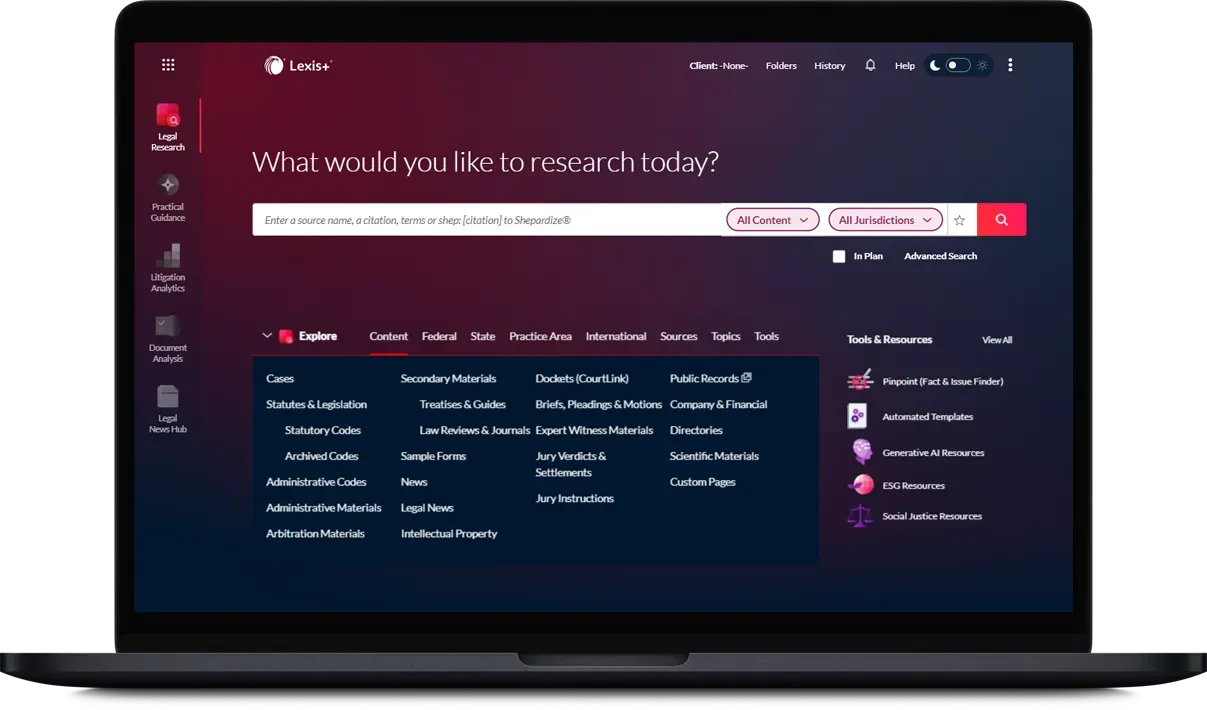
LexisNexis has rebranded its generative AI platform to Lexis+ with Protégé, positioning Protégé as the core AI assistant embedded across its research and drafting solutions. The platform pulls from authoritative LexisNexis case law, statutes, regulations, and exclusive secondary sources — giving attorneys a research foundation grounded in verified legal authority rather than open-web inference.
Protégé functions as both a generative and agentic assistant, adapting to user preferences while drawing on organizational documents stored in iManage, SharePoint, and NetDocuments alongside the LexisNexis database. The system offers two distinct modes: Legal AI, optimized for legal work and anchored to the Shepard’s Citation Service, and General AI, suited for broader tasks like client communications or business analysis. LexisNexis runs an ongoing customer review program with law firms and in-house legal teams to continuously train and refine the platform.
Key AI Features
Multi-model flexibility: Protégé runs on models from Anthropic, OpenAI, and Google, with all Legal AI responses grounded in the LexisNexis database.
Graph technology and Shepard’s integration: the platform layers graph-based retrieval on top of a living legal knowledge graph, identifying relevant legal data with precision and verifying citations through the Shepard’s Citations Service before they reach the attorney.
Document analysis and research: Conversational search accepts natural language queries, while document analysis extracts and summarizes insights from uploaded firm documents. AI-generated headnotes deliver coverage across every case, and attorneys can Shepardize uploaded documents directly to receive full Brief Analysis reports.
Who It’s Best For
Litigation firms filing 10+ briefs monthly see clear ROI through time savings on citation verification alone. Appellate practices benefit most from the platform’s ability to surface relevant authorities from natural language descriptions — complete with full citations and pinpoint references. Firms that also run frequent depositions can pair a research platform like this with Verbit’s Legal Visor for the real-time witness-analysis piece research tools don’t cover.
Pricing
LexisNexis doesn’t publish per-transaction or per-seat pricing for Lexis+ with Protégé. Plans are quoted individually based on firm size and usage. A free trial is available.
5. Harvey: Enterprise-Grade Legal AI Assistant
What It Does
Harvey drew attention when it launched as one of the first AI assistant platforms built specifically for law firms – developed on OpenAI’s GPT technology and trained on legal data. The platform operates through four core products designed to work together across the legal workflow. Assistant handles research questions, document analysis, memo drafting, and clause generation. Vault functions as a secure document repository and bulk analysis engine, running review across large document sets simultaneously – making it valuable for M&A due diligence. Knowledge delivers research across legal, regulatory, and tax domains with synthesized answers and citations. Workflow Agents lets teams build multi-step automated processes through a visual interface, with no coding required.
Core AI Capabilities
200,000 professionals use Harvey, running 850,000+ queries daily and processing 50M+ files per day. The 92% average monthly usage rate reflects something worth noting — this isn’t a platform firms adopt and abandon. Harvey integrates directly into Microsoft Word, Outlook, and SharePoint, with connections to iManage, Google Drive, and Box. A mobile app launched in September 2025 added voice-to-prompt and document scanning capabilities. Security standards include SOC 2 Type II certification, GDPR and CCPA compliance, and ISO 27001 adherence, with SAML SSO, audit logs, and IP allow-listing as default controls. Firms, such as Paul Weiss, Allen & Overy, A&L Goodbody, and Ashurst have adopted the platform.
Who It’s Best For
Harvey fits large law firms and corporate legal departments with high-volume M&A workflows and existing iManage or SharePoint infrastructure. For firms that also need deposition intelligence — real-time witness analysis and live transcription accuracy during proceedings — Verbit’s Legal Visor delivers capabilities Harvey isn’t built to address. Harvey uses demo-gated pricing with no published rates or free trial.
6. Spellbook: AI Contract Drafting in Microsoft Word
What It Does
Spellbook started life as Rally, a Canadian document-automation startup founded in 2017. When large language models became capable enough to actually read and reason about contracts, the team pivoted — and the bet paid off. Spellbook now serves nearly 4,000 legal teams across 80+ countries, has processed over 10 million contracts, and counts Nestlé, eBay, and Kennedys among its customers.
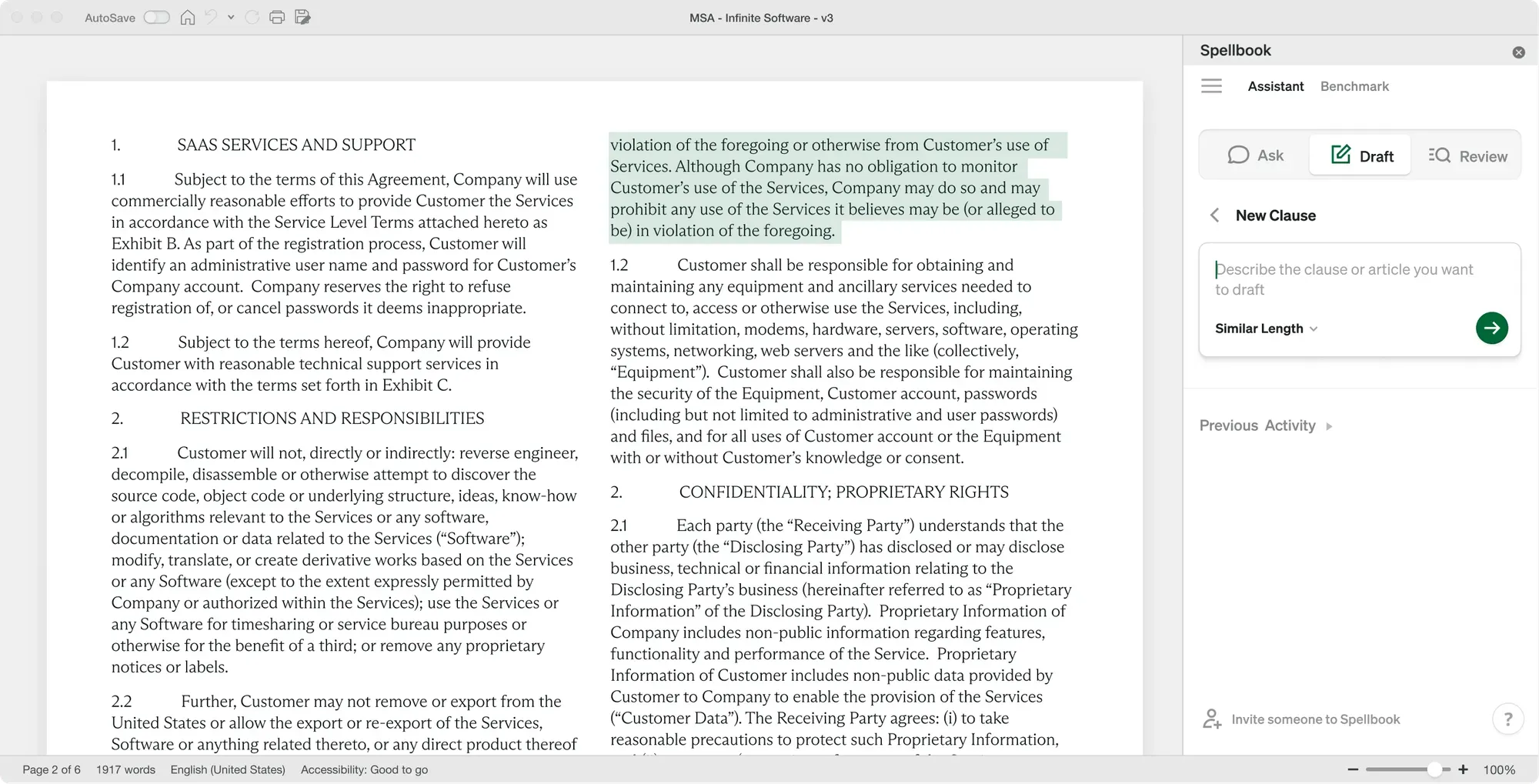
The platform runs entirely inside Microsoft Word as a sidebar add-in — AI suggestions appear as tracked changes and comments rather than in a separate interface. Spellbook is built on frontier models including GPT-5 and Claude Opus, tuned specifically for commercial contract work.
Core Features
Smart Clause Drafting sits at the center of Spellbook’s Library, letting attorneys search their full document history through plain language queries without leaving Word. The system pulls from OneDrive, Dropbox, or direct uploads and adapts inserted clauses to match the tone and structure of whatever agreement is open.
AI redlining scans full contracts and surfaces suggested edits inline. Clause benchmarking goes a step further — comparing language against 2,300+ contract types to flag what’s market-standard and what isn’t. Teams can also build custom playbooks that encode preferred positions on liability caps, payment terms, and indemnification standards, enforcing those positions automatically across every incoming contract. Document Q&A answers specific clause questions with exact citations.
On the security side, Spellbook maintains SOC 2 Type II certification, with all data encrypted in transit and at rest under a zero data retention policy.
Who It’s Best For
Transactional lawyers and small-to-mid firms that live in Microsoft Word and handle frequent contract negotiation will get the most out of Spellbook.
7. Clio Duo (Manage AI): AI Legal Practice Management Assistant
What It Does
Clio took a different approach with Manage AI (formerly Clio Duo) — rather than building a separate AI tool that attorneys need to context-switch into, the system operates directly within the Clio practice management platform, drawing on firm-specific data already stored in Clio Manage. Case management, document review, calendar events, invoicing, and client communications all run through a single, AI-assisted environment.
The practical implication matters: Manage AI works exclusively from your existing Clio data, which means it delivers contextually relevant insights without training external models on firm content. Administrative tasks that quietly consume attorney hours – deadline extraction, billing preparation, scheduling – get handled automatically, while the same permission controls already configured in Clio Manage stay in place.
Key Capabilities
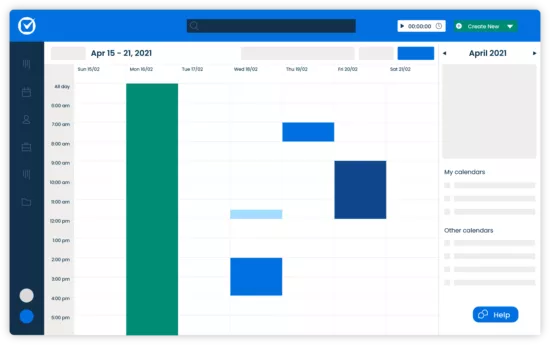
Deadline and calendar management: Manage AI reads court documents, identifies deadlines, and automatically creates calendar events, displaying the source document alongside the calendar entry so attorneys can verify at a glance.
Matter prioritization: the intelligent recommendation engine flags matters and tasks requiring immediate attention, ranking them by urgency, impact, and potential risk.
Billing: the system generates payment-ready invoices immediately after work completion, cutting the gap between work performed and billable output.
Document analysis: critical facts, clauses, and patterns surface within seconds rather than through manual review. Time logging, appointment scheduling, and task creation happen automatically. Custom reporting tracks performance and profitability in real time through natural language queries.
Who It’s Best For
Solo, small, and mid-size firms running on Clio are Manage AI’s primary audience. Family law, criminal, personal injury, civil litigation, real estate, and wills and estates practices — where administrative volume is high and staff resources are often lean — benefit from automated scheduling, billing, and client updates.
Pricing
Clio plans start at $49 per user monthly; AI capabilities are bundled into the Core plan and above rather than sold as a separate add-on (the entry-level Starter plan does not include AI features).
8. Luminance: AI Contract Review and Negotiation
What It Does
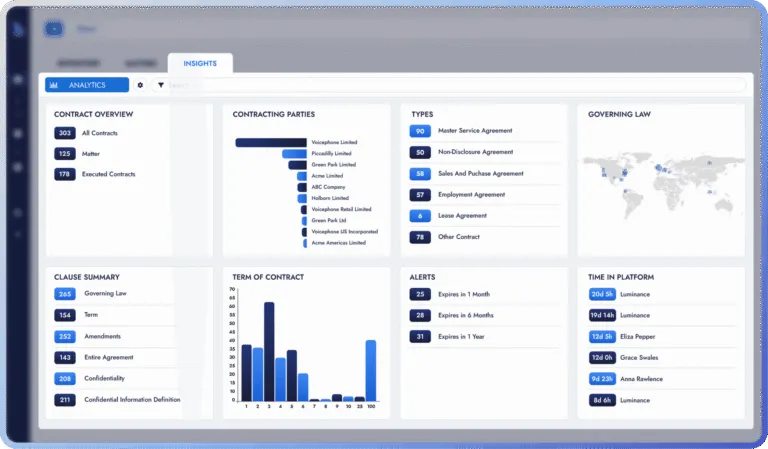
Cambridge mathematicians founded Luminance with a specific problem in mind — M&A data rooms, where legal teams face hundreds or thousands of contracts under brutal deadlines. The platform takes a different approach than most contract tools. Rather than flagging predefined issues through playbooks, Luminance identifies patterns and anomalies across entire document sets, surfacing risks that a human reviewer might not think to look for.
The full contract lifecycle falls within scope — contract generation, negotiation inside Microsoft Word, repository management, compliance monitoring, and litigation support, all handled through Legal-Grade AI agents. 1,000 customers now use the platform.
Core AI Capabilities
Traffic Light Analysis functions as a legal AI spellchecker of sorts, automatically categorizing clauses as red, amber, or green based on risk level. Autopilot goes further — it autonomously negotiates standard NDA terms with minimal human input, redlining documents, responding to counterparties, and logging every change along the way, with a human still required to sign the final agreement. Ask Lumi handles contract queries, agreement summaries, and instant clause redrafting through a conversational interface.
The reported results are worth noting: 90% time savings on contract review, a 98% reduction in contract management costs, and 500+ hours saved on contract generation.
Who It’s Best For
M&A teams and private equity firms running high-volume due diligence benefit most from Luminance’s strength in pattern detection across complex document sets. Luminance doesn’t publish rates. Pricing is enterprise/custom-quoted, but third-party estimates put costs at $100,000+ annually for larger deployments.
9. Westlaw Advantage (formerly Westlaw Precision): AI-Assisted Legal Research
What It Does
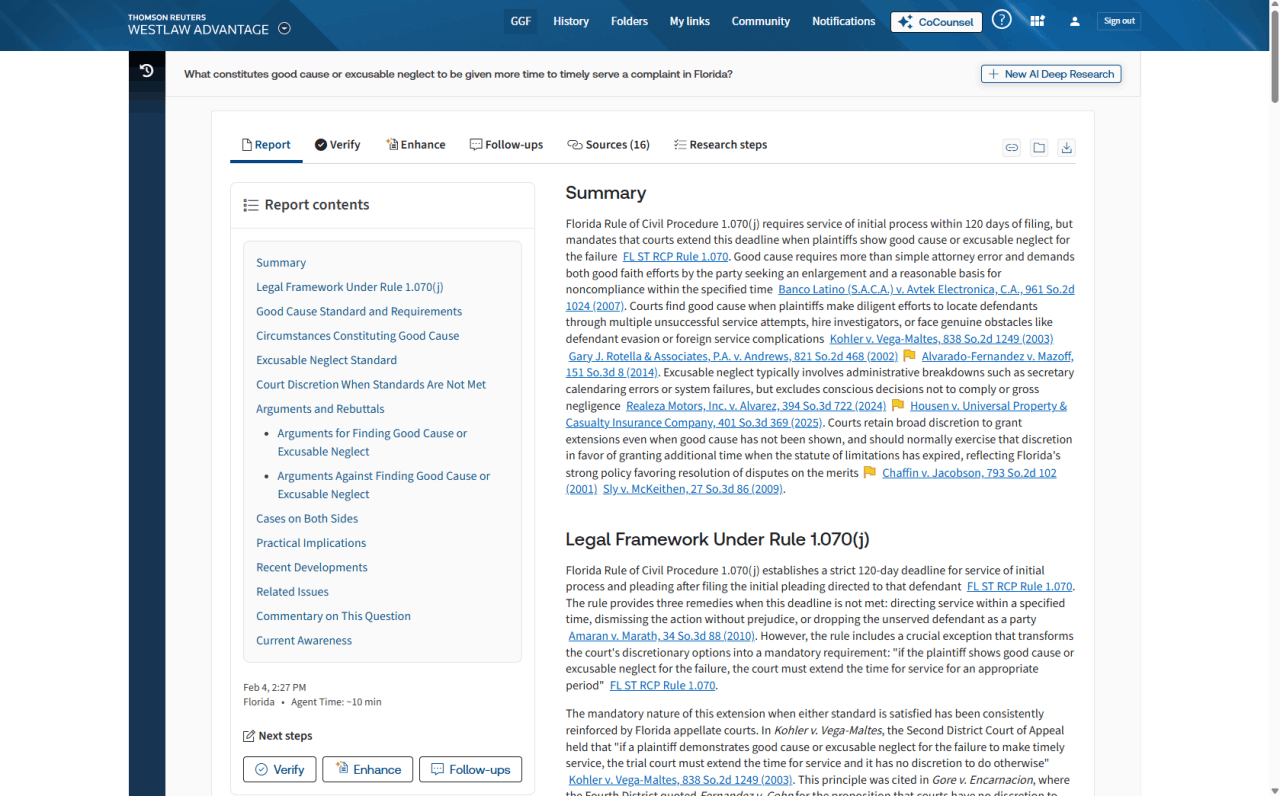
Westlaw Precision has since evolved into Westlaw Advantage, adding agentic AI tools directly into the familiar research interface rather than building a separate product. The upgrade keeps what litigators already rely on while layering in three significant additions: Deep Research, Litigation Document Analyzer, and AI Relevancy Overviews.
Deep Research is where the platform earns attention. The tool generates structured legal research reports from natural language descriptions — producing detailed analysis with statutes, case law, arguments for both sides, and links to primary and secondary sources. A health care attorney, for instance, can ask how different states interpret “medical necessity” in Medicaid regulations and receive statutory definitions, relevant regulations, and a jurisdictional comparison table in return. Users can also control research depth by adjusting report generation time and limiting results to specific jurisdictions.
Key Features
Litigation Document Analyzer replaced Quick Check with expanded capabilities. Uploading a complaint generates a report covering dispute summaries, legal claims, event timelines, and potential defenses. Brief analysis goes further — producing argument summaries, counterarguments, authorities not cited in the document, similar briefs, and suggested secondary sources.
Citation and quotation verification catches what human review might miss: hallucinated cases, inaccurate quoted language, authority mischaracterizations, and gaps in cited precedent.
AI Relevancy Overviews explain why particular cases surface in natural language search results — a small but meaningful feature that keeps attorneys from having to reverse-engineer the platform’s logic.
Westlaw Advantage is built for research, not real-time proceedings; firms running frequent depositions typically look to a purpose-built tool like Verbit’s Legal Visor for that piece.
Who It’s Best For
Litigation firms running frequent appeals get clear value from natural language authority discovery with full citations. Corporate legal departments handling multi-jurisdictional matters gain similar efficiency from the platform’s survey capabilities.
10. Lex Machina: Legal Analytics and Litigation Intelligence
What It Does
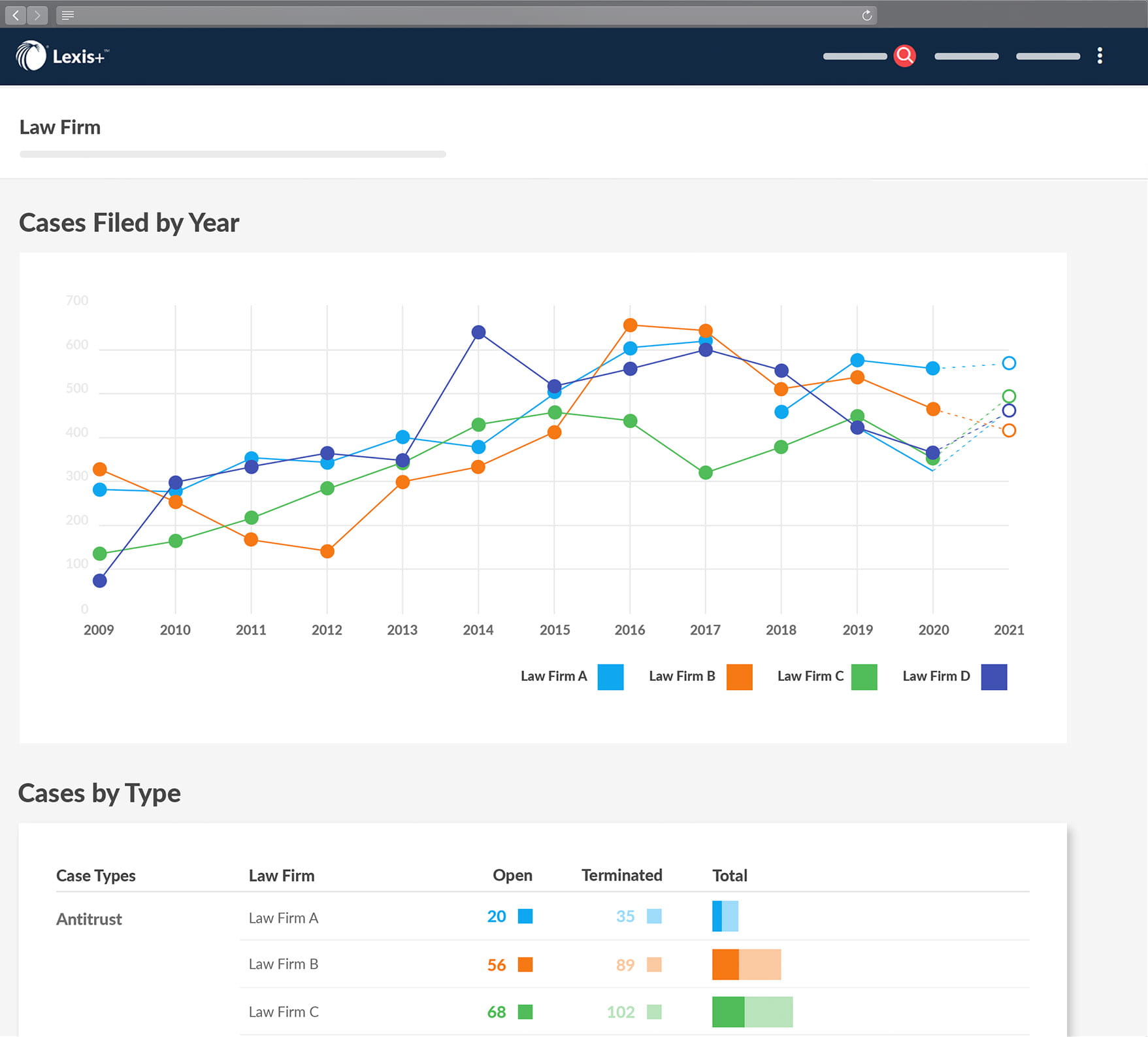
Stanford Law School and Computer Science department researchers built Lex Machina with a specific goal: turn raw court data into predictive litigation intelligence. Where most legal AI tools help attorneys draft or research, Lex Machina answers a different question entirely — what is likely to happen, and before which judge, and against which opposing counsel. The platform combines legal expert knowledge with machine learning to forecast judge behavior, attorney performance, and party outcomes across U.S. courts.
Protégé, the generative AI interface added in recent updates, makes that intelligence accessible through natural language queries. Attorneys can ask, “How often are attorney fee awards granted to plaintiffs in patent cases?” and receive tailored tables within seconds — the kind of strategic insight that previously took hours of manual research.
Core Capabilities
The system mines millions of pages of litigation data to surface judge analytics — tendencies, timelines, and rulings — alongside opposing counsel track records, damages predictions, and case outcome forecasts. Litigation Footprint visualizations map entire litigation histories, helping attorneys spot relationships and trends across complex matters. State court motion metrics, covering 40+ motion types, break results down by judge and court.
The practical value shows up in strategic decisions: typical damage award ranges, counsel performance in specific districts, and settlement benchmarks. API integration pushes that intelligence directly into existing firm systems, keeping workflows intact.
Who It’s Best For
Litigators making venue selection, settlement strategy, and resource allocation decisions get the clearest return from Lex Machina’s data-driven case assessment. Litigation teams that also need real-time insight during the deposition itself, rather than after-the-fact analytics, are better served by Verbit’s Legal Visor for that specific piece.
Pricing
LexisNexis doesn’t publish an official rate card for Lex Machina; unofficial estimates put subscription pricing in the range of $20,000-$80,000 annually, depending on firm size and the practice areas covered.
11. Paxton: All-in-One AI Legal Assistant
What It Does
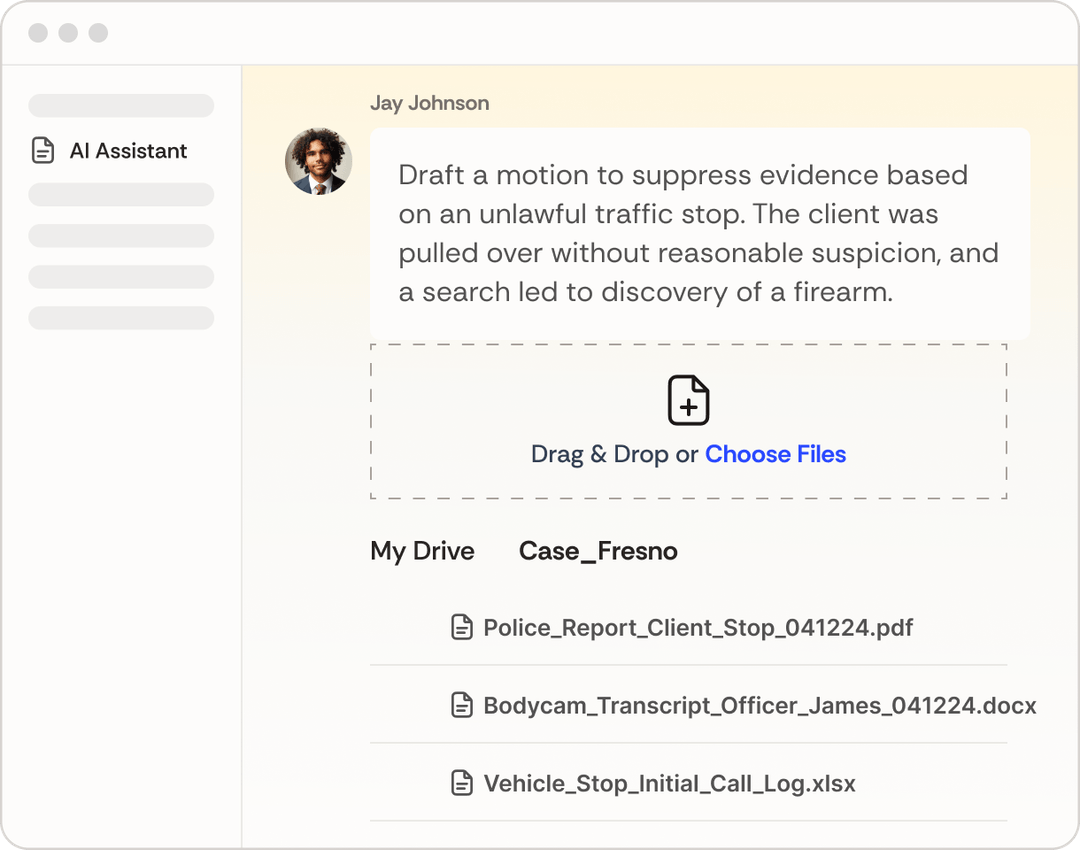
Paxton takes a unified approach, combining research, drafting, and document analysis in a single workspace rather than requiring attorneys to jump between tools. The platform surfaces cited case law and authority links while attorneys write motions, memos, or work through case strategy, making it straightforward to verify authority before anything goes near a filing.
Secure Matter Collaboration allows litigation teams to share case files, chronologies, evidence, and work product without credential sharing or duplicate uploads — a practical solution for firms running multiple attorneys on the same matter. Personal injury, medical malpractice, and insurance practices benefit from built-in medical chronologies and billing summaries that bring order to document-heavy workflows. The platform holds SOC 2, ISO 27001, and HIPAA compliance.
Key AI Features
Paxton covers U.S. federal regulations, state laws, and case law across all 50 states. File analysis tools review uploaded documents, surface key insights, and deliver actionable recommendations rather than raw summaries. Attorneys can feed in policy documents for initial issue spotting or memo drafts — the kind of early-stage research work that typically consumes hours before substantive writing begins. Contract analysis flags potential risks, inconsistencies, and deviations from standard terms.
Who It’s Best For
Small and midsize firms get the most from Paxton’s all-in-one structure — one platform covering research and drafting rather than managing separate subscriptions for each. Litigation, personal injury, employment, and regulatory practices gain particular value from the combination of case law research and document review in a single workflow.
Pricing
Paxton publishes its rates directly: an Individual plan runs $499/month (or $2,999/year), with custom volume pricing available for firms and enterprise teams.
12. Legora: Enterprise Legal AI Platform
What It Does
Legora started with a simple observation: junior associates were spending entire summers manually summarizing court cases. That insight — gathered while embedded within Nordic law firm Mannheimer Swartling — shaped a platform built around how legal work actually gets done, not how technologists imagine it does.
The Stockholm-based company emerged from Y Combinator and reached $100 million in annual recurring revenue within 18 months of general launch. Today, Legora serves over 1,000 customers across 50 markets, employs more than 400 people across nine global offices, and counts White & Case, HSFK, Linklaters, and Barclays among its customers. Built on Microsoft Azure with Azure OpenAI Service, the platform handles multi-step agentic workflows — from document review through to structured report generation.
Core Features
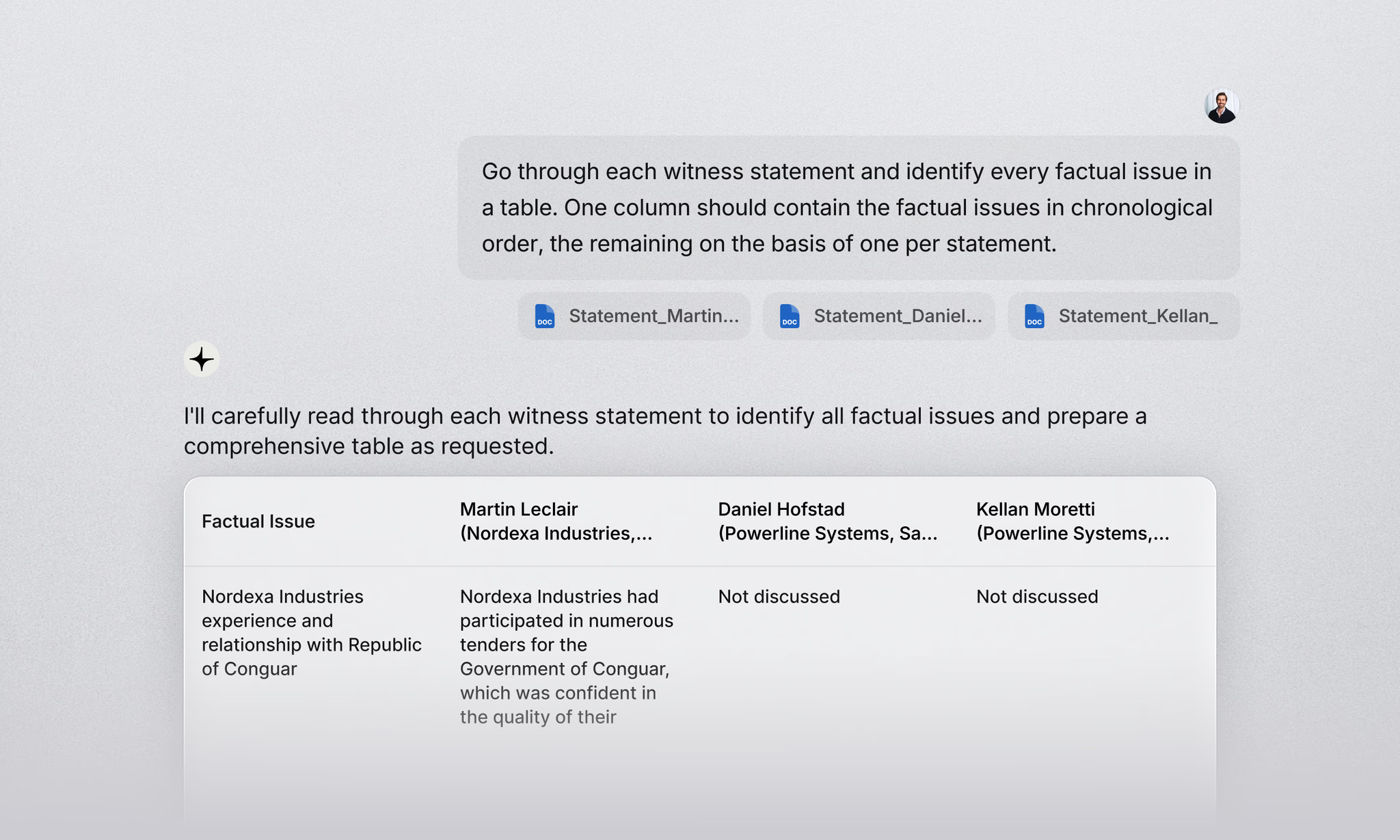
Tabular Review processes thousands of documents simultaneously, returning answers in structured grids — particularly useful for M&A data rooms and lease portfolios. Workflows automate document classification and routing with role-based permissions. Legal Research delivers synthesized memos with source-level citations. Portal, currently rolling out to general availability, lets law firms share custom AI workflows and playbooks with clients through a white-labeled collaboration environment — a feature that positions the platform as a firm-to-client tool rather than just an internal one. Word and Outlook Add-Ins extend contract review and email-attached document analysis directly into existing workflows. Security credentials include ISO 42001, ISO 27001, SOC 2 Type II, and GDPR compliance with AES-256 encryption.
Who It’s Best For
Multinational in-house teams managing frequent M&A transactions benefit most from Legora’s bulk document review capabilities. Law firms looking to extend AI-assisted workflows to clients — rather than keeping them internal — gain particular value from Portal. Firms that also handle high-volume depositions should consider adding Verbit’s Legal Visor for the real-time witness-analysis piece Legora doesn’t cover.
13. Kira Systems: AI Contract Analysis and Due Diligence
What It Does
Noah Waisberg and Dr. Alexander Hudek founded Kira in 2011 — and in doing so, created the AI contract analysis category before most firms had considered what that category might look like. The problem they were solving was straightforward: M&A teams could realistically review only a small fraction of contracts in any given deal because comprehensive manual analysis simply wasn’t feasible. Kira changed that calculus.
Now owned by Litera, the platform enables legal teams to analyze thousands of contracts where manual methods might cover 50 to 100. Kira works across M&A, real estate, banking and finance, corporate and commercial, IP, employment, and restructuring matters. Lito, the bundled AI Legal Agent, extends that capability into Word, Outlook, and web browsers for smaller-scale structured reviews.
Key Capabilities
Kira delivers 90%+ accuracy in extractions, trained on 45,000+ lawyer hours and drawing on 1,400+ lawyer-trained proprietary AI models. The hybrid AI architecture combines those models with optional Generative Smart Fields — which extract answers through natural language questions without requiring training data. Concept Search finds any legal concept across documents without setup, while Quick Study allows teams to train custom models to identify virtually any clause. The platform maintains SOC 2 Type II certification with GDPR/DORA/NIS2 alignment, and cuts contract review time by up to 50%.
Who It’s Best For
Am Law 100 firms and M&A practices running high-volume due diligence get the clearest return from Kira’s provision extraction at scale.
14. MyCase: Legal Practice Management with AI Automation
What It Does
Solo attorneys and small firms often struggle with fragmented tech stacks — juggling separate tools for billing, case management, and client communication. MyCase consolidates all of it into a single legal practice management platform, then layers 8am IQ on top as an AI-powered assistant embedded directly into existing workflows. The result: firms handle client intake, matter management, time tracking, billing, and client portal functions without bouncing between disconnected systems. 19,000 law firms use MyCase, with attorneys recovering 64 billable hours annually through automation.
Core AI Features
8am IQ Discovery Assistant converts scanned PDFs and image-based documents into searchable text through embedded OCR — a practical fix for firms still dealing with paper-heavy case files.
Document Assistant generates summaries of contracts and pleadings with automatic highlighting of key clauses, parties, and deadlines. Case Assistant goes a step further, searching across notes, filings, and messages to surface facts and build timelines directly from real case data. Writing Assistant handles tone and grammar in emails and case summaries, and MyCase has natural language analytics on its roadmap that would let attorneys ask plain-language questions about outstanding invoices, practice area ROI, and firm performance metrics.
Who It’s Best For
Family law, criminal, personal injury, civil litigation, real estate, and estate planning practices gain the most from MyCase’s unified approach to billing and client communication.
Pricing
Basic costs $50 per user monthly on an annual plan, or $60 billed monthly. Pro runs $100 annually or $120 monthly. Advanced reaches $130 annually or $150 monthly. A 10-day trial is also available.
15. Sirion: AI Contract Intelligence and Management
What It Does
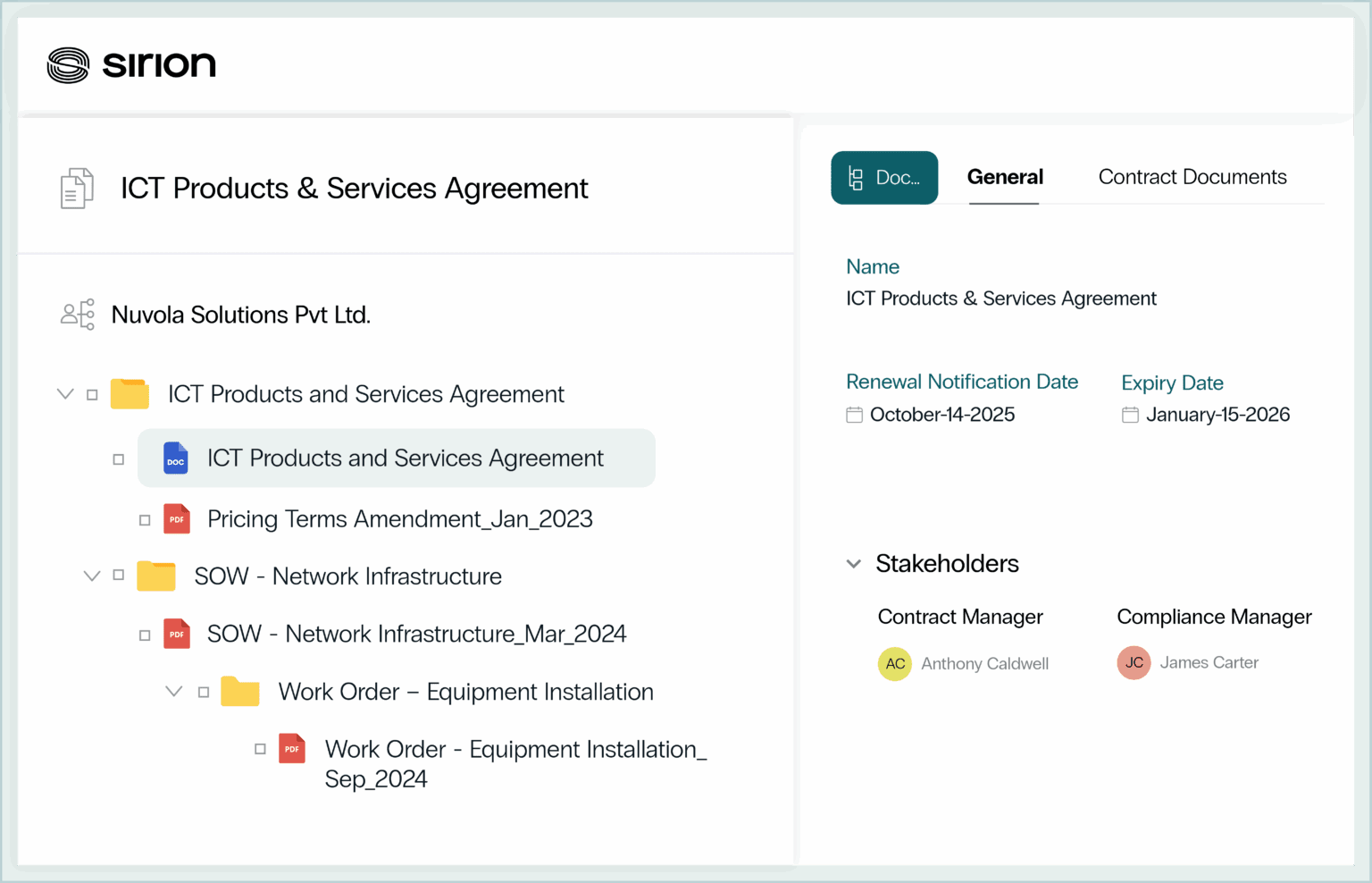
Sirion manages more than 7 million contracts valued at nearly $800 billion across 100 languages — for organizations including Vodafone, IBM, and Morgan Stanley. The scale alone sets it apart. Rather than treating contracts as static documents filed away after signing, Sirion functions as an AI-native contract lifecycle management system that keeps agreements under continuous operational oversight.
Built on more than a decade of dedicated AI R&D, the platform embeds purpose-built agents throughout the contracting process. Search Agent retrieves contract intelligence on demand. Draft Agent creates agreements from approved templates. Issue Detection Agent flags playbook deviations. Redline Agent proposes compliant edits. Extraction Agent converts documents into structured data. Playbook Agent standardizes institutional knowledge across the organization. AskSirion ties these together as a conversational interface, coordinating agent activity to surface results without requiring users to navigate each tool separately.
Key Features
Multi-model extraction identifies financial terms, obligations, risk clauses, renewal dates, SLAs, and jurisdictional nuances with enterprise-grade accuracy. The practical outcomes are significant — organizations report 90% faster contract centralization, 85% faster insights delivery, and up to 90% acceleration in time-to-contract.
Obligation intelligence maps compliance deadlines directly to owners and workflows, producing 99% on-time adherence to contract milestones — a meaningful shift for legal and procurement teams managing hundreds of active obligations simultaneously. Portfolio-level analytics surface pricing exposure concentrations, vendor underperformance patterns, and revenue-affecting customer obligations. Integration with ERP, CRM, and billing systems enables automated invoice validation and cash forecasting.
The financial case is straightforward: customers report 8% to 12% lower spend leakage, 60% lower governance costs, and $2.2 billion in total savings.
Who It’s Best For
Enterprise legal, procurement, sales, and finance teams managing complex contract portfolios get the most from Sirion’s end-to-end lifecycle capabilities. The platform suits organizations where contract obligations span multiple departments and where post-signature performance tracking is as important as the deal itself.
Comparison Table: 15 Best Legal AI Tools for Lawyers in 2026
The platforms covered here serve distinct needs — from deposition intelligence to contract lifecycle management to legal research. The table below makes it easier to identify which tool fits your practice at a glance.
| Tool Name | Primary Function | Key AI Capabilities | Best For | Pricing | Notable Metrics/Adoption |
|---|---|---|---|---|---|
| Verbit Legal Visor | AI-powered legal transcription and deposition intelligence platform | Real-time transcription with legal terminology training, automatic flagging of witness discrepancies, speaker identification (15-30 seconds), semantic search, 50+ language support, automatic chaptering and summaries, SOC 2 Type II/ISO 27001/HIPAA certified | Attorneys across employment defense, insurance defense, commercial litigation, and plaintiff litigation; particularly valuable for second-chair attorneys needing real-time insights | Custom-quoted plans for Legal Visor’s capabilities, but more basic legal transcription with Verbit starts at $24/month (not court-admissible, but additional human editing layers and cover page production are available) | Trusted by 3,000+ organizations processing millions of minutes of legal proceedings annually |
| Thomson Reuters CoCounsel | AI legal research with Westlaw integration | Deep Research (agentic AI with multi-step research plans), Tabular analysis, Mischaracterization Identification, AI Jurisdictional Surveys, document analysis, Library with expert-created prompts | Litigation-heavy firms already subscribing to Westlaw requiring verified citations | Not published by Thomson Reuters; third-party estimates: Essentials ~$225/user/month; Westlaw Precision with CoCounsel ~$428/month; full-stack ~$850/user/month (1-3 year terms available) | Well over 1 million users including 80% of Am Law 100; adopted by federal courts including Supreme Court and 94% of US state courts |
| Ironclad | AI-native contract lifecycle management platform | Jurist AI assistant with Intake Agent, Redlining Agent, Conversational Search; AI Assist (GPT-4 powered) for clause generation; Smart Import with OCR; AI Playbooks for compliance | Enterprise legal, procurement, and sales teams managing high-volume contract workflows | Not published | Processing 1 billion+ contracts; $200M annual recurring revenue; individual customers report up to 96% reduction in contract turnaround time, 70% reduction in contracting costs |
| Lexis+ AI (Protégé) | AI-powered legal research platform | Models from Anthropic, OpenAI, and Google; graph-based retrieval with Shepard’s Citations Service verification; conversational search; document analysis; AI-generated headnotes; direct Shepardizing | Litigation firms filing 10+ briefs monthly; appellate practices benefit significantly | Not published; custom/quote-based pricing; free trial available | Ongoing customer review program with law firms and in-house legal teams |
| Harvey | Enterprise-grade legal AI assistant with research, drafting, and document analysis | Four core products: Assistant (research, analysis, drafting), Vault (bulk document analysis), Knowledge (legal/regulatory research), Workflow Agents (no-code automation); integrates with Microsoft Word, Outlook, SharePoint, iManage, Google Drive, Box | Large law firms and corporate legal departments running frequent M&A transactions requiring bulk document review | Demo-gated pricing (no published rates or free trial) | 200,000+ professionals, 850,000+ daily queries, 50M+ files processed daily, 92% average monthly usage; adopted by Paul Weiss, Allen & Overy, A&L Goodbody, Ashurst |
| Spellbook | AI contract drafting in Microsoft Word | Smart Clause Drafting with Library search, AI redlining, clause benchmarking (2,300+ contract types), custom playbooks, document Q&A; runs on GPT-5 and Claude Opus; SOC 2 Type II certified | Transactional lawyers and small-to-mid firms handling frequent contract negotiation in Microsoft Word | Not published | Nearly 4,000 legal teams across 80+ countries; 10 million+ contracts processed; customers include Nestlé, eBay, Kennedys |
| Clio Duo (Manage AI) | AI legal practice management assistant | Deadline extraction with auto-calendar creation, intelligent recommendation engine, automated invoice generation, document analysis, time logging, custom reporting with natural language queries | Solo, small, and mid-size firms running on Clio; family law, criminal, personal injury, civil litigation, real estate, wills and estates practices | Plans start at $49/user/month; AI bundled into Core plan and above (not included in entry-level Starter plan) | Not published |
| Luminance | AI contract review and negotiation | Traffic Light Analysis (red/amber/green risk flagging), Autopilot (NDA negotiation with human sign-off required), Ask Lumi chatbot for contract queries and redrafting | M&A teams and private equity firms running high-volume due diligence projects | Enterprise/custom pricing; third-party estimates suggest $100,000+ annually for larger deployments | 1,000+ customers; 90% time savings on contract review, 98% reduction in contract management costs, 500+ hours saved on contract generation |
| Westlaw Advantage (formerly Westlaw Precision) | AI-assisted legal research | Deep Research (structured reports with statutes, case law, arguments), Litigation Document Analyzer (complaint/brief analysis), citation/quotation verification, AI Relevancy Overviews | Litigation firms running frequent appeals; corporate legal departments needing multi-jurisdictional surveys | Not published | Not published |
| Lex Machina | Legal analytics and litigation intelligence | Protégé generative AI interface, judge analytics, opposing counsel track records, damages predictions, case outcome forecasts, Litigation Footprint visualizations, 40+ motion types by judge/court, API integration | Litigators making venue selection, settlement strategy, and resource allocation decisions | Not officially published; unofficial estimates of $20,000 to $80,000 annually (depending on firm size and practice areas) | Mines millions of pages of litigation data across U.S. courts |
| Paxton | All-in-one AI legal assistant | Integrated research with cited authority, Secure Matter Collaboration, medical chronologies and billing summaries, file analysis, contract risk analysis; SOC 2, ISO 27001, HIPAA compliant | Small and midsize firms; litigation, personal injury, employment, and regulatory practices | Individual: $499/month or $2,999/year; custom volume pricing for firms and enterprise teams | Access to U.S. federal regulations, state laws, and case law across all 50 states |
| Legora | Enterprise legal AI platform | Tabular Review (thousands of documents simultaneously), Workflows with role-based permissions, Legal Research with citations, Portal (white-labeled client collaboration, rolling out to GA), Word/Outlook Add-Ins; ISO 42001, ISO 27001, SOC 2 Type II, GDPR compliant | Multinational in-house teams running frequent M&A transactions; law firms seeking firm-to-client collaboration | Not published | $100M annual recurring revenue reached within 18 months of launch; 1,000+ customers across 50 markets; 400+ employees across 9 offices; customers include White & Case, HSFK, Linklaters, Barclays |
| Kira Systems | AI contract analysis and due diligence | 90%+ extraction accuracy, 1,400+ lawyer-trained AI models, Generative Smart Fields, Concept Search, Quick Study for custom models; SOC 2 Type II certified | Am Law 100 firms and M&A practices running high-volume due diligence | Not published | Trained on 45,000+ lawyer hours; up to 50% reduction in contract review time |
| MyCase | Legal practice management with AI automation | 8am IQ with Discovery Assistant (OCR), Document Assistant (summaries/highlighting), Case Assistant (timeline building), Writing Assistant; natural language analytics (roadmap) | Solo attorneys and small firms; family law, criminal, personal injury, civil litigation, real estate, estate planning practices | Basic: $50/user/month (annual) or $60 (monthly); Pro: $100 (annual) or $120 (monthly); Advanced: $130 (annual) or $150 (monthly); 10-day trial available | 19,000+ law firms; attorneys recover 64 billable hours annually through automation |
| Sirion | AI contract intelligence and management | Multi-agent system: Search, Draft, Issue Detection, Redline, Extraction, Playbook Agents; AskSirion conversational interface; multi-model extraction; obligation intelligence with 99% on-time adherence; ERP/CRM/billing integration | Enterprise legal, procurement, sales, and finance teams managing complex contract portfolios | Not published (enterprise/custom quotes only) | 7 million+ contracts worth nearly $800B across 100 languages; customers include Vodafone, IBM, Morgan Stanley; 90% faster contract centralization, $2.2B in total customer savings |
Note: For real-time deposition intelligence — live transcription accuracy, witness discrepancy flagging, and in-proceeding analysis — Verbit’s Legal Visor stands apart from the other platforms on this list. Its litigation-grade infrastructure addresses a gap that research, contract, and practice management tools simply aren’t built to fill.
Conclusion
The right legal AI tool isn’t the most feature-rich one — it’s the one that addresses the workflows consuming the most time in your specific practice. Transactional attorneys handling frequent contract negotiations will find clear value in platforms like Ironclad or Spellbook. Litigators building case strategy from dense research get more from CoCounsel or Lexis+ AI. Firms running high-volume depositions need something different entirely — and that’s where Verbit’s Legal Visor stands apart, delivering real-time transcription accuracy and live deposition analysis that practice management or research tools simply aren’t built to provide.
The instinct to adopt several tools at once is understandable, but it rarely works well. A better approach: identify your single most time-consuming workflow, select a platform built specifically for that problem, measure the results, and expand from there. AI works best as a force multiplier — not a replacement for attorney judgment, but a way to make sure nothing gets missed while keeping the focus where it belongs, on the client and the case.
Click here to connect with Verbit’s legal team to discover more on Legal Visor and our other legal technology solutions.