
How to better serve congregants who are Deaf or have hearing loss, among many others
Creating accessible religious services, sermons, programs, and community events is an important part of welcoming everyone into your community.
Whether your house of worship is a church, synagogue, mosque, temple, or other gathering place, thoughtful accessibility practices help all congregants to fully participate. When you embed inclusivity practices into your religious experiences, so many others in your congregation benefit outside of the individuals they were originally designed for (ie: those who are Deaf or navigating hearing loss).
Some religious leaders already know that captioning, transcription, and accessibility tools are essential to creating inclusive worship experiences. Others may be discovering these needs for the first time. No matter where you fall on that journey, this checklist can help you create a more connected, inclusive, and engaging environment for everyone.
Verbit works closely with worship centers of all sizes to make the spoken word and music from services, sermons, and events more accessible. Through accurate captioning, transcription, audio description, and translation, your messages can reach more congregants effectively, both in person and online.
Use this enhanced checklist to identify the areas you’re already supporting and discover opportunities for deeper inclusion within your community.
1. Improve audio & visual accessibility in worship spaces
Clear sound and visual access are the foundation of an inclusive service. Before adding captioning or additional tools, it’s important to make sure all congregants can see and hear as clearly as possible.
Some guidance:
Strong audio and visual systems benefit everyone, especially congregants who are Deaf, hard of hearing, or who rely on speech-reading and visual cues. They also support older adults and remote viewers who join through livestreams. Improving clarity enhances connection and reduces barriers so your message remains the focus.
Your A/V checklist:
- Ensure a well-functioning sound system with clear amplification.
- Use wireless or lapel microphones for all speakers (including guest pastors, readers, and worship leaders).
- Reduce background noise during services where possible.
- Provide good lighting and clear sightlines to the speaker.
2. Enhance worship design & communication access for congregants who are Deaf or have hearing loss
Communication accessibility allows everyone to follow, engage with, and understand sermons and worship moments in real time.
Some guidance:
Tools like live captioning, captions for recordings being shared and distributed, ASL interpretation, and readable visual displays help create a worship experience that meets the needs of congregants who are Deaf or hard of hearing, multilingual attendees, older adults, and online participants. While most religious institutions aren’t legally obligated to meet Americans with Disabilities Act requirements, these are practices to support the accessibility expectations of today’s audiences and are worth considering.
Your checklist to improve religious experiences:
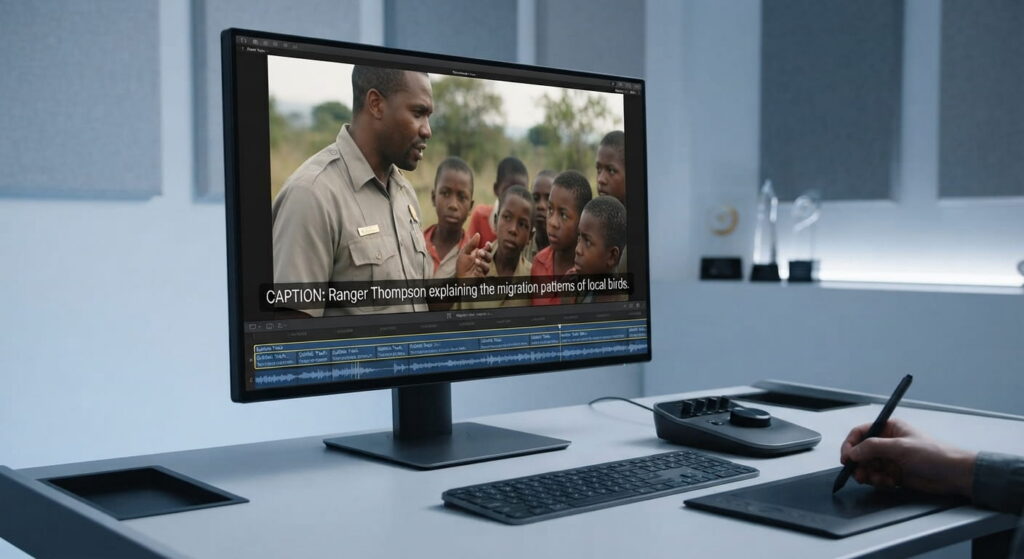
- Offer live captioning during services (either on-screen or through mobile devices).
- Consider ASL interpretation for in-person services when possible.
- Provide captioned recordings or searchable transcripts of sermons and events online.
- Display song lyrics and scripture in real time with large, readable fonts.
- Train greeters and volunteers to communicate respectfully with congregants who are Deaf or hard of hearing.
3. Use technology & captioning tools to make worship services accessible
A thoughtful technology setup supports consistent, reliable accessibility during weekly services and special events.
Some guidance:
Many houses of worship now deliver hybrid or fully online experiences and events. Ensuring your technology integrates well with captioning and transcription services -whether from Verbit or another provider – helps keep your message clear across devices and platforms. A simple, stable setup gives congregants confidence that they can follow along without interruption. It’s also worth noting that accessibility is meant to be easy, even for individuals who don’t pride themselves on being the most tech savvy. A partner like Verbit can help to handle most of these technical elements below for you and offers simple integrations so that you don’t need any complex hardware.
Your technology checklist:
- Install or maintain strong Wi-Fi connectivity in your sanctuary or streaming space.
- Use a supported audio encoder (such as vMix, OBS or Kiloview) or video conferencing (such as Zoom or Microsoft Teams) to send clean audio to your captioning provider.
- Provide a dedicated audio feed or output from your soundboard for optimal captioning accuracy.
- Use your captioning provider to generate a static RTMP link for regular live-caption use.
- Offer QR codes or direct links so congregants can easily view captions on their phones.
- Confirm your livestream platform supports caption overlays or external caption links.
- Customize caption settings (font size, color, background) for visibility.
- Set up simple booking and scheduling tools for weekly services or events.
4. Plan accessible worship services & communicate directly with your community members
Similar to the concept of Universal Design for Learning (UDL) and proactive planning in today’s universities, accessibility works best when it’s planned intentionally and communicated clearly so congregants know support is available.
Some guidance:
Congregants may not recognize that accessible resources such as captions or interpreted content are an option unless you share that information openly. Consistent planning helps ensure your accessibility tools function smoothly, and clear communication builds trust and encourages participation from individuals who may otherwise feel left out.
Your checklist:
- Ask congregants about accessibility needs on welcome forms or during event sign-ups.
- Send prep materials (sermon outlines, speaker names, relevant scripture) to your caption provider ahead of time to improve accuracy. Verbit, for one, pre-trains its automatic speech recognition technology, Captivate, on these names and keywords to give religious partners peace of mind.
- Clearly communicate the availability of accessibility services (in bulletins, announcements, and on your website).
- Make sure captions can be turned on and off depending on the service segment (e.g., worship music vs. sermon).
5. Build an inclusive worship space & community through accessibility practices
Accessibility is not only about tools, but about fostering a culture where everyone feels they belong.
Some guidance:
Creating space for congregants who are Deaf or hard of hearing to share input and participate fully strengthens the entire community. Considering accessibility beyond weekly services, including weddings, funerals, youth programs, and holiday events, shows that inclusion is woven into the fabric of your ministry or religious institution.
Your checklist:
- Invite feedback from congregants who are Deaf, hard of hearing, have vision loss and others about what supports them best.
- Offer community engagement opportunities that are welcoming and accessible.
- Consider accessibility in all events: special services, ceremonies, seasonal gatherings, and community programs.
- Celebrate accessibility improvements and use them to educate and uplift your community.
Make your worship services more accessible
Creating accessible worship experiences is an ongoing journey. Whether you’re beginning to explore ASR tools like captioning, transcription, ASL interpretation, or accessible livestreaming – or you’re ready to upgrade your existing setup – Verbit can help make the process simple and sustainable.
Our team regularly partners with churches, synagogues, mosques, temples, and faith-based community centers to assist them in making sermons, music, scripture readings, and events accessible for congregants who are Deaf or hard of hearing, older adults, multilingual families, and online worshippers.
If you’re looking to make your services more inclusive, improve the accessibility of your religious livestreams, or ensure your events align with ADA and accessibility best practices, we’re here to guide you step by step.
Making your sermons and events accessible is more than technology — it’s ministry in action. It can also help prospective congregants discover you. When you offer transcripts of your sermons and activities online, they become searchable and discoverable over standard video without captions and transcripts. Connect with us here to help you build an accessible worship experience that welcomes everyone.
FAQs on accessibility for religious experiences
What does accessibility mean for houses of worship?
Accessibility in houses of worship goes well beyond physical access of offering handicapped parking spaces. It means ensuring all congregants—including people who are Deaf or hard of hearing, older adults, multilingual individuals, or those with disabilities—can fully participate in services, events, and community programs. Some congregations offer sign language interpreters, but technology has extended the possibilities to ensure more congregants are included in services and events. This includes providing clear audio, assistive listening devices, live captioning of sermons, captioned recorded videos being shown, ASL interpretation, accessible seating, readable displays, and inclusive communication practices.
How can churches, synagogues, mosques, and other worship centers make services more accessible?
Worship centers can improve accessibility by offering live captioning, providing ASL interpretation, using clear audio systems, displaying scripture and song lyrics in readable formats, and planning events with inclusive design in mind. Many organizations also use captioning and transcription tools to make livestreams and recorded sermons more accessible online. These tools like transcripts also help to make their online videos and content more searchable and discoverable.
Why is captioning important for religious services?
Captioning helps congregants who are Deaf or have hearing loss follow sermons, prayers, music, and announcements in real time. It also supports older adults, people who prefer to read along, multilingual families, and online worshippers. Captioning reinforces clarity, improves engagement, and helps ensure compliance with accessibility standards.
Do houses of worship need to follow ADA accessibility guidelines?
While religious organizations are often not legally required to follow ADA Title III, many choose to align their services with Americans with Disabilities Act best practices to ensure inclusivity. Providing captioning, clear audio, communication access, and accessible digital content helps remove barriers and creates a more welcoming environment for all congregants.
What technology is needed to add live captioning to worship services?
Most worship centers only need a few core tools, such as a stable Wi-Fi connection, a video conferencing platform (Zoom or Teams) or a supported audio encoder (like OBS, vMix, or Kiloview), and a clean audio feed from the soundboard. From there, a captioning provider such as Verbit can deliver accurate captions directly to screens, livestream platforms, or congregants’ mobile devices. Verbit, among others, offers easy integrations so that significant hardware is not required to still deliver captions seamless to participants.
How can small congregations improve accessibility with limited budgets?
Improving accessibility doesn’t require large budgets. Simple steps like repositioning microphones and increasing lighting are the first steps. Advanced technology like Automatic Speech Recognition tools, such as Verbit Captivate, can then be used at a very small budget so that congregations can either offer QR codes for mobile captions, offer livestreams with captions and provide captioned sermon recordings online. Using ASR makes the process very inexpensive and many captioning providers offer self-service and scalable options for weekly services or special events.
How does accessibility strengthen community engagement?
Accessibility signals welcome, belonging, and care. When congregants who are Deaf or hard of hearing—or those who face other barriers—can fully engage in worship, connection deepens. Accessible worship encourages participation, improves retention, and helps build a more inclusive and vibrant faith community.