A recent article from Inside Higher Ed underscores the immense pressure public colleges and universities are under as they race to comply with the April 24, 2026 ADA Title II digital accessibility deadline. With only a few months remaining, institutions are grappling with the challenge of making thousands of websites, documents, videos, and course materials fully accessible.
After a careful read, several points stood out as especially telling about the scale of the task, what higher ed institutions are facing, and why solutions like Verbit’s Campus Complete are becoming mission-critical.
“Full Compliance… Just Not Going to Happen”
Inside Higher Ed reports that “full compliance by all institutions in the next three months is just not going to happen,” according to accessibility experts.
Universities must bring all web content, mobile apps, PDFs, videos, and course materials into compliance with WCAG 2.1 Level AA standards. For institutions with decades of legacy content and minimal accessibility staff, this deadline represents a significant logistical and operational hurdle.
The article emphasizes that nearly half of US universities have just one or two staff members dedicated to accessibility, highlighting that manual remediation alone cannot scale to meet the Americans with Disabilities Act Title II requirements in time.
In other words, for many institutions, this isn’t just a busy quarter. Instead, it’s a full-scale, campus-wide mobilization that touches every department creating digital content.

Legacy Content and Decentralized Challenges for Universities
One of the strongest takeaways from the article is the sheer volume of content universities must address. Inside Higher Ed highlights:
- Thousands of PDFs and course materials need accessibility remediation, including proper headings, alt text, and navigable structures.
- Pre-recorded and live video content must include high-quality captions and audio descriptions.
- Audio-only materials require accurate transcripts for compliance.
One university official described managing these updates as “trying to move a mountain with a shovel,” a vivid illustration of the strain on small accessibility teams. Many universities also struggle with decentralized content creation, where multiple departments, faculty, and library teams each produce materials that must be audited and remediated.
The article also notes that historical course materials and legacy websites present additional challenges. Older files may lack structured metadata, transcripts, or captioning, making them more complex and time-consuming to remediate, yet they are still legally required to be accessible.
A simple subscription: ADA Title II compliance
See how the new Campus Complete subscription can provide you with the unlimited captioning and accessibility tools now needed.

Why the ADA April 2026 Deadline is So Urgent
The April 24, 2026 deadline represents more than a compliance checkbox – it’s a legal and civil rights imperative. As Inside Higher Ed reports, inaccessible digital content “excludes people with a range of disabilities from accessing government services.”
For universities, the pressure is twofold:
- Legal exposure: Noncompliance can lead to lawsuits, federal investigations, or public complaints.
- Operational strain: With only a handful of accessibility staff, many institutions cannot audit, remediate, and monitor content simultaneously without outside support.
The article quotes accessibility experts warning that even the most proactive campuses “cannot realistically achieve full compliance manually in such a short time frame.” This reality has prompted universities to explore technology-assisted solutions to bridge the gap.

Tangible Accessibility Workflows for Institutions, as Highlighted by Inside Higher Ed
Inside Higher Ed provides concrete examples of the work universities are undertaking:
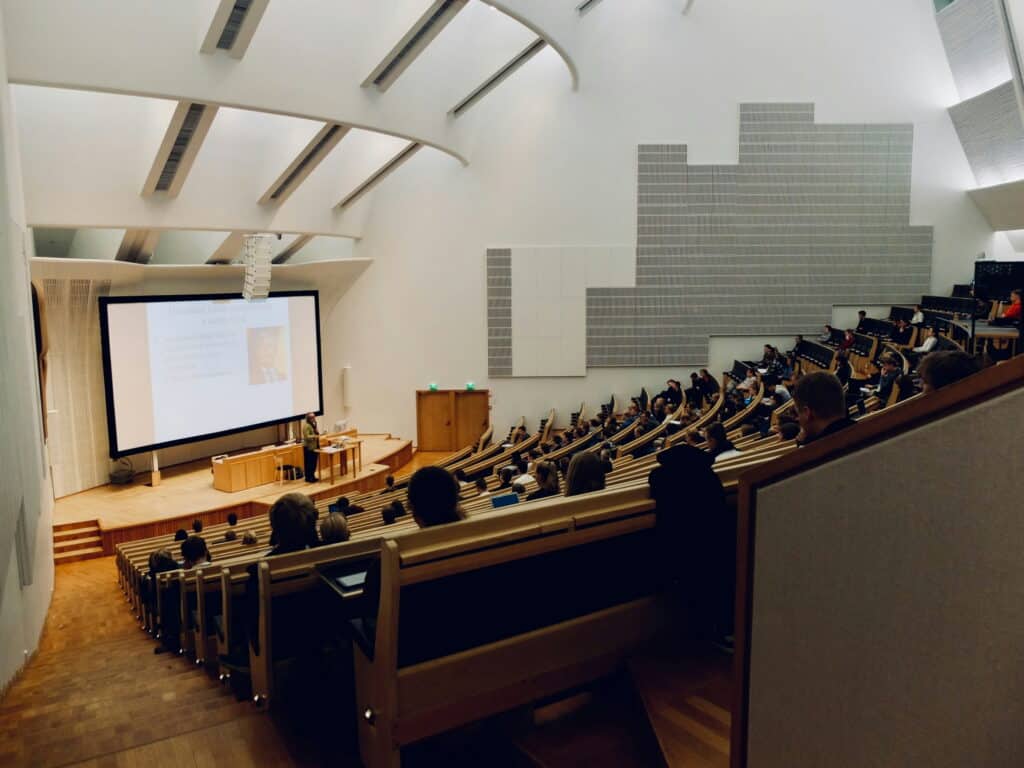
- Video content: Faculty lectures and guest speaker recordings must be captioned, with additional audio description for visual elements to ensure full accessibility.
- Document remediation: PDFs require proper headings, alt text, tagged tables, and navigable reading order.
- Platform updates: Learning management systems, mobile apps, and websites must be audited and upgraded to meet WCAG 2.1 Level AA standards.
These tasks demonstrate the complexity of campus-wide digital accessibility. Even simple content updates often cascade into multiple steps, requiring both automated checks and human review to ensure quality.
Why AI-Powered Tools Are Critical for Higher-Ed Institutions
The Inside Higher Ed piece makes it clear that universities cannot rely solely on manual workflows. AI-driven solutions are essential for scaling accessibility efforts without overwhelming small teams. For example:
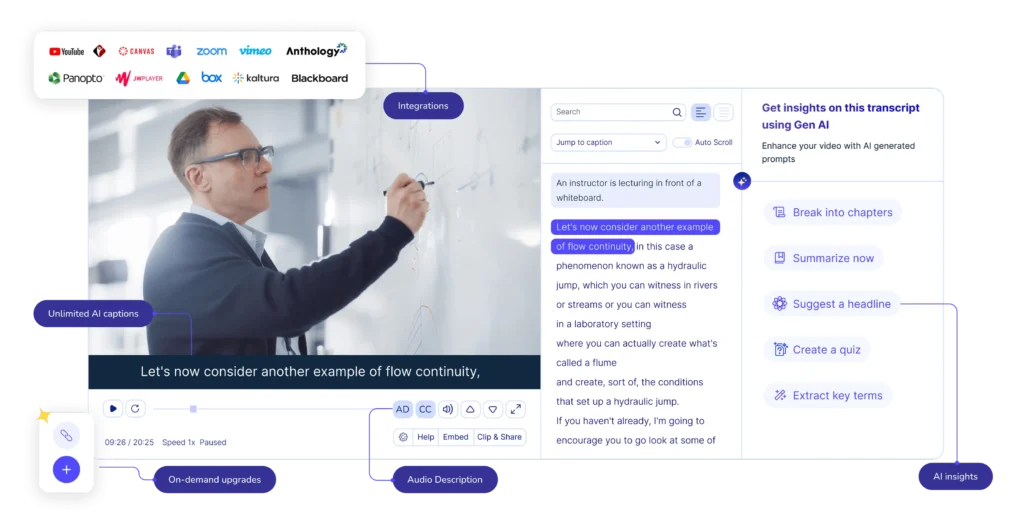
- Automated captioning and transcription can quickly process pre-recorded lectures and live video content.
- AI-generated transcripts allow for immediate review and refinement by human accessibility experts.
- Audio description tools can flag key visual content and provide AI audio descriptions that human editors can finalize.
This combination of speed, accuracy, and compliance assurance is exactly what makes Verbit’s Campus Complete valuable. By automating repetitive tasks while maintaining human oversight, universities can accelerate compliance without sacrificing quality.
Verbit’s team is also hosting a multi-part webinar series fully focused on ADA Title II readiness to provide actionable advice to university leaders tasked with these challenges.

Key Takeaways from Inside Higher Ed’s Coverage of the Americans with Disabilities Act Deadline
- Time is extremely limited: April 24, 2026 is just months away, leaving little room for delay.
- Staffing limitations make manual remediation unrealistic: Most universities have only one or two accessibility staff members.
- Legacy content is a major obstacle: Thousands of existing files, PDFs, and videos must be made accessible quickly.
- Technology and AI are essential: Scalable, automated solutions with human review are the only practical way to meet deadlines.
- Accessibility is campus-wide: Compliance requires coordination across IT, faculty, libraries, and content creators.
The Inside Higher Ed article makes it clear: universities must act now. Accessibility is a legal requirement, a student equity issue, and a potential risk if ignored.
Moving Beyond ADA Compliance: Strategic Accessibility
While the April 2026 deadline creates urgency, the broader lesson is that accessibility is not just about legal compliance. Accessible digital content enhances student experiences, supports inclusive learning, and strengthens institutional reputation.
As one advocate in Inside Higher Ed notes, people with disabilities “get used to it and develop skills to avoid these issues – they shouldn’t have to.”
By leveraging scalable tools like Verbit’s Campus Complete subscription plan with tools like AI-powered audio description, universities can move beyond a reactive, deadline-driven approach toward strategic, sustainable accessibility – ensuring all students, faculty, and staff have equitable access to digital learning materials.
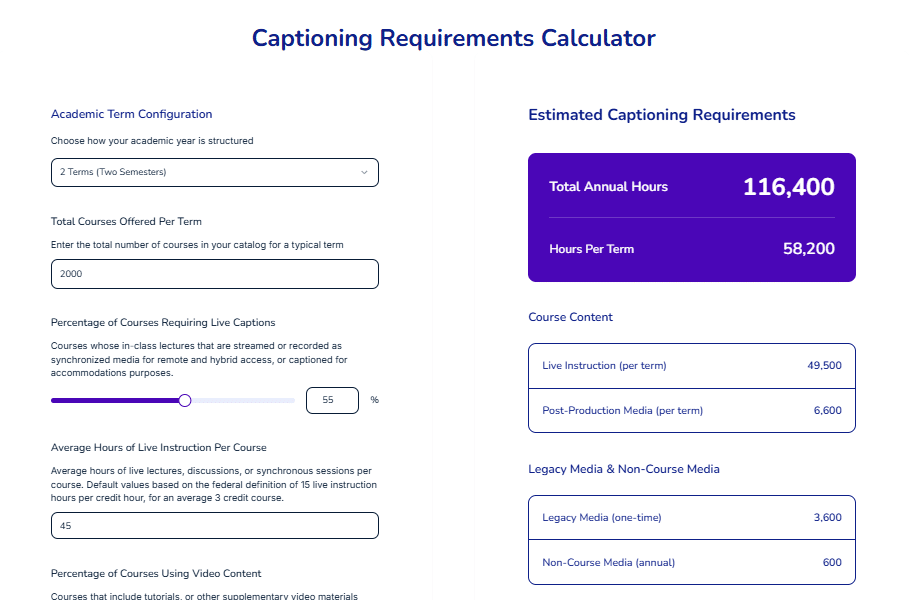
Estimate your needs with our ADA Title II calculator
As of April 24, 2026, most public higher-ed institutions must make their digital media content accessible. Use this calculator to estimate your scope of work for compliance to meet these new accessibility standards.